

The Briar Patch critters would be proud. After debuting in 1881 within the pages of Uncle Remus: His Songs and His Sayings, a book written by Putnam County’s own Joel Chandler Harris, the Uncle Remus stories and their characters – pardon me, the critters – remain active and relevant as the main attraction of the Uncle Remus Museum at the southern entrance to downtown Eatonton, which last week celebrated its 60th anniversary.
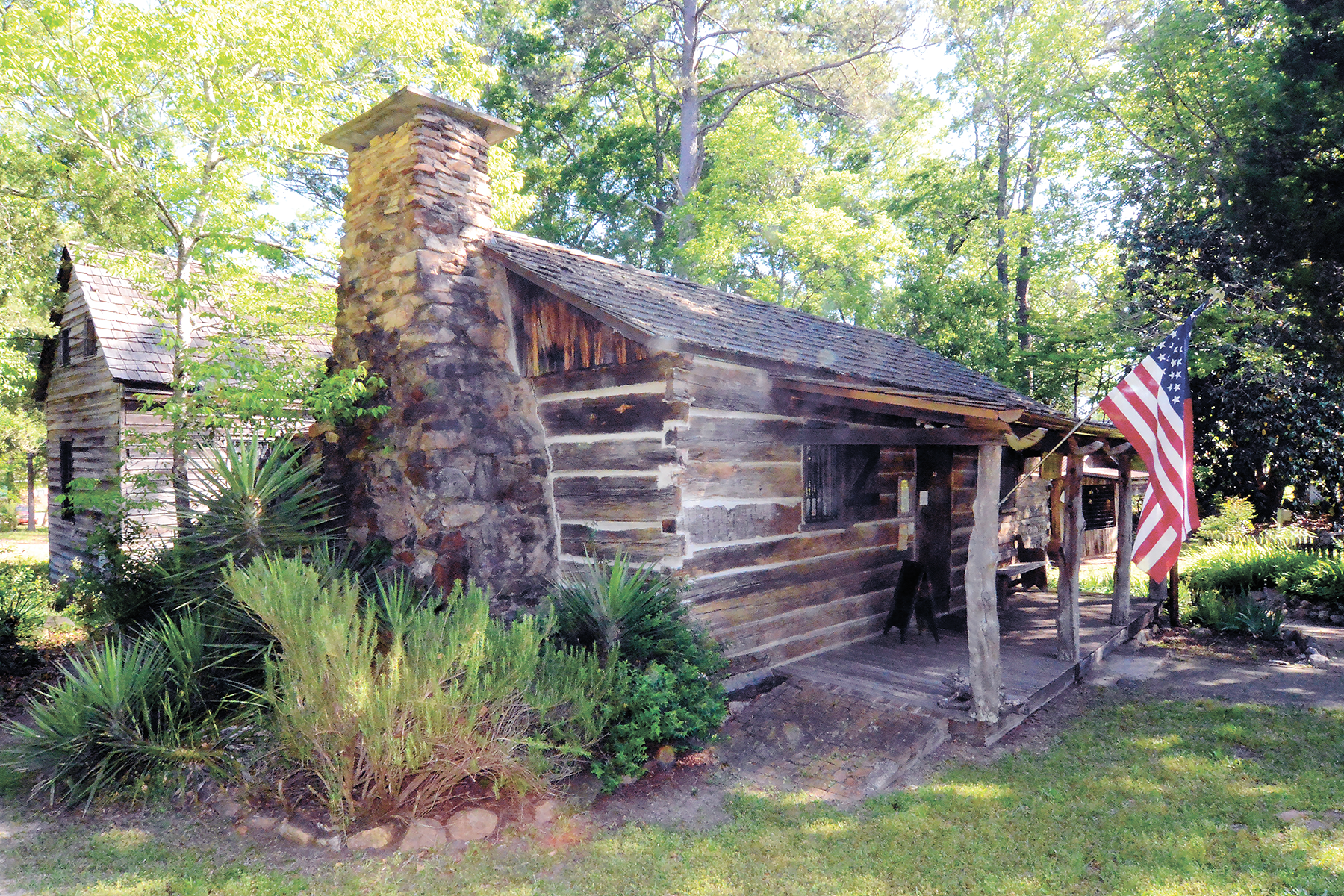
According to local historian Jim Marshall, a museum board member since 1985, it opened on April 21, 1963, in its current front building, adapted from two or three pre-Civil War era slaves’ quarters. The original displays included a few dioramas depicting key critter moments, a couple of long-since-outdated storyboards and a modest collection of wood carvings and iron artifacts from the 1850s era of Putnam County, Marshall said.
“I remember the day that Governor Carl Sanders came down from Atlanta and helped with the dedication. That was actually the first Saturday in June that year, so the ribbon cutting and all that was kind of a delayed dedication,” Marshall recalled. “I was in the 11th grade then and of course, all we had back then was just the front cabin. Didn’t even have the fence up, didn’t have the front walk, didn’t have any shrubbery and any plants here were still just trying to get going.”
The so-called shed room, known as the Ezell Addition, named for a local family that donated money for its construction in 1967, separates the main cabin from a second major structure. Originally built about 1815, in 2009 the structure was moved intact by flatbed truck to its current location from behind a Madison Avenue home.
It had been stored in pieces for several years before being reassembled, fitted with a kitchen and plumbing and used as a one-bedroom rented apartment.
“We were very fortunate and grateful to have this wonderful lady, Lynn Gregory, who had grown up here in Eatonton, out in the Rockville community, but had passed away and surprised us with a very nice bequest of nearly $150,000 because she was related to the Gregory family, who had been very involved in getting the museum going,” Marshall explained.
After moving it, the cabin’s more modern amenities were removed, and it completed the museum’s current footprint. A period-correct “blacksmith shop” stands nearby, built with Marshall’s oversight about four years ago by John Kendrick Holmes as an impressive Eagle Scout project.
The shop holds several tools and equipment from the early-to-mid 1800s with a descriptive storyboard attached outside describing their uses and significance.
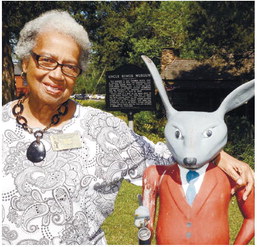
Perhaps the museum’s main attraction or greatest asset, though, is longtime docent and promoter, Georgia Benjamin-Smith, who enthusiastically brings the critters to life in presentations of their stories.
She proudly points out she’s spoken with visitors from every state, “even Alaska and Hawaii,” and from “too many countries to count” from around the world.
To her, Harris’ stories not only keep the African folk tales of her pre-war enslaved Georgian ancestors alive but help her remain rooted in her Eatonton upbringing.
“These stories bring back memories to me because when I was a child, I lived on the same street I was born on and every house had the storytelling. These stories were told. Every blessing day I was raised up with ‘em,” she said. “And after I retired (from the medical field), I was glad to come here so I could try to keep and introduce these stories to the young people. The people that don’t know. I absolutely love ‘em.”
Marshall said that’s the key to maintaining an ongoing relevance for the Uncle Remus Museum and Chandler’s storytelling in the modern world.
He recognizes that several current celebrities, including Eatonton’s Alice Walker, who wrote The Color Purple among other significant works, have criticized Harris in the past for allegedly appropriating and profiteering from Black culture, but insists that’s a misinterpretation.
Even Walker, he said, has come to reconsider her opinion.
“In her last filmed interview from her retirement garden, (Walker) was interviewed and she actually referred to it as a ‘Godsend’ that Harris had saved the Uncle Remus stories," Marshall said. "She had come to understand that nobody else had, and if they hadn’t been written down by someone, they would’ve been lost forever.
“Also, there’s a lot of misunderstanding about what the tales are about,” he continued. “And they’re all about human character. Doesn’t matter if they’re about Black or white or animals or whatever; they’re stories about what we all do and feel and think. And that’s what’s so fun to me.”
March through October, the Uncle Remus Museum (214 S. Oak St., Eatonton) is open Monday through Saturday from 10 a.m. to 5:00 p.m. but closes for lunch each day from noon to 1 p.m.
On Sundays, it opens 2-5 p.m. For winter hours or more information, visit online at uncleremusmuseum.org or call 706-485-6856.