
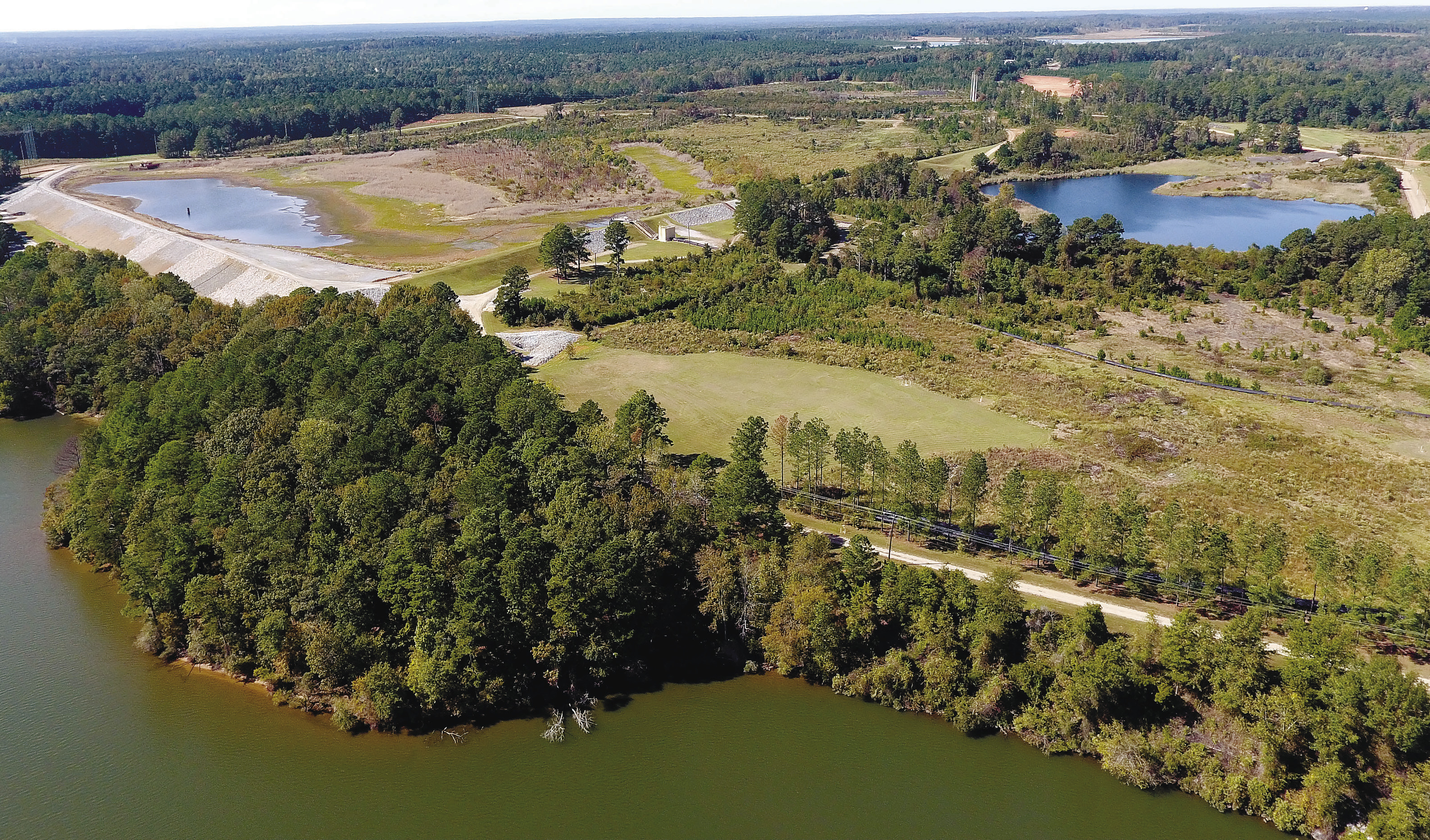
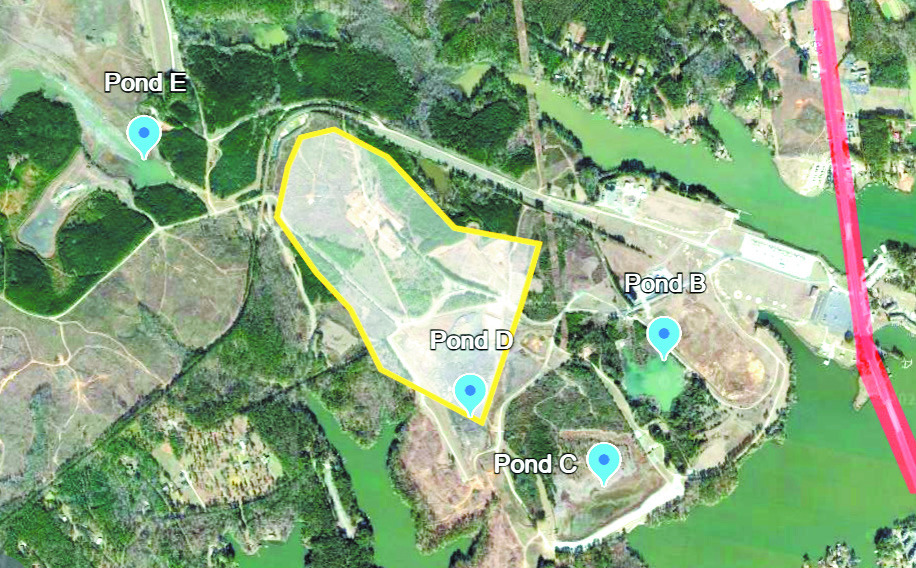
Georgia Power Company says it will be a decade or more before work is completed on the transfer of toxic coal ash from four ponds to a new 115-acre landfill on the old Plant Branch site.
The land, which was home to the now dismantled former coal-fired power plant, is in southeast Putnam County at the Baldwin County line.
The Eatonton Messenger has learned some of the coal ash will instead be processed for reuse by a new facility to be constructed at the Plant Branch site. When completed in 2026, it will process enough ash from ponds at the site to produce about 600,000 dry tons of marketable ash each year, according to a Georgia Power press release provided to the newspaper.
Coal combustion residual (CCR), commonly called coal ash, is waste from a coal-fired power plant. It contains contaminants such as cadmium, mercury, and arsenic that can pollute lakes, ponds, and streams, as well as groundwater, drinking water, and the air.
However, coal ash also can be processed for use in products such as concrete, gypsum wallboard, blasting grit, roofing granules, and a variety of geotechnical and agricultural applications.
“In addition to reducing the amount of ash going to a landfill and complementing our closure plans, projects such as this bring additional jobs and positive economic impact for the local community,” Georgia Power Vice President of Environmental Affairs Jennifer McNelly said.
Still, the primary task of moving the coal ash to landfills built to prevent leakage into water supplies continues at the Plant Branch.
In January this year, the company’s landfill cleanup plan was approved, and a Solid Waste Handling Permit was issued by the Georgia Department of Natural Resources Environmental Protection Division.
“Construction is currently underway on the newly permitted, lined CCR landfill,” Georgia Power spokesperson Kelly Richardson told The Eatonton Messenger this week. “Georgia Power is conducting work that is essential during the early stages of the ash pond closure process, which includes stormwater diversion, dewatering, and vegetation clearing. Groundwater monitoring is actively ongoing to closely monitor water quality around the site.”
Plant Branch was built by Georgia Power in 1965 and became a landmark for Lake Sinclair boaters and a dramatic sight for motorists passing by on Highway 441.
By the time it was shut down in 2015, Plant Branch had four coal-fired units capable of producing 1,540 MW of electricity. But it also had produced 50 years of coal ash, which was held in ponds on the land surrounding the plant.
“At Plant Branch, all five ash ponds will be closed by removal to a permitted, on-site, lined landfill,” Richardson said. “The company has completed closure activities at one pond and closure activities are ongoing at the remaining four ponds.”
The coal ash from the single pond already closed was moved to another pond. The remaining ponds will be covered and sealed as each pond is emptied and the coal ash is put into the new landfill. That landfill will also be covered and sealed at the end of the process, not expected to be completed until the mid to late 2030s.
Georgia Coal Ash is an environmental group based in Rome. It gives Plant Branch and five other Georgia Power facilities high marks for the plan to remove all coal ash from ponds and transfer to a new or existing environmentally safe, lined landfill.
Six other Georgia Power plants in the state got low scores from the environmental group for deciding to cover and seal some or all their coal ash ponds without removing the CCRs to a landfill. As a result, the utility has been the subject of lawsuits and complaints from the public and environmental groups.
In 2021, The Atlanta Journal-Constitution reported Georgia Power said both methods would ensure safety.
Nearly 130 million tons of coal ash was generated by U.S. coal-fired plants in 2014 alone. Since then, the use of coal to generate electricity has dramatically decreased, causing the amount of coal ash produced to drop to 69.7 million tons in 2020, according to a study by the American Coal Ash Association (ACAA), a non-profit trade association.
The organization adds that 40.9 million tons of that total was “beneficially used” in 2020.
Plant Branch joins Plant Bowen near Cartersville and Plant Mitchell near Albany as locations for Georgia Power’s beneficial reuse project.
“With the nationwide focus on improving American infrastructure, including roads and bridges, demand for materials continues to outpace available supply, and collaborative projects such as this will be critical to bridging that gap in the future,” ACAA Executive Director Tom Adams said.
Georgia Power expects to have all its coal-fired power plants closed by 2035 when Plant Bowen is scheduled to shut down.