

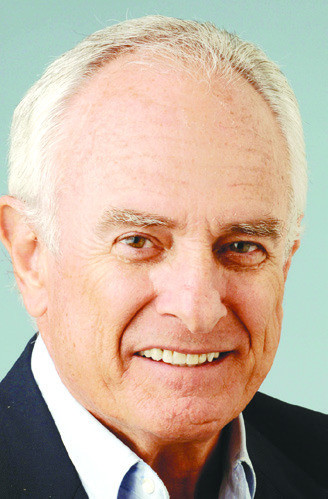
The contentment in Ned Yost’s life today could not be more striking and fulfilling as he farms, hunts, fishes, puts up for the winter, and cooks and cleans on a 500-acre spread.
It’s about 10 miles from Warm Springs, where President Franklin Delano Roosevelt used to enjoy outdoor abundance in the Pine Mountain Range.
Ned’s spread is fit for a country squire, where he and his wife Deborah are keen on filling their freezer with venison from the abundant deer on his property, harvesting about 25 deer each year, he says. There’s more. Ned fishes for bass and bream on a 26-acre lake he built after settling in at Rising Rock Ranch, where he constructed a brick house with more columns than Scarlett O’Hara erected at Tara.
Ned cuts the grass throughout his plantation, where he plants acres of sunflowers for the doves and plots of clover for the deer. There are egg-laying chickens and a vegetable garden that yields a horn of plenty, including his favorite, sweet corn.
If you come for dinner, Ned will do the cooking from what he produces, and get this, when dinner is over, everybody, including Deborah, stays put. Ned will clean up the kitchen.
Upon retiring from baseball, Ned told Deborah she had done enough. She never complained about moving the family from minor-league job to minor-league job, followed by the constant travel of his major league affiliations, while cooking, managing the home front, and doing everything else that moms do.
“From now on,” Ned told Deborah upon retiring, “I will do the cooking and cleaning. Your home duties are over.”
His man cave happens to be a multi-purpose barn with a shelter, a lean-to where you’ll find tractors, including a big John Deere 6120M, and assorted farm equipment that Ned keeps in good working order.
There are sleeping rooms and lockers, loaded with camouflage, for him and his three sons: Ned Jr., who played baseball at Georgia, Joshua, and Andrew; and daughter Jenny, an outdoor aficionado, too.
When he settles down at his desk to do paperwork or plan his week, Ned is surrounded by dozens of animal mounts from his lifetime of abundant hunting.
When he retired as manager of the Kansas City Royals following the 2019 season, Ned knew he would not return to baseball. He’d decided to spend the rest of his life down on the farm, courtesy of what the Big-League pension plan can do for baseball lifers – provided they manage their money prudently.
No doubt, Ned’s net worth would turn the heads of those in his graduating class back in Dublin, California, where he grew up.
Ned made it to the Big Leagues as a catcher but did not distinguish himself over a five-year period except for helping prepare him for a future as a baseball scout, coach, and manager. He could recognize talent and was imbued with cogent leadership skills.
His career as a major league manager began with the Milwaukee Brewers in 2003 for seven years. Then came an uplifting run in 2015 with the Royals and that unforgettable defeat of the Mets, four games to one, to claim the World Series.
As a manager, Ned wore No. 3, the car number of his close friend Dale Earnhardt, Sr. Earnhardt’s death in 2001 was a tough loss for Ned, who spent time as a member of Earnhardt’s pit crew during the 1994-‘95 Major League strike.
Early on in his dozen years with Bobby Cox, Ned watched Cox’s every move. They often sat and drank coffee with Cox playing the role of teacher and Ned the inquisitive pupil.
His respect for Braves’ legends Henry Aaron and Cox knows no bounds.
“Hank Aaron was a very smart baseball man, not just the greatest homerun hitter,” Ned said. “And I learned so much from working with Bobby Cox,” who influenced Yost’s managerial style, principally that “it is always about the team.”
In contrast, a manager like Tommy Lasorda was a colorful character and a headline maker, but players are aware when the manager plays to the camera. Cox was cooperative with the media but had no interest in the limelight. Ned is cut from the same cloth, much like current Braves manager Brian Snitker.
When Ned reflects on Atlanta’s long run of divisional championships, he also offers high praise for Leo Mazzone, the heralded Braves’ pitching coach during the 14-year streak. “I would say that because of Leo, 90 percent of the pitchers who came to Atlanta improved and became better pitchers.
“Of course, (Braves GM) John Schuerholz made a big difference,” Ned added. “He went out and signed players that would help us win, those who were competitors and who had a good influence in the locker room.”
That’s all good for reminiscing down on the farm, where the work ethic is still ingrained in Ned’s makeup.