
As the Masters officially got underway, I began my day (mid-morning was not a deterrent) with a pimento cheese sandwich and a Diet Coke.
Then I beat it over to the manor clubhouse for a respite with a smattering of friends and acquaintances beneath the Big Oak by the first tee.
For years, I spent time there because it has been and remains the place to be. If you have read anything about the Masters through the years, you know about the legend of this tree, perhaps the most famous in golf.
You never know who you will see at the Big Oak. Golfers, players’ wives, agents, media personalities, Augusta National members, caddies, and PGA Tour officials.
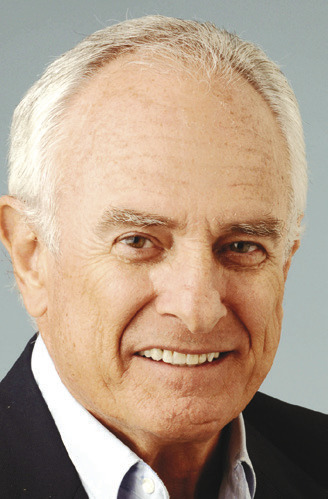
Knowing for the first time (for the most part) since 1982, Verne Lundquist would not be in Augusta this year, I decided to call him. We enjoyed a lot of banter under the tree over the years, and, sadly, he's not on the premises this week.
He lamented that when he retired from CBS in 2024, it was of all the events he covered in his remarkable career, that he would miss the Masters the most.
A friend of his, Bill Griffin, hosted Verne and his wife, Nancy, and friends the previous Tuesday night of Masters week, which led to a parade of champions stopping by his table to congratulate him and say goodbye.
The smiles on their faces confirmed that Verne was not only beloved by countless broadcast and Masters fans but also by the players.
Everybody from Jack Nicklaus to Ben Crenshaw to Scottie Scheffler to Jon Rahm stopped by to thank him for his contributions to the Masters.
Verne is one of the most passionate of Masters aficionados. His link with Augusta National immortality is forever secure. It was here in 1986 that he made his brilliant call, which still resonates today throughout the golf world.
Nicklaus was about to score a 30 on the back nine to win his sixth Masters title in one of the most memorable performances in the history of the sport — indeed a signature memory for countless fans who were enraptured by the Golden Bear winning his sixth Masters at age 46 with his son Jackie on his bag. Every mother and grandmother in Richmond County and millions more via television were swooning over this all-time great moment.
When Jack stroked his putt, you heard Verne Lundquist say, “... maybe!” as the ball made its way toward the cup. Then, as it slammed safely in the hole, Verne punctuated the broadcast with a thundering, “YESSIR!” That has been rated the No. 1 call in golf history.
Jack and Jackie huddled beforehand, with Jackie reading the putt differently from his father. The son/ caddie saw a slight break to the right, but Jack said, “I have had this putt before, and I think it breaks to the left, toward Rae’s Creek.”
He was right, his memory telling what his eyes could not see — another vignette in the grand champion’s life that is a reminder of why he was a grand champion.
With a compact frame that was just right for the game of golf, Nicklaus manipulated and managed his swing to become the most dominant player in his sport.
But it was the mental part of his makeup that set him apart. He had a steel-trap mind with an ability to shut out all external distractions and execute with uncommon adroitness, which is why he was almost always in the hunt when a major took place.
It is astounding that he not only won 18 major titles but also finished runner-up 19 times.
When there was drama in sports, Verne Lundquist always seemed to be there.
Christian Laettner’s miracle shot to defeat Kentucky in the NCAA Elite Eight, 104-103, at the Spectrum in 1992 with no time left on the clock; “Yessir” on Nicklaus putt at Augusta in 1986; and his second-greatest golf call when Tiger Woods chipped in from off the green in the 2005 Masters, which propelled him to victory.
Woods had hooked his eight-iron over the 16th green to the left. He would be lucky to get the ball close and save par. So, what did he do?
He did what great champions do. He chipped in for a birdie, which brought about Verne’s classic description: “In your life have you ever seen anything like that?”
If great players in sport render excellent performance, then you conclude that when outstanding performance takes place, great broadcasters rise to the occasion.
Thanks, Verne, for the memories.