
“What can you tell me about that crazy topsoil I bought this year? Nothing grows! And if something comes up and starts to grow it doesn’t get far before it turns yellow and dies!”
-Joye Hancock, Eatonton
I could hear the concern in her voice. The garden around her house is white-picketed perfection, full of inspiration and appeal. She has several raised vegetable beds in a level, sunny spot that she amends with bagged compost annually. By June, her beds are brimming with abundance, but this season growth hasn’t just lessened--it has ceased altogether. Her seedlings yellow and fade away within a week of transplanting, and seed she has direct sown struggles to germinate.
Growing tomatoes and peppers from seedlings to sell at the early-season farmer’s markets, I rip open my fair share of compost bags. I use organic starting mix to germinate, potting up the starts in organic container mix once they have two sets of leaves. All my bagged soil is “OMRI listed,” meaning it has been certified by the Organic Materials Review Institute to be safe in organic gardens, free of pesticides and herbicides.
In the past I’d occasionally find a soggy bag full of anerobic bacterial growth that made it stink, or maybe one with big fat grubs in it. But what I am now finding firsthand are two separate and concerning threats in readily available bagged soil: Picloram-based, broad-leaf herbicide contamination, and compost that is just carbon wrapped in compost residue.
Picloram is the main active ingredient in Grazon, which is applied to hay fields to kill broad-leaf weeds that degrade the quality of hay. It persists in the soil for three years minimum, killing anything besides grasses—such as vegetables! Horror stories abound: farmers who bring in a load of manure that kills all their beds; no-till fanatics who layer their beds with hay mulch and lose everything; common gardeners who purchase topsoil that prevents their tiny plots from prospering.
For the record, carbon is generally good. For every one-percent increase in carbon organic matter put into the soil there should be a 20,000-gallons-per-acre increase in water holding capacity. If you increase bioavailable carbon in the soil, you are going to get juicier produce. But it has to be composted with equal parts of nitrogen to become bioavailable; otherwise it locks up any nitrogen in the soil, robbing it from the plants.
Ms. Joye bought “topsoil” that appears to be bulked up with pine bark and woodchips mixed with poultry litter. All the ingredients are there to make it topsoil--except time.
So, we devised a test by planting fresh corn seedlings in her worst bed. If they did great, I’d suspect Picloram; but if they died, carbon. They are dying, and to be honest, I am quite relieved! A prescription of nitrogen soup will set things straight in her beds. If your gardens are having trouble, try this test, too, or have your soil tested at your local ag extension office.
Nitrogen soup recipe:
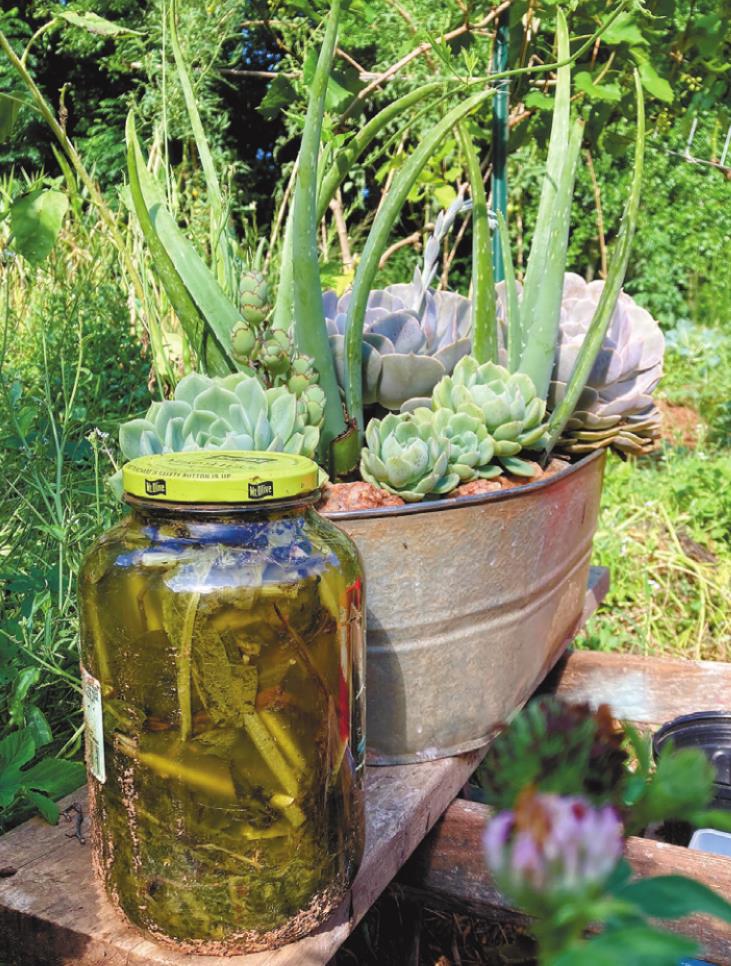
In a large pickle jar, big bucket, or water-tight trash can, brew comfrey, nettle, weeds, or any dark green leafy matter with water until it smells horrible (approx. 1 week in the sun). Add chicken coop litter and/or rabbit poop for extra strength. Dilute 10:1 water-to-soup ratio for feeding young plants, or apply a 1:1 mixture to rescue beds with carbon overload.
Until next time,
Eatonton Gardenerd
garden.nerd.31024@gmail.com
The Eatonton Gardenerd is an experienced gardener who works with local organizations like the Butterfly and Blooms Garden, the Garden Club at PCPS and various local farmers’ markets while maintaining his own acre of densely planted food. He has previously worked for USDA-Agricultural Marketing Service and is on his way to completing his first gardening book.