
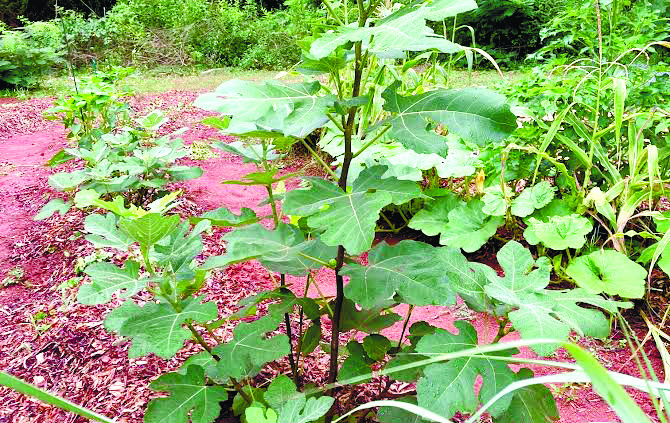
“I’m thinking about planting a few fig trees. Do figs require a lot of fertilizer and how many figs will an average tree produce?”
- J. Parker, Eatonton Not every little town around Middle Georgia gets to claim horticultural fame, but Eatonton was home to Benjamin Hunt, a notable and perhaps notorious local character, who bred a fine fig for cultivation in a rainy and humid climate. Regrettably, any documentation concerning the breeding of this fig seems hopelessly lost to history, but we do still have the ‘Hunt’ fig, and that fig is a little bit of what makes Eatonton so special.
You can find them peppered throughout the backyards of old houses around Eatonton, these are the truest as the variety was later “improved” at LSU.
Though the flavor of the fruit is decent when eaten out-of-hand, Hunt figs really are absolutely excellent when made into fig preserves.
Figs are easy fruit
Our gritty red clay soil grows figs well, so long as you loosen it up well and mix in some compost before planting.
No additional fertilizer is required. A healthy sapling will bear few fruits in its first or second season; full maturity comes after the third.
A single fig tree will easily produce five pounds of figs per season, for centuries.
The oldest recorded human-planted tree happens to be a fig: Jaya Sri Maha Bodhi in Sri Lanka. Planted in 288 B.C. from a cutting, it still bears fruit.
Summer pruning after the main crop is necessary to control the overall size of the trees. I keep my figs at about seven feet—which is as high as I can comfortably reach to pick.
Cardinals and Tanagers are the biggest fig pests in my garden, but they seem to go only for the ripest of fruit and are nice to have around, so I don’t mind sharing a little with them. Insects do not seem to bother my figs at all.
Rain determines suitable varieties
Mr. Hunt was onto something when he selected genetics that favored a downward hanging fig with a long thin neck and petite fruit. Those traits shed rain off the fruit easily, instead of collecting in the “eye” of the fig where it can cause rot.
Avoid upturned eye varieties. I have found ‘Celeste’ and ‘Chicago Hardy’ do very well here. I have high hopes for the variety ‘Green Ischia’ which is downward fruiting and pale green when ripe, which may fool birds.
By the way, now is a good time to be thumbing through the bare root and garlic bulb catalogs as most of the stock is presold for fall delivery and good outfits regularly sell out of things well before they are shipped. If you want to plant trees in the fall, order now.
Until next time, Your Eatonton Gardenerd This week’s jobs: Sow, sow, sow like mad! – But hold off on carrots awhile.
– Pick beans and peppers diligently to maintain production.
Gardeners! Send your gardening tips and questions to: garden.nerd.31024@gmail.com
CONTRIBUTED