
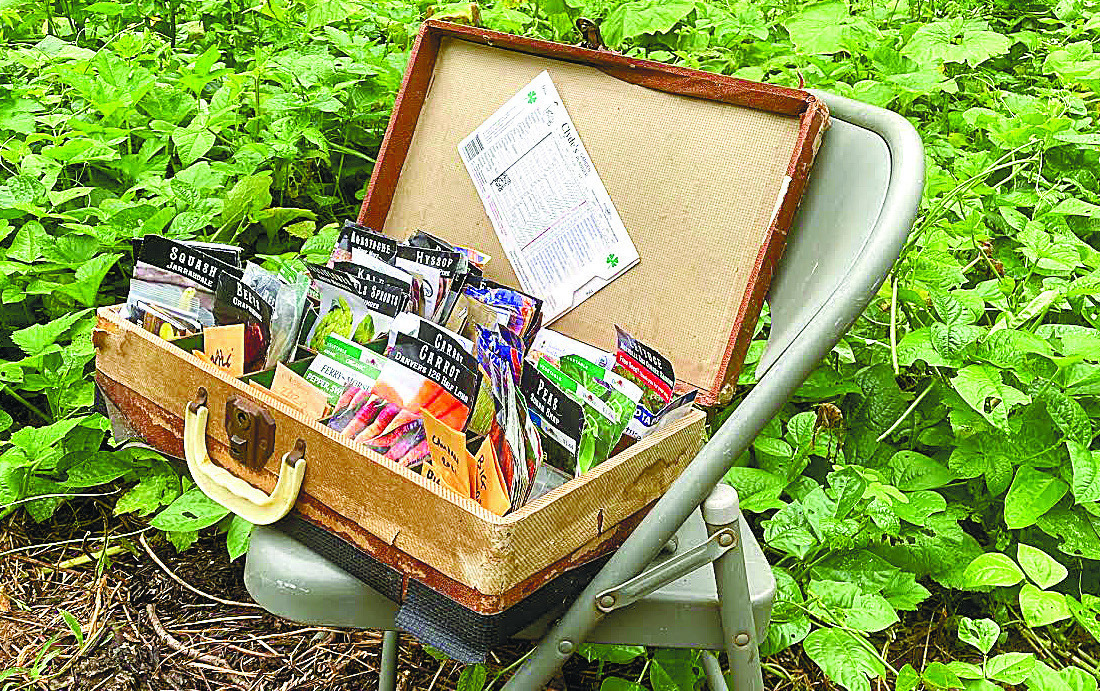
“How do you know what to sow and in what order?”
- J. Rafferty The timing of what to sow and when to sow takes time to learn. When a gardener is observant and can remember to mark down dates of sowing and planting, and they are thoughtful and present enough to go back and make useful notes about how it all went, then those dates and data can be analyzed and organized into an accurate schedule for planting and harvesting, tailored to a specific site.
It is good to save this work for when the weather is cold and spring seems an eternity away. After a few years of growing reliable and sturdy varieties of whatever your family uses most, you get quite a good feel for it, your memory gets triggered by small changes in the garden or landscape around you, you recognize bellwethers of seasonal progression.
Right now, my gut and graphs tell me it is time to sow cabbage, chard, cilantro, kale, other leafy greens, and lettuce.
Head start
There are several resources available to help you get a head start on timing, from the trusty Farmer’s Almanac to smartphone applications that help you manage your garden from bed prep right down to record-keeping during harvest. There are also many excellent vegetable journals that have suggested dates mapped out by month, with discussions on techniques useful for cultivating scheduled crops.
Personally, I have relied for years on a well-worn copy of Clyde’s Garden Planner (www.clydesvegetableplantingchart.com) as my basis for planting dates. Through analysis of my seasonal data, I’ve found it to be fairly accurate, going by our local first and last frost dates. It also has useful information about planting depth and a provides a close range for harvest windows by variety, too. It’s a great resource to keep with your seeds and refer to each time you reach for a packet to sow.
Seed storage
Seeds are best kept in the refrigerator, above freezing, but below 50-degrees Fahrenheit, while maintaining low-andstable humidity. The bottom back corner of your fridge, where leftovers go to die, will extend the storage interval of some of your seeds almost indefinitely.
Tomato seeds kept in these conditions are regularly viable for 10 years or more.
Leftover or collected seed can be stored in standard coin envelopes labeled with the variety and collection date, then sealed shut and organized in zippered, plastic baggies further labeled with the crop type. Keeping these bags with all other crop seeds in their envelopes and baggies inside of a master container keeps things easy and tidy in the refrigerator until it comes time to fish out some seeds and get to sowing.
Until next time, Your Eatonton Gardenerd This week’s jobs: Observe the changes taking place in your garden – Collect seed from fully ripe peppers and tomatoes – Prune stone fruit to limit size next season.
Hey Gardenerds! Send your gardening tips and questions to: garden. nerd.31024@gmail.com