
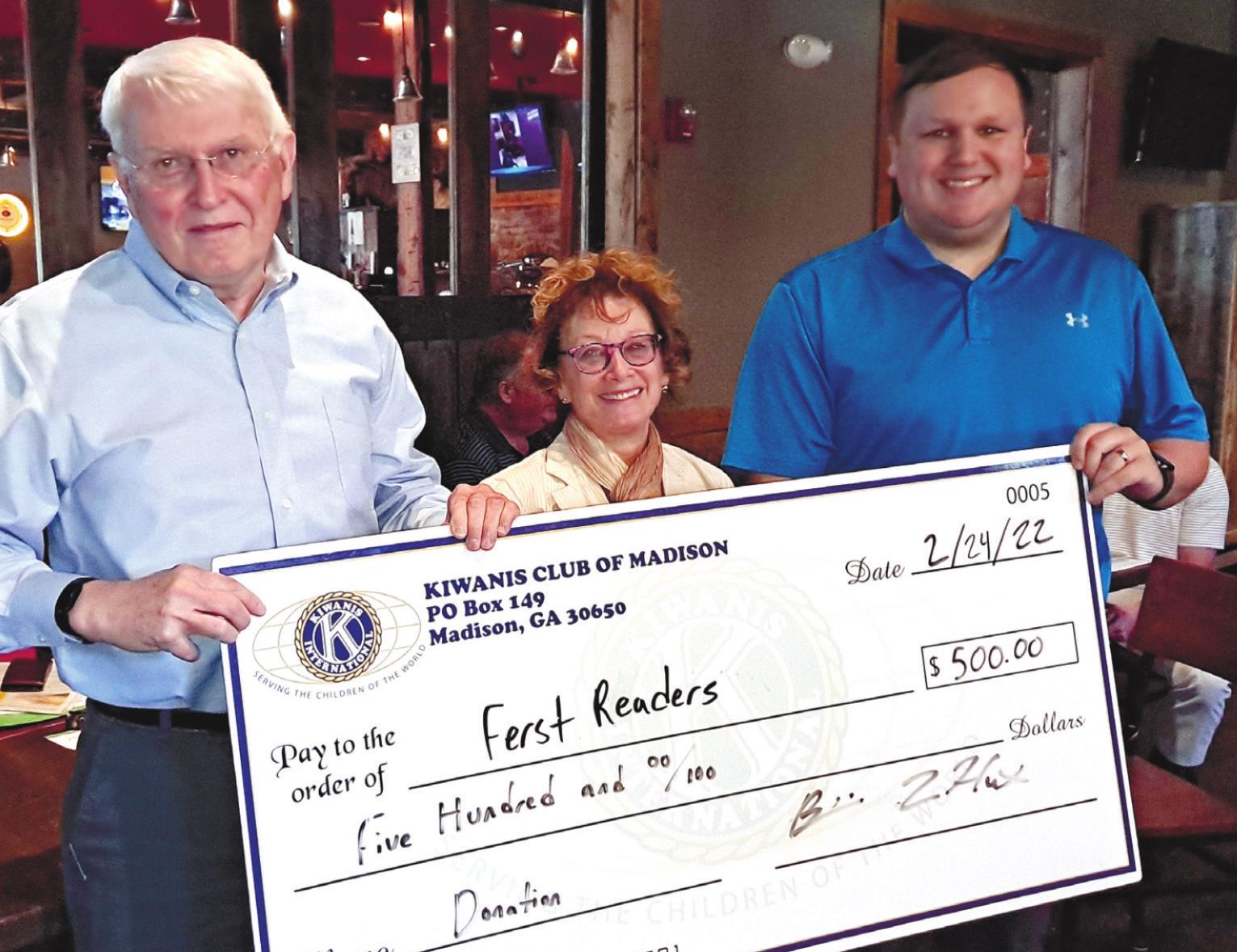
Every child under the age of five in a participating community is eligible for the program. No group is favored or stigmatized by being part of the program. Children may be registered at birth, or at any age between birth and five years. Regardless of age, the first book is “The Little Engine That Could” and the graduation book is “Look Out Kindergarten Here I Come!” when the child turns 5.
Any adult caregiver can register a child.
The books are delivered each month by U.S. Mail to the child’s home, and multiple children in a home (including twins, triplets, etc.) each receive their own age-appropriate book.
If a child moves out of Georgia, the child is removed from the FFCL program. If the child moves out of the participating community but remains in the state of Georgia, he/she remains as part of the original CAT community until a Ferst Foundation CAT in the new community adopts him/her.
Every registered child will receive the “Ferst” Library Card and additional literacy support items.
Once the funds are raised and the bookends arrive in the participating community, every registered child will receive a coupon for the Imagination Library Bookends.
Finally, and most importantly, the program is ABSOLUTELY FREE to participating families. There are NEVER any charges or costs to the children or families, ever. The cost of the program is covered by the efforts of the local Community Action Team members through the acquisition of public and private contributions, sponsorships, grants, etc.
Pertinent Facts
• Reading to a child in an interactive style raises a child’s IQ by six points.
• Children with as few as 25 books in the home complete on average two more years of schooling than those with no books.
• Only 43 percent of third graders are reading proficiently.
• Vocabulary development by age 3 has been found to predict achievement by third grade.
• A child’s brain grows to 80 percent of its full size by age 3. In the first few years of life, a child’s brain builds 700 connections per second.
• By age 3, children from low income families may hear 30 million fewer words than their more affluent peers.
• In middle income neighborhoods, the book to child ration is 13:1 compared to 1:300 in low income neighborhoods.