
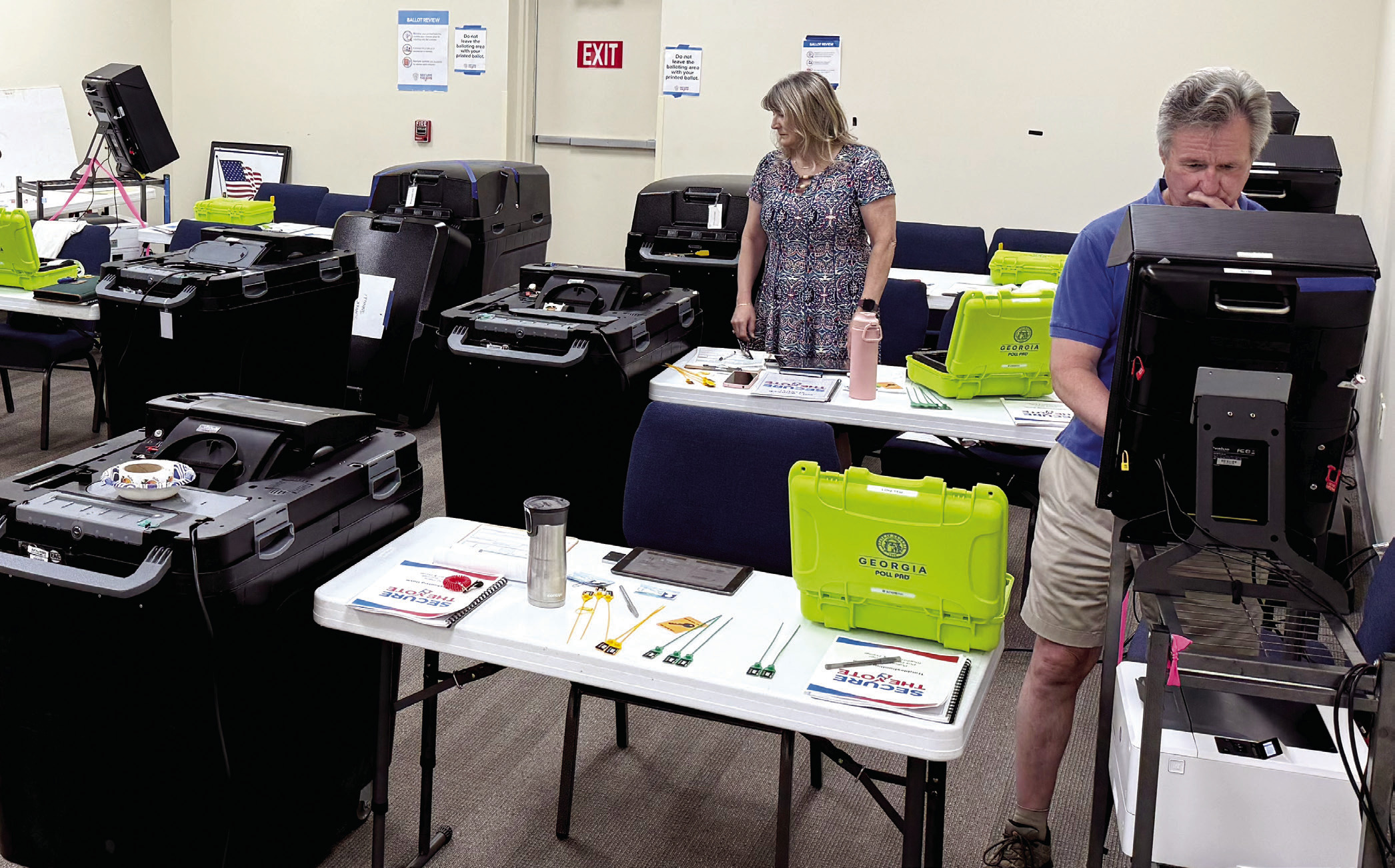
As Georgia’s general primary approaches, Putnam County Elections Supervisor Kim Rudolph is encouraging voters to double-check their registration information and understand key rules that could affect their participation — not only next month, but in a potential June runoff.
Rudolph said one of the most important points voters need to understand is how party selection works in Georgia’s open primary system.
“You have the right to choose either party’s ballot,” she explained. “But whatever you choose in May is what you’ll also be assigned in June if there is a runoff.”
That means voters who select a Republican or Democrat ballot for the May 19 primary cannot switch parties for the June 16 runoff election.
Rudolph noted this could lead to frustration, particularly among voters who cross party lines to participate in a competitive local race.
“My biggest concern is that people seem very interested in the local Republican race, so somebody who would personally affiliate as a Democrat might choose a Republican ballot in May, but then in the runoff in June, they will not get the option to vote [their preferred party line] at that point.”
However, Rudolph emphasized this restriction applies only to the primary and any associated runoff, not to November’s general election.
“In November, all candidates will be on the ballot,” she said. “I think people are afraid that if they declare that now, it’s going to impact how they vote in November. It does not.”
Beyond party selection, Rudolph urged local voters to verify their registration details ahead of the election. Voters can access their information online at ber.putnam-ga.gov using basic identifying details, such as their name, date of birth, and county of residence.
Additionally, particularly when it comes to address information, if a voter has moved but not updated their registration, Rudolph said they will be required to vote based on their previous address.
“If their address is old, they might see a ballot that no longer pertains to them,” Rudolph explained. “They can still vote, but they would have to vote based on whatever address is determining their ballot.”
While changes can currently be submitted, Rudolph said updates made during an active election cycle may not take effect until after the primary and runoff period.
Another point of confusion involves identification requirements. Rudolph stressed that voters must bring a valid — physical — photo ID to the polls.
“Digital identification is not acceptable to vote; not even the Apple digital ID,” she stressed. “So if you went through and got the DDS app and you put your ID on your phone and you don’t physically carry your driver’s license anywhere with you anymore, you may not use that digital version even if it’s acceptable by law enforcement.”
Common acceptable forms of voter ID include a Georgia driver’s license, U.S. passport, military ID, or other government-issued photo identification. Significantly, an expired Georgia driver’s license remains valid for voting in this state, Rudolph said; however, an expired license from any other state does not.
Voters are also reminded that cell phone use of any kind is prohibited while voting, meaning digital notes or stored sample ballots cannot be accessed inside the polling place.
“Please don’t put your choices on your phone and then expect to use your phone as a cheat sheet,” Rudolph said.
Instead, she encouraged voters to print sample ballots in advance, research their candidates, and bring a paper copy with them for reference. However, no campaign materials with candidates’ names and/or faces on them are permitted within polling places. Nothing that could be considered campaign material is allowed.
Rudolph also mentioned that voters often misunderstand nonpartisan ballots, as they contain only judicial races.
“If somebody decides they want to vote on a nonpartisan ballot thinking they’re voting independent, the reality is they’re only going to see the judges,” she said.
Finally, Rudolph addressed “straw poll” questions that may appear on party ballots. She cautioned voters not to confuse them with binding measures, stressing that they are “strictly opinion questions ... not binding in any way.”
With strong interest expected in local races, Rudolph said she anticipates strong voter turnout from Putnam County next month.
Her overall message? Informed voters make for smoother elections.
“The more people are informed, the better off we all are,” Rudolph said. “When voters come in, and they’re informed, our poll workers don’t have to deal with angry voters who just don’t understand the process. It’s actually pretty easy.”