
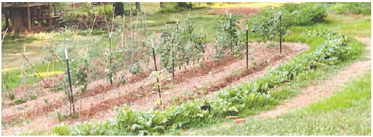
“When you use cover crops, do you have to till them under?”
-Joye Hancock, Eatonton Many gardeners in Eatonton skip the clay altogether and rely on raised beds for vegetable production. The allow you to grow in straight compost, but they also can get very compacted over just a few seasons, and they often have uneven soil moisture levels which can make a uniform growth pattern of a crop harder to achieve.
You can amend the soil with more compost and work with a garden fork to loosen the soil into a fine tilth, but a bed that regenerates itself and requires less input of finished compost, less intensive cultivation, and no tilling is far more appealing to this Gardenerd.
Basics
Cover-cropping is the practice of growing a crop during the off-season times, when your beds would normally be empty, which is then terminated and left in place to rot down into topsoil. This practice involves bacteria- driven composting and fungally driven moulding, working together in the same bed, no turning of piles, hauling of materials, and very little strenuous shoveling. In his book: The Living Soil Handbook, farmer and author Jesse Frost Lays out the following basic principles of no-till cover cropping:
• Todisturbthesoilas little as possible.
• Tokeepthesoilcovered as much as possible.
• Tokeepthesoilplanted as much as possible.
By adhering to these guidelines, you cultivate not only the crops you plant, but the world of life within the soil. This activity of this life is the mechanism by which all amendments and fertilizer are broken down into a form that can be taken up by the plants.
Mycorrhizal fungi will form a subsurface nutrient network between individual plants when left undisturbed, and it will allow you to will grow a more bountiful garden which is more tolerant of pest pressure and environmental stresses.
Garden cover-cropping
Cilantro will happily grow right through a Putnam County winter once established, as will brassicas like kale, collards, cauliflower and broccoli. They all produce deep into the cold and are traditionally grown here through the fall. Try planting a bed with these intermixed, and throw in some Daikon radish seed too.
Harvest what you want to use or give away and at the peak of the season knock everything flat or chop and drop the plants on the surface of the bed, leaving the roots in the soil. Cover with a thick mulch of cardboard, a layer of black poly film, or silage tarp.
Alternately cover with 6-8 inches of woodchips. Then walk away until spring planting time.
Once the soil warms plant directly back into the bed without tilling, where the cover crop once was should be a nice layer of living topsoil. Woodchips over cardboard offers good results and less weeds every year.
Until next time, Your Eatonton Gardenerd This week’s jobs: Plant cover-crops – Collect tithonia seed – Stay warm Fellow Gardenerds!
Send questions, concerns, and tips to: garden. nerd.31024@gmail.com