
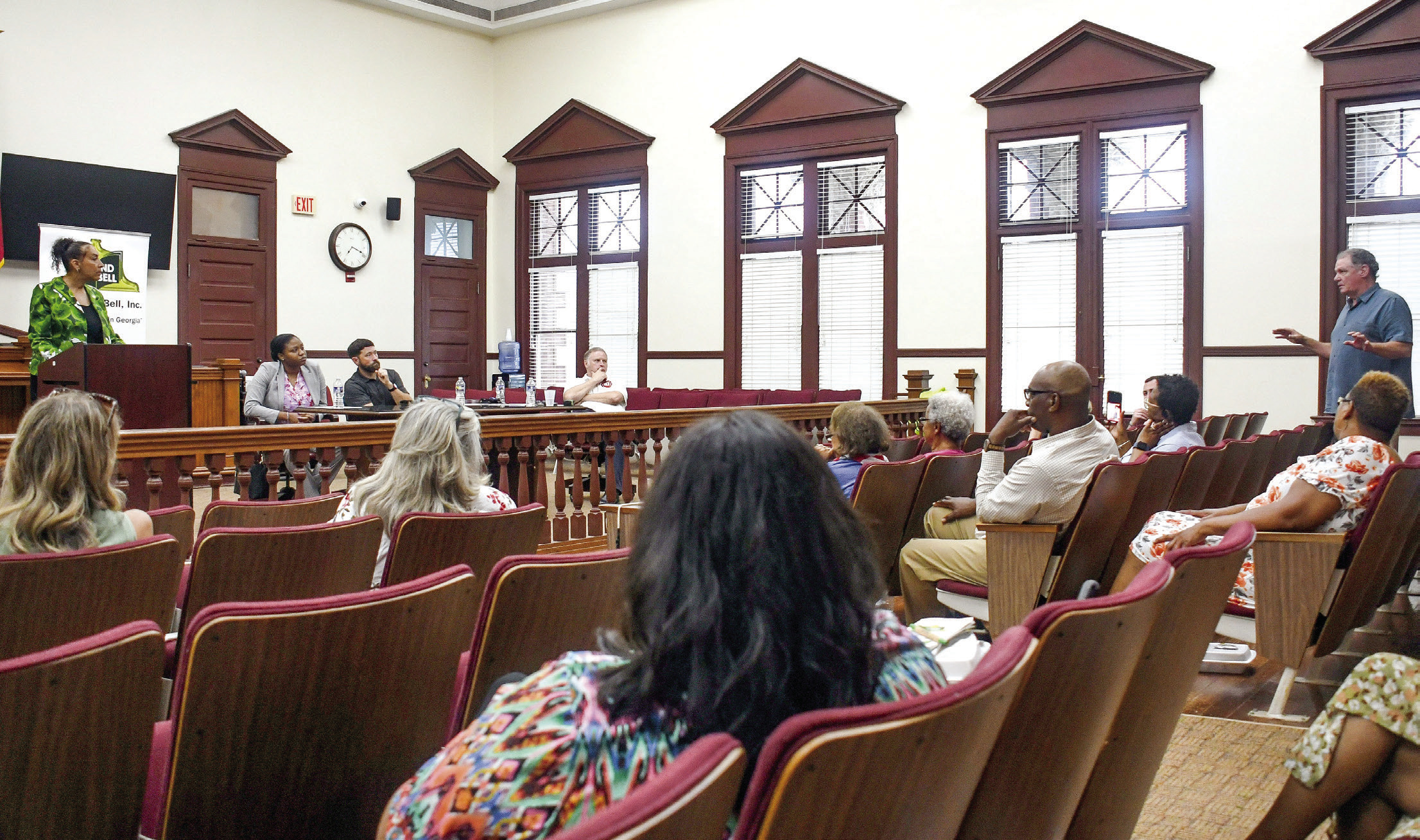
Several community leaders and officials turned out on June 17 at the Putnam County Courthouse in Eatonton to discuss and address the county’s serious opioid use and addiction issues, and what resources are available to combat seemingly endless problems related to opioid abuse.
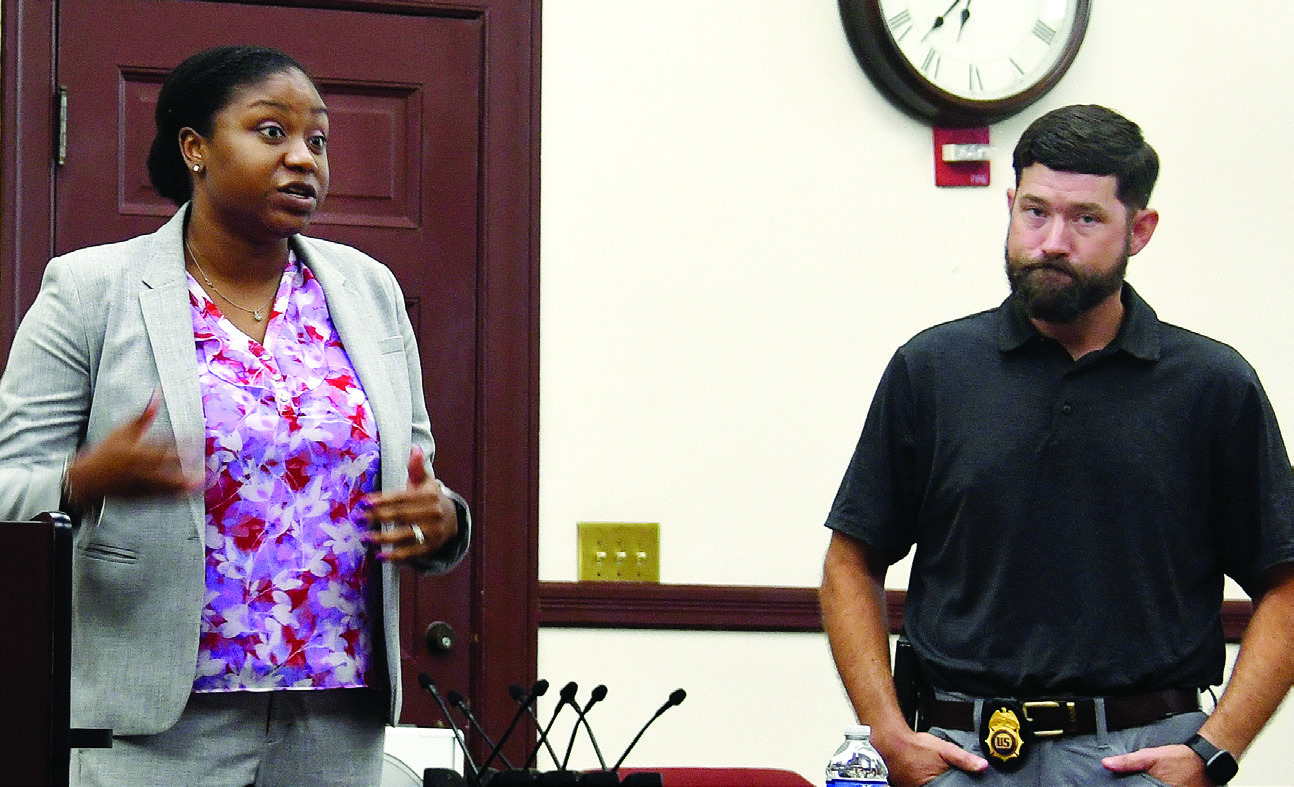
Hosted by Beyond the Bell Executive Director Sandra Dean, the Tuesday evening discussion in the main courtroom included, among others, Eatonton Mayor John Reid with City Councilmember Janie Reid, Eatonton Police Chief Howell Cardwell, Putnam County Sheriff’s Lt. Harry Luke, Eatonton Fire Chief Jamey Williamson, Acting U.S. Attorney Shanelle Booker, and Middle Georgia DEA Special Agent Tyler Vandenburg.
Dean opened the meeting by encouraging anyone with outdated prescription drugs, whether opioids or not, to dispose of them properly by depositing them in a locked box at Eatonton Police headquarters (214 W. Marion St.), rather than just flushing or throwing them away.
She also explained the state’s “Good Samaritan” law, specifically as it pertains to opioid abuse intervention.
“This law protects individuals who try to help people that may be overdosing on opioids or other drugs. If you think that they in danger, you are safe to intervene or call 9-1-1,” Dean stated.
She also stressed that individuals can safely administer a medication called naloxone, more commonly known by its commercial brand name, Narcan —a nasal spray that works by blocking the effects of opiates on the brain and restoring breathing.
“We offer Narcan training for whoever wants to take that; we will get someone from the health department to teach you how to administer Narcan, in case you come across that,” Dean said, adding that free, single-use Narcan samples also were available to meeting attendees.
“So, if you do feel that you are acting in good faith and someone is overdosing, or you just feel that they are, you’re protected by law,” she assured the audience.
Booker, the acting U.S. district attorney based in Macon, later lamented the scourge of fentanyl, a particularly potent synthetic opioid, as a particularly damaging force, but also clarified that both “good” and “bad” fentanyl exist. She explained that qualified doctors may prescribe fentanyl for legitimate medical use; however, even that can be abused with potentially deadly consequences.
Likewise, DEA Special Agent Vandenburg said illegal fentanyl is prolific in illicit pills found throughout Middle Georgia, including Putnam County.
“The most common way that we see it is a brown pill that’s pressed and labeled M30. They’re trying to make a fake oxycodone,” he said. “It is being placed in marijuana and other types of drugs as well.”
Vandenburg explained that certain dealers will lace marijuana, cocaine, or methamphetamine with powdered fentanyl to establish a user’s addiction to their supply.
“They don’t put a whole bunch in it; just enough to where you’re becoming addicted to that particular methamphetamine or cocaine,” he said. “They’re trying to get you to come back to them so that you don’t go to anybody else, so that they can get your business, for as long as it lasts.”
Both Luke and Cardwell lamented the effect of opioids in Putnam County schools, citing even pre-teens involved in several cases. Luke said vape pens in particular have become a significant opioid delivery method in addition to old-fashioned marijuana.
“It’s not a week that goes by that I don’t get a call, and when I go to the school, there are three kids sitting at the lunchroom table, slumped over because they’ve been vaping at lunch,” Luke said. “Most of them get it from their parents, too.”
Multiple audience members contributed anecdotal evidence of various drug abuses by fellow, local residents throughout the evening, with several also questioning why less than 30 people showed up to witness an opioid and addiction discussion that demands and warrants the community’s attention.
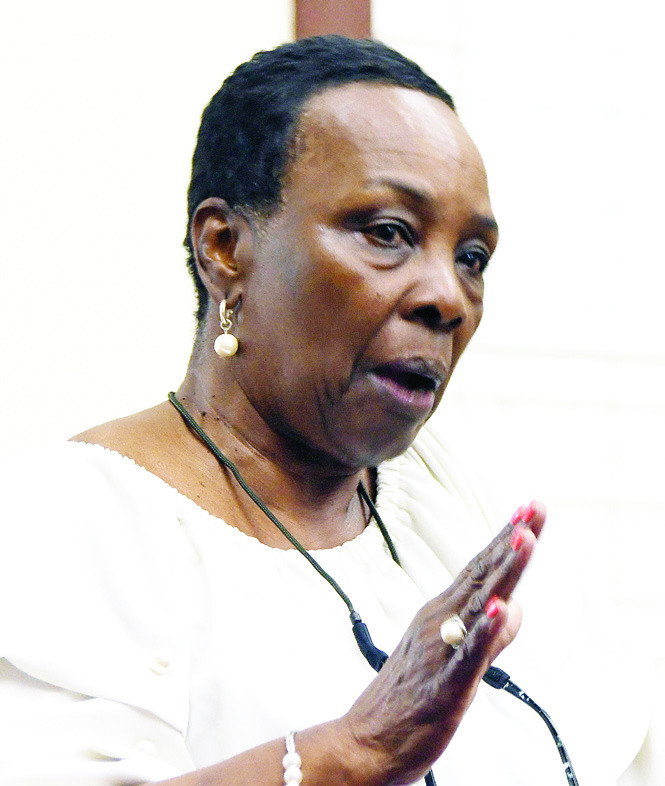
Councilmember Reid spoke to the issue. She said she suspected attendance would be relatively light for the initial Beyond the Bell meeting, but expressed confidence that the next meeting, scheduled for 6 p.m. on July 15 at God of Peace Ministries (601A S. Jefferson Ave., Eatonton), would draw a larger crowd.
“That’s exactly why we chose three different places to meet,” Janie Reid said. “Different people come to different things … we know without a doubt that a few people only show up at certain places. We may not have the masses, but we will have more people [at God of Peace].”
Ms. Reid also emphasized that city and county politicians and leaders have been collaborating for several years with the city’s police department and the sheriff’s office to address local drug abuse concerns, and insisted that progress has been made.
Still, she acknowledged much more work remains to be done, but reminded everyone in attendance of the African proverb of “it takes a village” to raise a child, the phrase made popular by Hillary Clinton in her 1996 book of the same title.
“You all may not believe that, but really, these things that you’re saying are not alarming to us. But we don’t like it, and we’re going to do what we can,” Janie Reid said. “And although we’re working on it — my whole life, I’ve been working on it — we still need to do more and with your help we’re going to try and get something positive done here.”