
Long before voting became common for Black Americans, residents in Eatonton and Putnam County fought through segregation, intimidation, and systemic barriers to cast their ballots.
That history — and concern that younger generations may not fully grasp the realities of the past — inspired a community discussion held May 9 at the Putnam County Administration Building. The event was organized by Putnam County District 2 Commissioner Richard Garrett in support of the Smithsonian Institution’s traveling “Voices & Votes” exhibit, currently on display in the same building.
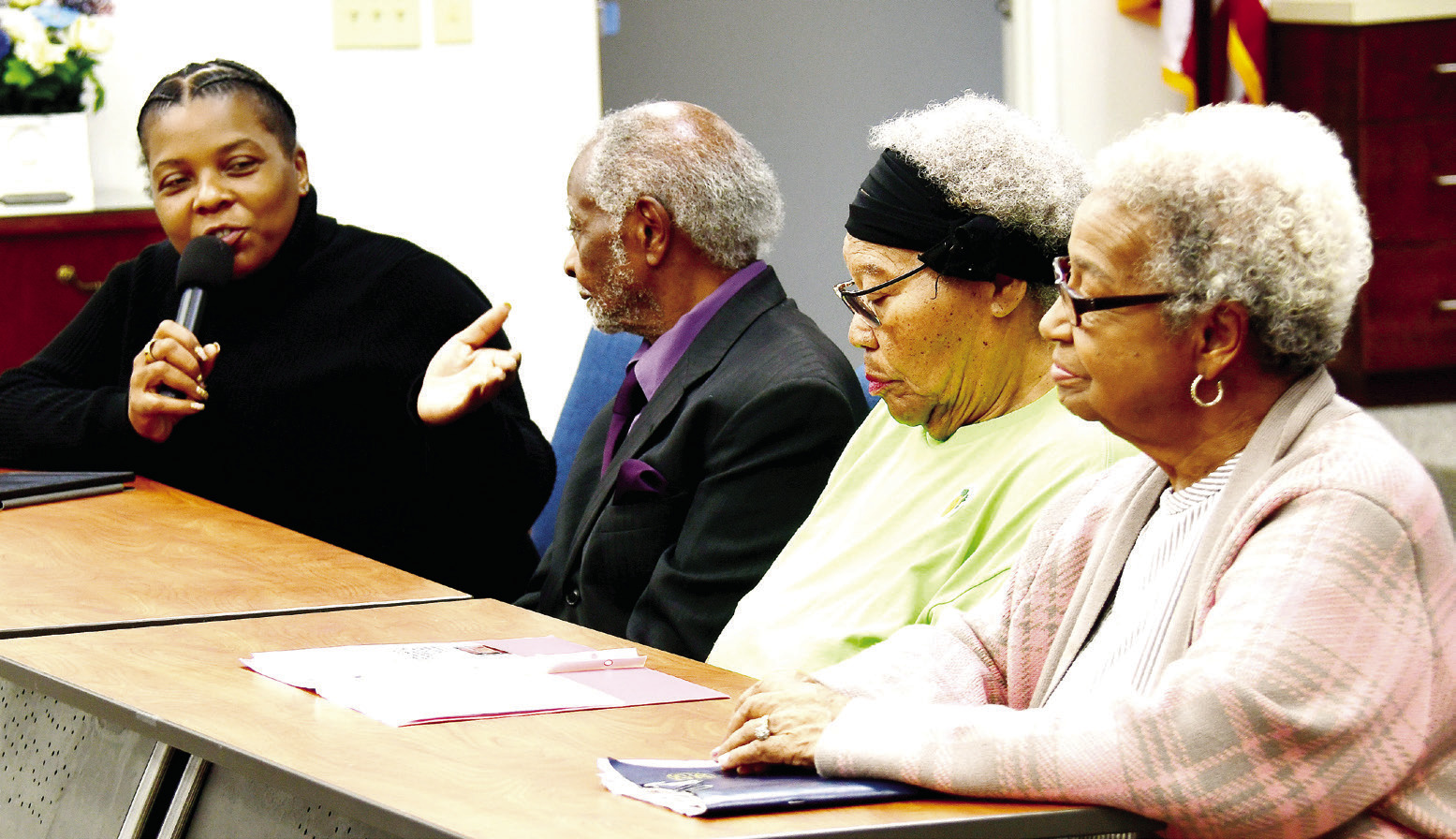
Moderated by Kilee Reid of the Butler-Baker Foundation, the panel featured lifelong Putnam County residents Georgia Benjamin-Smith, Rosie Dennis, and George Thompkins, with each sharing deeply personal memories about segregation, school integration, voting rights, and civic engagement.
“We had to go through a lot,” Benjamin-Smith told an engaged audience. “But what we had to learn was that one word that can handle the whole thing: unity.”
Much of the discussion centered on how hard-fought voting rights transformed local government and public life. Thompkins recalled the years before Black elected officials held office in the county and described the gradual changes following the Brown v. Board of Education ruling and school integration.
“When integration came in 1970 ... I moved from Butler-Baker to Putnam County High School,” Thompkins recalled. “I was one of the teachers ... it was a trial kind of thing.”
Thompkins described frustrations that remained after integration, including less-than-equal hiring practices that led him to sue the local school board. Later, he joined other local leaders in a federal voting rights lawsuit that helped dismantle at-large voting systems and create district-based representation.
“That case is well known,” Thompkins said. “It put to rest at-large voting, and they divided the city and county into districts instead.”
The change paved the way for the election of Black county commissioners and school board members across Georgia, including Thompkins himself.
Dennis reflected on the excitement of those early campaigns and the sense of accomplishment many residents felt after decades of exclusion.
“It really did give you that feeling of accomplishment,” she said. “You started from campaigning, and then poll watching, and then getting that we won.”
Still, Dennis said she worries many younger residents take voting rights for granted because they did not witness the struggle firsthand.
“There’s no way for you to know if you were not there,” she said. “People had to die, people had to march, people were in fear of their lives.”
Benjamin-Smith echoed those concerns while urging continued community conversations about local history and civic responsibility.
“If you don’t know history, it can be repeated,” she said. “We need to keep these programs going.”
The panelists repeatedly returned to the importance of community involvement, with Dennis lamenting what she described as the decline of the traditional family and neighborhood structure that once held communities together.
“Everybody looked after everybody’s child,” she said. “But now it’s just different.”
Benjamin-Smith, however, insisted she still believes in what she called the “village concept,” saying that adults must continue to mentor and correct young people regardless of social changes.
“These are our future leaders,” she said. “No matter what color they are, they’re all future leaders.”
Reid, who guided the conversation through questions about race, voting, and civic engagement, said younger generations need more opportunities for open dialogue across age groups and backgrounds.
“We should definitely love on each other opposed to be strangers,” Reid said. “It’s your paths and your stories and your experiences.”
Audience members also joined the discussion, calling for more town hall-style events and greater civic education for young voters. Several speakers noted declining voter participation among younger generations and frustration with growing political division nationwide.
Despite those concerns, the evening closed on a hopeful note.
“If you want to be a part of something, then you've got to do something,” Dennis said, encouraging younger citizens to participate in public life rather than just complain from the sidelines. “That’s all it takes, a little participation.”