
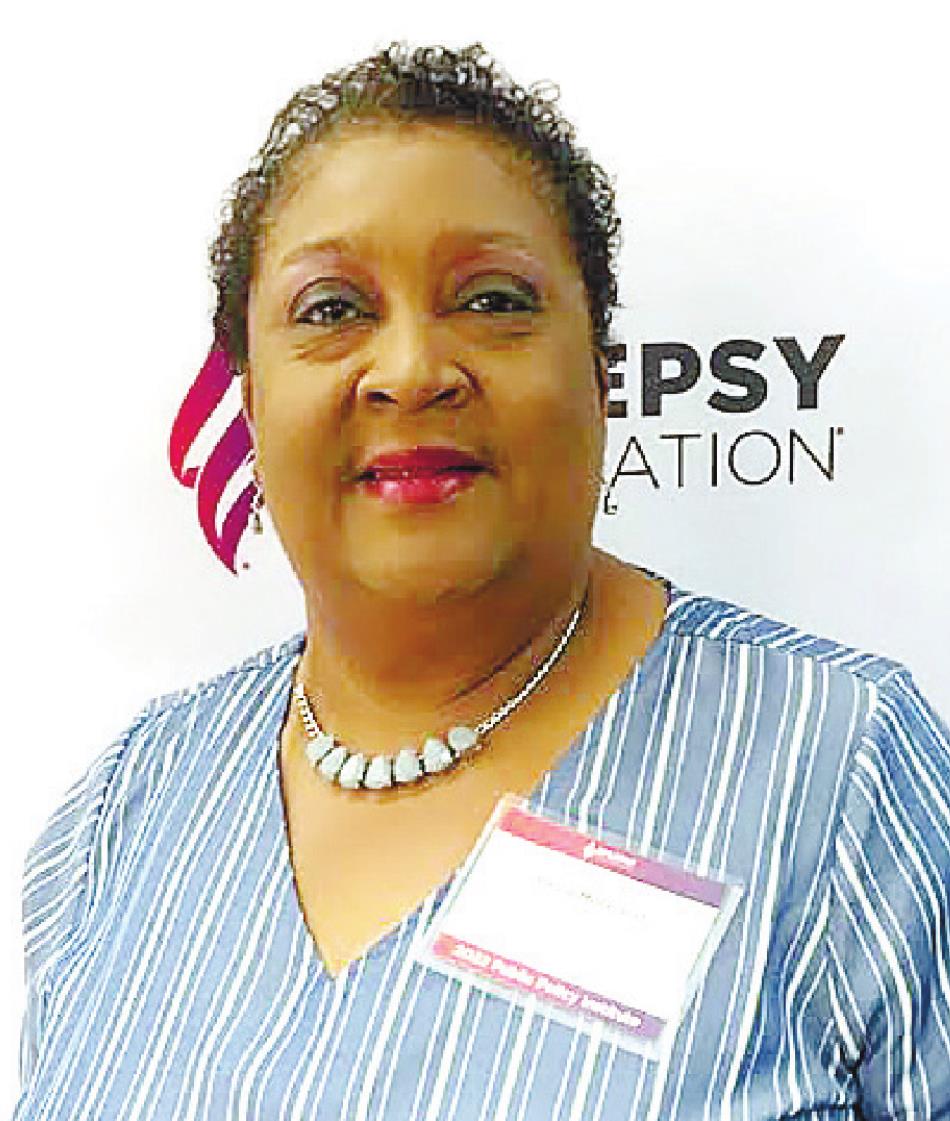
Last month, Eatonton native Paula Moreland visited Washington, D.C., as part of a multi-state lobbying effort to address congressional offices about legalizing cannabis as a medicinal drug for treating epilepsy.
Moreland, who now lives near Atlanta, stated the purpose for meeting with congressional leaders was to seek their support not only for medicinal-cannabis legalization, but in managing the cost of medicines, medical care, disability rights and education. She added that research doctors and professors from major universities also attended the conference to offer evidence cannabis can be a vital tool in treating individuals with epilepsy.
“The main thing was to come together as one big group of citizens who are suffering really from the same thing. And it included not just people with epilepsy, but caregivers, parents, family members and friends of people who have epilepsy, and children who have epilepsy. They were all there as advocates as well,” Moreland stressed.
“So we addressed Congress ... and got to speak to them and let them know where our heart was and how deeply we’re concerned about this effort for the medicinal treatment of epilepsy using cannabis.”
Moreland said she presented her case in detail to representatives of Georgia Sen. Raphael Warnock’s office and briefly spoke with the senator, too, as he was heading to a different meeting.
“We were able to quickly let him know who we were and what we were there for and thanked him for his staff bringing us into the office and sitting down to speak with us,” she said.
“What we found was a lot of them were not actually aware of how well cannabis has been used as medicine. They had heard some things, but they were not very aware of what the research showed.”
Moreland said she left Washington feeling “encouraged” by the amount of education going forth regarding legalizing medicinal cannabis application versus recreational use. Still, she suspects change will not come as quickly as she’d like to see.
“What’s holding it back, I think, is all the states having to go about legalizing,” she said. “That’s the key thing they kept telling us about, legalizing, and that’s why we were advocating for them to legalize it so the medicinal purposes on treatment can move forward quick.”
Moreland was diagnosed with epilepsy nearly 20 years ago and underwent brain surgery twice, eventually becoming one of the first patients nationwide to have a deep brain stimulator implanted in order to bring things under control.
She explained medicinal cannabis use eases the seizure-inducing affects of epilepsy through its calming influence on a patient’s neurological system. She added its dosage and application, typically through ingesting liquid tinctures or gummy-type “candies,” is dependent on the age and physical size of the patient.
These days, Moreland is doing well, she said, despite losing a promising corporate career to epilepsy after graduating from Virginia’s Liberty University. She now fills her days not only with advocacy efforts, but as a writer, producer and director of gospel-themed plays. They have been staged at Eatonton’s Plaza Theater and more recently at the decommissioned, historic Butler-Baker school.
“And every one of them that I’ve done, I let Eatonton have it first,” Moreland said of her productions. “Like Mama in the kitchen, I let Eatonton taste my plates first, and all of the proceeds (from the Eatonton shows) go to Mothers Against Crime.”
Her local, charitable efforts even led to the City of Eatonton declaring Feb. 9 as Paula Moreland Day, an honor she doesn’t take lightly.
“It’s definitely not about me coming and signing signatures and all that kind of stuff,” Moreland insisted with a laugh. “I make it strictly about the kids and the school members, teachers, and administration. Each year they select several students to come down and I honor those students on the day with gifts be based on their respectfulness and how they get along with others.”
Moreland emphasized, though, that for now her focus remains on advocating for legalizing medicinal cannabis to ease the suffering of people with epilepsy. She also wants to make certain that smaller communities are not forgotten in any advancements realized.
“My heart is in being an advocate because I love to bring a whole lot of things back to Eatonton. I mean, it’s one of the smaller cities that a lot of times the resources that I hear about are not being made available to,” she said. “So my advocacy is not just for this area, but I do want to do what I can to bring educational material and positive change home to Eatonton.”