
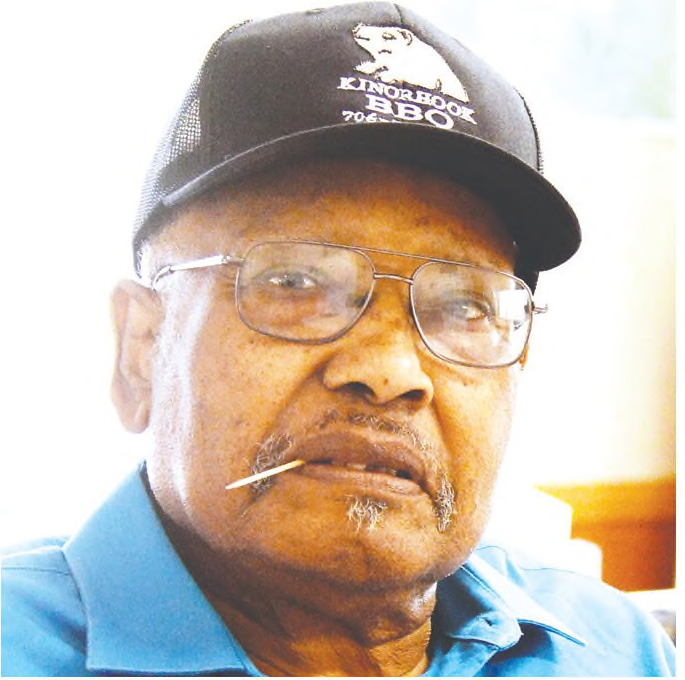
Over Labor Day weekend, Frederick Ward and his wife, Barbara, will host up to 200 people at a family reunion in a Milledgeville hotel.
Near and distant relatives will arrive from as close as down the street to as far away as Arizona, Michigan, and New York State - and all points in between.
The Wards are no strangers to hosting, though. As the proprietors of Kinorhook BBQ, just off Rabbit Skip Road on Mocking Bird Drive in western Putnam County, there are few native Putnamites who have hosted and fed more of their neighbors these last 20 years or so.
The barbeque place is idle for now, as both Frederick, 74, and Barbara, 73, have been dealing lately with various ailments in varying degrees. But both are more than ready to share some history and good times with kinfolk near and far.
“You know, everybody calls this area Kinderhook now,” Frederick points out. “But the truth is everybody used to joke about this area that everything here was either kin by blood or hooked by marriage, so they called it Kinorhook.”
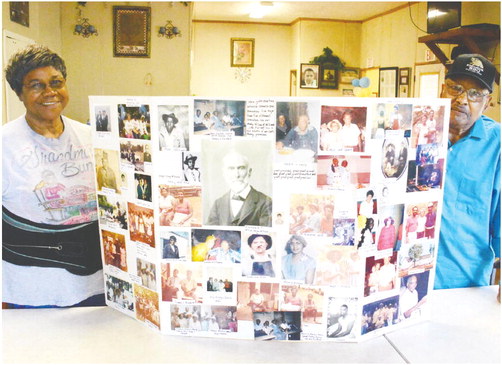
As part of his preparation for the Ward reunion, for the last several months Frederick has been going over old family photos and documents and anything else that might complete a thread of familial connection over the last 200 years or so. He’s uncovered what he believes are legitimate branches of a tall and tangled family tree that led to the likes of Martin Luther King Jr. and Ray Charles, among the most well-known native Georgians worldwide, and actor Danny Glover, a Californian by birth, but with a natural-born Georgia mother.
Also holding a prominent central positioning on the three-paneled photo collage Frederick put together is a black-and-white image of an elderly white man, William Nelson Williams, who Frederick says is his great-great-grandfather.
“Some of the plats and stuff I had found were all of Williams, my ancestors. He gave them their freedom and gave them a last name. A slave didn’t have a last name at the time, and he gave them all names and the big plantation land. It went from right here at Rabbit Skip to Jones County,” Frederick claims.
“He had some big land, but I don’t know whether it was giving them the land or just that he had those five black sons that he granted free or not, but he could’ve put some of his lands in their names.”
It’s a murky and convoluted but fascinating world that Frederick is exploring. He has helped, though, through cousins Hugh Williams Jr., Rhonda Sadler, and Linda Abrams.
“The four of us are getting the history and books together,” Frederick says, pointing out it’s important to everyone involved to share the family history through a reunion before some of its participants are no longer around to participate. “This is a Black thing that goes back to slavery when so many of them had run away or either was driven away or whatever. And after 1864, after the Emancipation Proclamation, they started getting families back together.
“The great reunion when all those families that had been scattered all over had run away and everywhere, they got ‘em all back together to create the great reunion," he added. "And that’s just been handed down through the years. And now and then the families just have to get together.”