
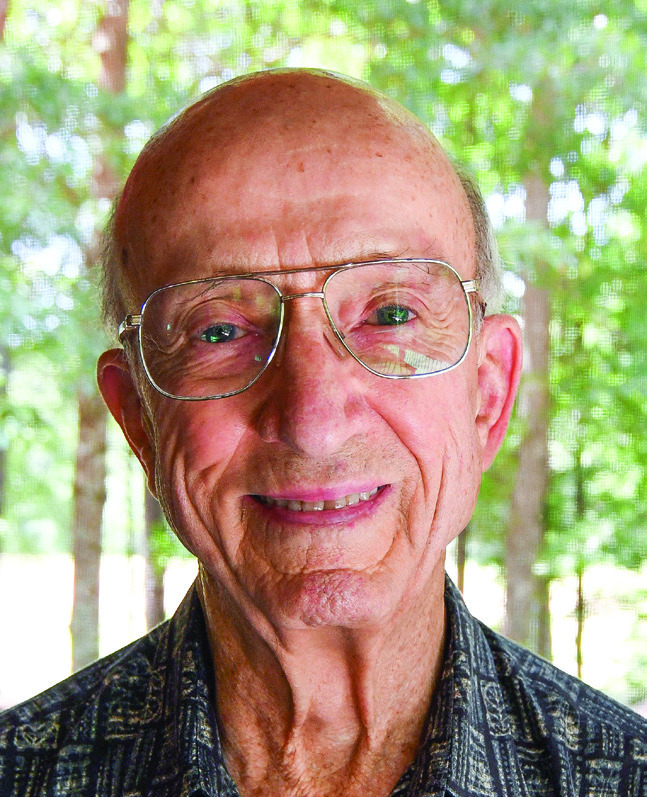
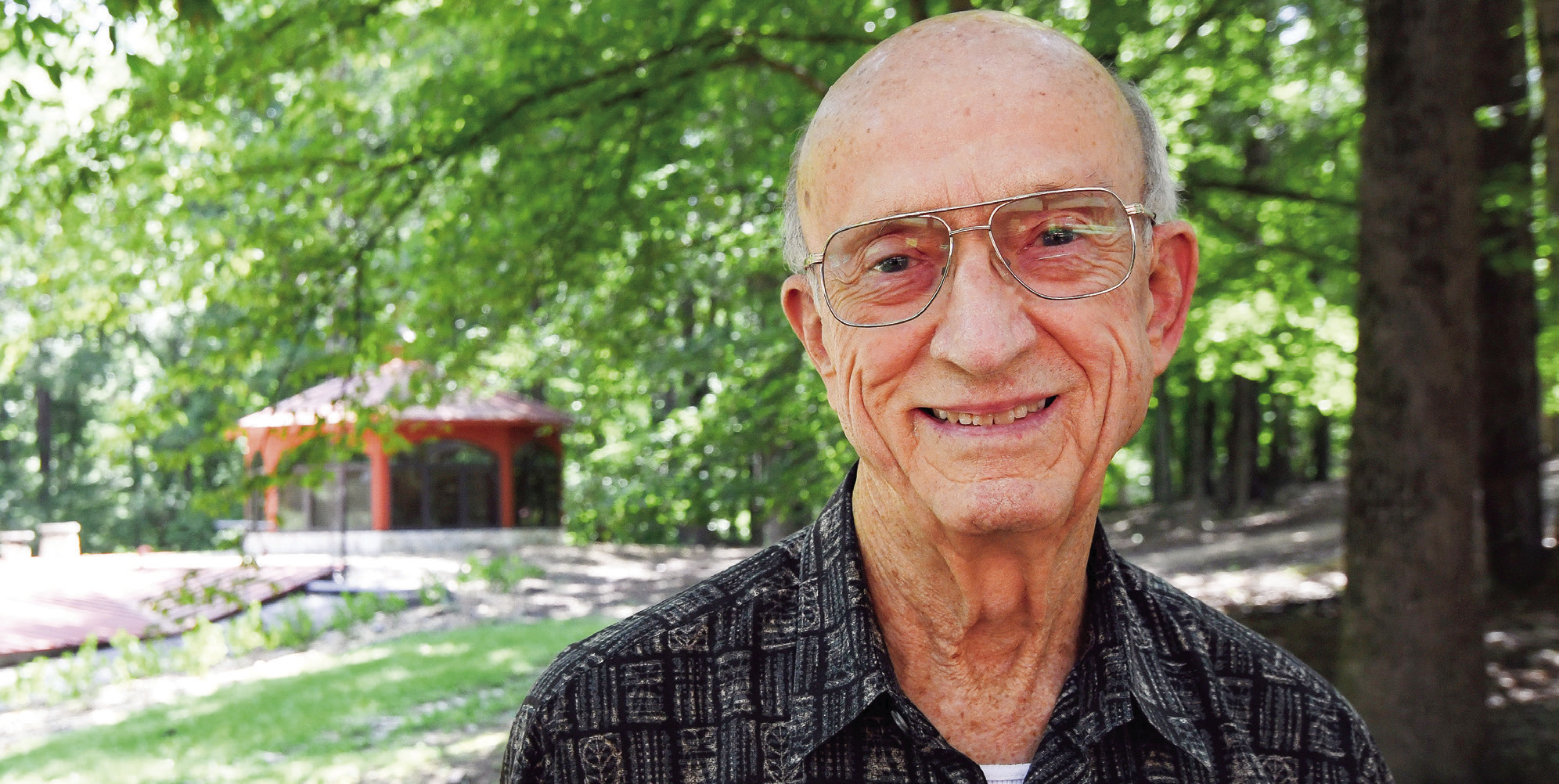
About a week before Tom Thompson turned 90 this June, he marked the milestone not with quiet retreat, but renewed vigor.
Just days before his birthday, he was in a Gainesville hospital undergoing a robotic heart valve repair. He was back home in Eatonton within less than 48 hours.
“I can walk for miles now,” Thompson happily reported. “I couldn’t before, but I can now, and I love being outside, working.”
That resilience, with equal measures of humor, curiosity, and practicality, has formed the backbone of Thompson’s life. A farmer, an innovator, a builder, and a civic leader, he has spent the better part of a century shaping not just his family’s land and legacy in Putnam County, but its schools, utilities, hospital, and politics, too.
Step inside Thompson’s home and you immediately sense his penchant for seeing the world differently. Built in the early '80s, it is a two-story octagon with its living area nestled mostly underground. Warmed in winter and cooled in summer by the steady temperature of the earth, a glass atrium rises like a transparent crown above ground, flooding natural light below.
The idea sprouted when Thompson was just 12 years old, sleeping in a unique basement bedroom his parents had carved out beneath the family home.
“It was the most comfortable room in the house, cooler than anywhere else in the summer, easy to heat in the winter,” he said. “That stuck with me.”
Decades later, juggling two businesses and raising a family with his second wife, Pam, he returned to the memory in 1980, then designed and drafted plans for his own subterranean sanctuary.
“I taught myself how to draw, but I can’t even do good handwriting, much less paint anything, but give me a drawing board and I can get it done,” Thompson declared with obvious pride. “So, I wanted it efficient, but I also wanted it to look good.”
He added there’s also “whimsy” in the details.
“Things that most people would never notice or even see,” Thompson said. “But it works, too,” he stressed.
Excavation for the house began on Labor Day 1981. Thompson and his family moved in three days before Christmas 1982.
Thompson’s life began in 1935 on his family’s Putnam County dairy farm, which at the time included about 40 cows, but he also grew up in downtown Eatonton, where his father owned and ran a small grocery store on Jefferson Avenue, facing the Putnam County Courthouse.
He enjoys recounting days as a 7-year-old grade schooler, selling peanuts in partnership with his father, who he said did not believe in allowances (“entitlements,” his father called them), but was happy to provide an “opportunity” to young Tom by financing his peanut sales, but only through a well-defined contract that split the profits.
Following graduation from Emory University and a stint in his early 20s with the U.S. Air Force and Reserves, Thompson returned to Eatonton in 1960, when there were still about 165 dairies in operation.
Upon leasing his father’s relatively small dairy operation, Thompson, then 24, soon went about automating the feeding process and wound up selling the equipment to his competitors, far and wide. He eventually grew his herd to more than 1,200 dairy cattle, the largest in the county at the time, and the dairy equipment business thrived for decades.
Thompson also served on the Atlanta Dairy Board and Georgia Milk Producers Board, but his knowledge and plainspoken style pushed him far beyond Eatonton and Georgia. In the early '70s, he was tapped to testify about the state’s dairy industry before the U.S. Senate Agriculture Committee. Expecting a quiet hearing, he instead found television cameras and senators puffing cigars waiting for him in Washington, D.C.
Undaunted, and without a scrap of paper in front of him, Thompson recalled delivering his testimony off the cuff.
“I just talked to them like I talked to anyone,” he said, crediting his Putnam High School debate coach for giving him the poise for a performance that resonated beyond the committee walls.
From then on, Thompson became the face and voice of Georgia dairymen in Washington and in the press.
Still, perhaps his most lasting work happened closer to home after he and his first wife called together local parents to discuss creating a new school. Within months, Gatewood School opened its doors; its original floor plan sketched by Thompson on a long-gone paper napkin. He went on to serve as Gatewood treasurer, and later chairman, helping guide the institution for more than a decade.
That same sense of stewardship carried into utilities and politics. In 1985, Thompson led a grassroots campaign to reform Tri-County EMC, the regional electric co-op. What began with a petition drive and a dramatic showdown ended with Thompson serving as chairman of the Tri-County board for 29 years, during which he was credited with bringing transparency and accountability to the organization.
Later, at friends’ urging, he ran for chairman of the Putnam County Board of Commissioners. Thompson won by a two-to-one margin but kept his promise to serve only one term.
“If I can’t make a difference in one term, I’m not doing a second,” was a mantra that Thompson firmly adhered to.
Thompson’s civic contributions extended beyond leadership roles, too. After his father died in November 1962 of Hodgkin’s disease, the Thompson family donated the land upon which Putnam General Hospital rose.
“My dad said, ‘The people of Putnam County have been good to us. Do something good for the county,’” Thompson said.
Today, he continues that commitment as chair of the hospital authority.
For all his accomplishments, Thompson shrugs off the idea of personal legacy.
“We don’t own anything,” he insists. “We’re just caretakers. I’ve always tried to make sure and leave things good enough that someone else could use them after me.”
Asked what has guided him through nine decades, Thompson leans on both faith and pragmatism: “Stay prepared. If you’re ill-prepared, you can’t do it, whether you want to or not.”
“And think beyond yourself,” he added. “Life isn’t about how much you can get; it’s about what you can give.”
More than anything else, though, Thompson advocates adopting and retaining a positive attitude. “Negativity gets you nowhere,” he said.
For Tom Thompson, success has never been measured in wealth or recognition, but in service — to family, neighbors, his county, and his country.
“Really, what you do for others should mean more to you than whatever you may have done for yourself.”