
Editor’s note: The symmetry of 52 weeks in a year and 26 letters in our alphabet inspired us here at The Eatonton Messenger to embark on an alphabetical journey every other week in 2023, looking at something – or someone – unique, significant, unusual, or just plain interesting in Putnam County, Georgia, home to 10 different locations listed on the National Register of Historic Places – including the Putnam County Courthouse as part of Eatonton’s official historic district.
Heading north on Hwy 441, not long before making the transition from Putnam to Morgan County, a left turn onto Ponder Pines Road will take you a couple of miles west to part of the secondlargest egg-producing operation in the country.
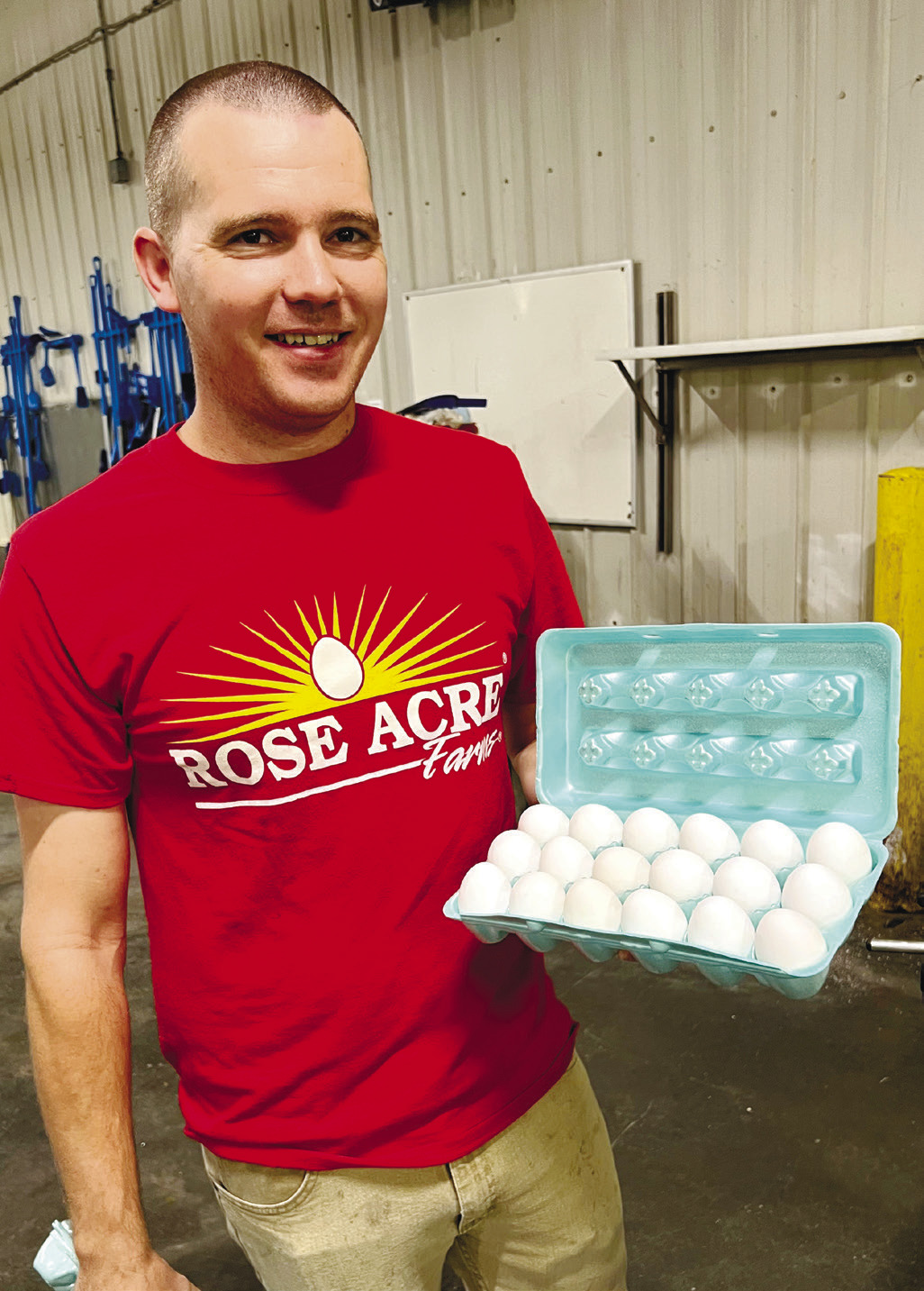
One of 15 Rose Acre Farms facilities nationwide, the Putnam County location produces between 850,000 to 1.1 million eggs per day, plant manager David Larson said. Up to eight fully loaded tractor-trailers will pull out daily, headed for distributors that will then forward the fragile cargo to individual stores and restaurants.
It takes almost 1.2 million chickens to lay that many eggs every day and locally they’re housed in 11 buildings, with each of those up to 25,000 square feet and housing up to 200,000 birds in each of the three newest structures, built about 10 years ago. Approximately 80,000 to 90,000 chickens live in each of the original eight chicken houses, constructed in the late 1990s.
Larson said the birds arrive at the plant when they’re about 18 weeks old and ready to start laying eggs. They will live about 110 weeks in the chicken houses with their feed adjusted by an onsite nutritionist who determines the specific mix of corn meal and other grains each group of chickens will require, largely based on age. After two years, most birds will be fated for a trip to a rendering plant where they eventually end up as pet food.
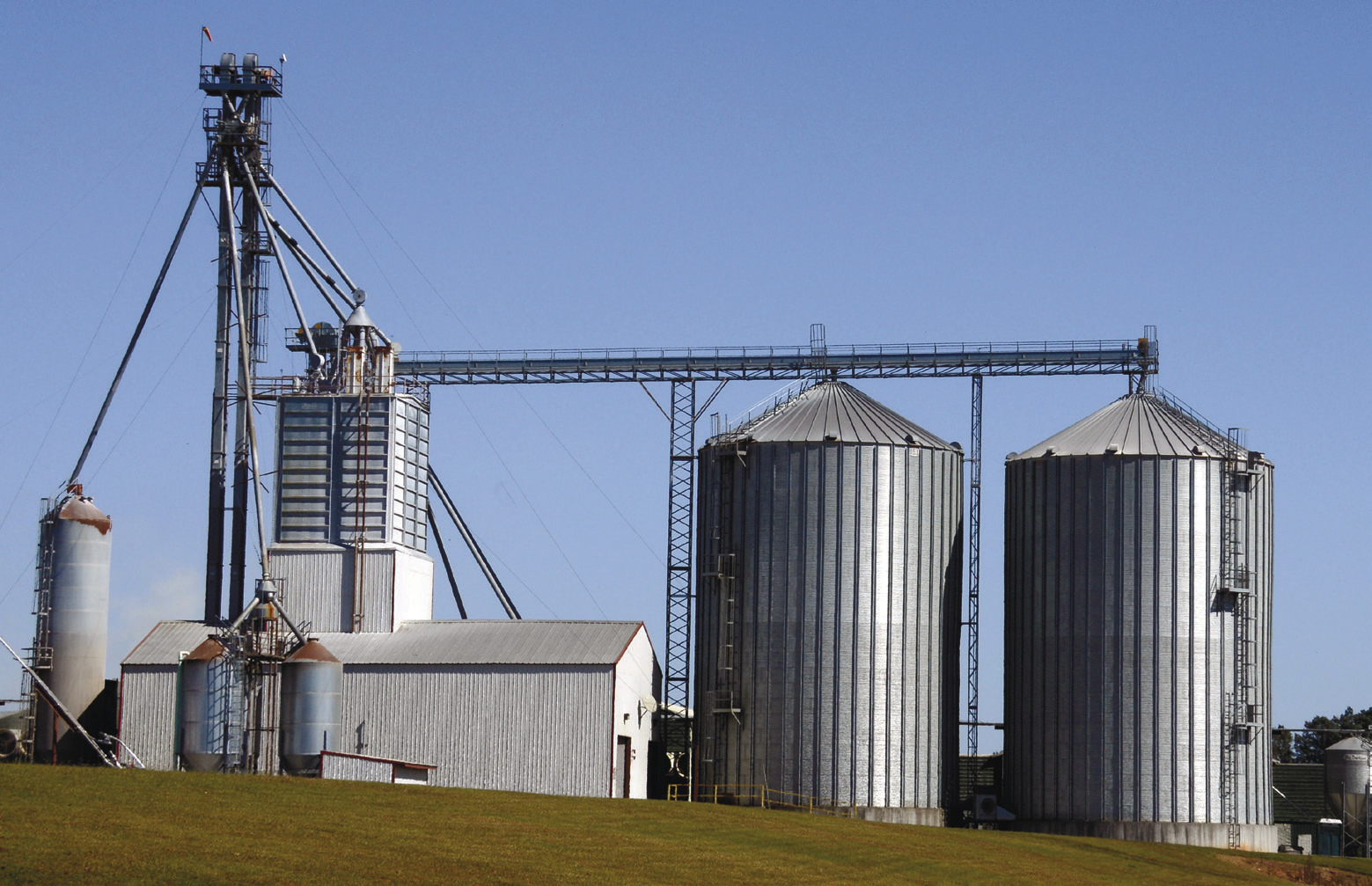
Rose Acre has its own grain mill at the Putnam site, where assisted by computers, technicians mix the feed precisely as instructed, then a series of augers lifts it to a point more than a hundred feet high where gravity takes over and the feed is routed through several large, metal tubes to various hoppers on the ground.
There is very little human contact with the feed as it then resumes its journey to each chicken house through many more series of tube-encased augers.
The company embarked in 2013 on an initiative to go cage-free at its facilities, but as an older facility, Larson said the Putnam plant has “conventional” accommodations for its chickens.
“All of our new construction for the past four or five years has been cage-free at our other locations … I’m sure at some point it will change here, too. It just depends on the economics and the market. But it is kind of the trend of the industry,” he added.
Chickens require about 16 hours of light per day in order to maintain healthy egg production on an individual level but are relatively inactive at night.
That requires just a couple of employees through the wee hours to monitor the facility for fire or any other threat to the birds, as well as do temperature checks every two hours for each chicken house to make sure they don’t get too hot, Larson explained. Most labor shifts at the egg plant begin at 6:30 a.m. and last until mid- to late-afternoon, he said.
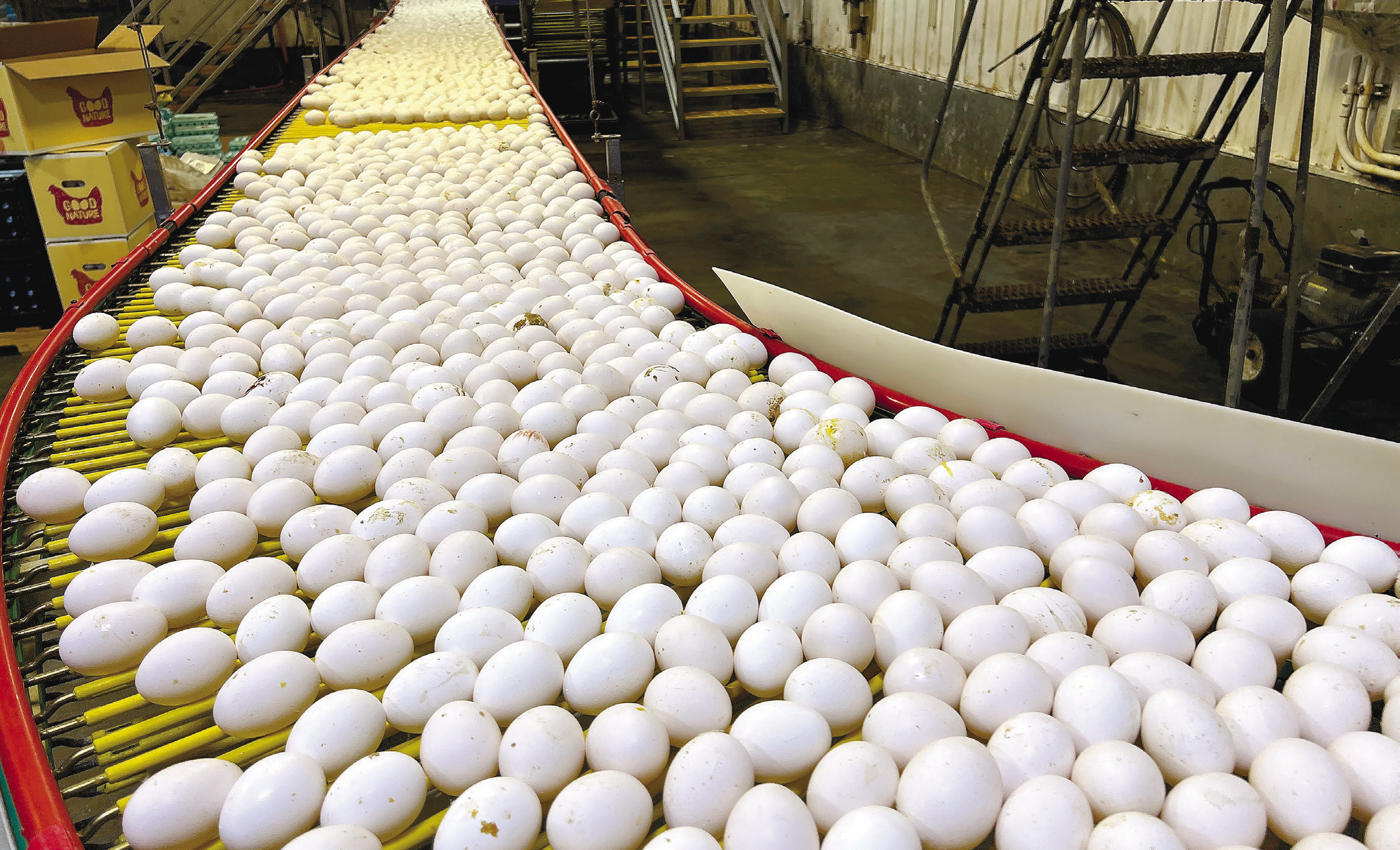
Once the sun is out, the eggs start coming, practically non-stop for hours on end. An extensive, complicated network of conveyor highways bring eggs from the chicken houses by the thousands, by the tens and hundreds of thousands, with remarkably few interruptions, to the cleaning and sorting and packaging parts of the operation.
“We start running eggs at 7 a.m. and we’ll stop around 4 or 5 p.m. and then our sanitation crew comes in around eight o’clock at night and they’re working until four o’clock in the morning,” Larson said.
The eggs enter the building dirty, sometimes cracked or even outright broken. They are initially washed en masse, then travel through a series of sophisticated inspections by machines that look for dirt, check for cracks and then weigh the eggs for sorting, but always under the trained, watchful eye of a human operator.
One inspection employs a series of hi-resolution cameras that rapidly examine rolling eggs on a conveyor, searching for dirt. The next inspection involves bouncing sound waves off the shells and based on the echo, deciding which eggs might have minute, indiscernible cracks.
From there, high-intensity ultraviolet light is shined atop the eggs as they roll by, with mirrors below to reflect the light back up to hit every surface point and thoroughly disinfect each shell with no contact or chemicals employed.
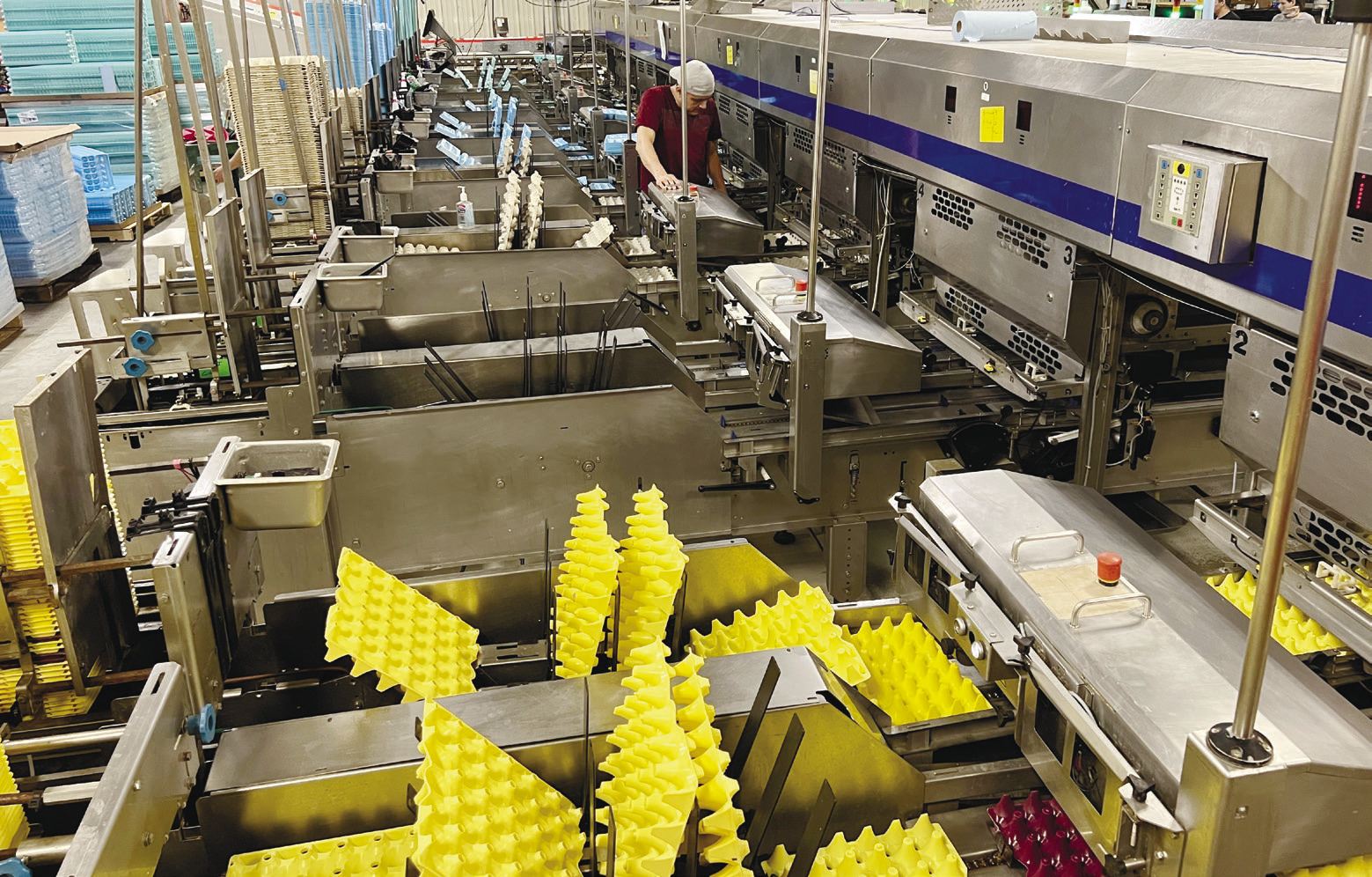
Once the eggs make it through the gauntlet of tests, they enter a new packing line where they’re again sorted and mechanically guided to appropriately sized containers for packaging. Workers eventually remove each egg-packed foam tray or clam-shell container to carefully stack them for shipment.
“There’s probably hundreds of thousands of cartons here at any given time,” Larson said. “In fact, we’re building more dry storage for them right now.”
Regardless, before any pallets of eggs leave the building an onsite USDA inspector can randomly select cartons of eggs for testing, ensuring only safe, edible products ever leave the premises.
For anyone searching for work, Larson confirmed Rose Acre Farms is hiring. He suggested visiting the company online at goodegg.com and going to the careers section to see current opportunities.