
Editor’s note: The symmetry of 52 weeks in a year and 26 letters in our alphabet inspired us here at The Eatonton Messenger to embark on an alphabetical journey of Putnam County every other week this year, looking at something – or someone – unique, significant, unusual, or just plain interesting.
When Tom Thompson arrived back home in Putnam County, barely out of his teens after being drafted and serving overseas during World War I, he returned to what once was a small but profitable family cotton farm reduced to a shell of its former self by the boll weevil infestation. Undaunted, Thompson secured a job at Hearn & Greene, a downtown Eatonton hardware store (now the Chamber of Commerce building), saved a little money and eventually opened his own grocery store near where the Pex Theater stands.
Thompson eventually branched out to become a successful dairy farmer and significant landholder in the county until he died at 74 years old, late in 1962 as a very early chemotherapy patient.
Before passing, though, Thompson instructed his son, Tom Jr., who still lives in Eatonton, to take some of that land “and look for something you can do that would be of benefit to the county.”
At the same time, the entire country was going through a hospital-building boom, largely due to the Hill-Burton Act of 1946, an initiative by the Truman administration to provide matching federal grants for the construction of public and non-profit private healthcare facilities.
By late 1965, Thompson told the rest of his family he’d decided to donate land to build a hospital in Eatonton, and although never a Hill-Burton facility, records show that on Jan. 4, 1966, an almost-square 12.2 acres of land was deeded free of charge for what would open in 1968 as Putnam General Hospital.
Originally constructed in a simple X shape, the hospital opened as just a five-bed, basic care facility, but over the ensuing decades, it has been renovated and added onto several times, until now sporting 22 beds, all in private rooms with private bathrooms attached, plus an intensive- care unit added in 1978 with three dedicated beds.
PGH Foundation Director Tracy Stickley explained the hospital is limited to 25 inpatient beds to remain a Critical Access Hospital (CAH), which means it is federally designated within the Medicare Rural Hospital Flexibility Program that aims to improve and maintain higher standards of healthcare and emergency services in rural areas of the state.
In Georgia, that means CAH facilities must accept Medicare patients, maintain a current acute care hospital license, and provide at least one inpatient case per day.
Additionally, PGH must meet the same standards for surgical procedures as general acute-care hospitals and must provide emergency services, including always having a qualified on-call physician available within an hour. Similarly, 24-hour emergency care must be available seven days a week, though a CAH hospital also is allowed only an annual average 96-hour (four-day) length of stay.
Stickley said an average of 11 beds remain occupied most days at PGH, though it was operating at capacity many days during the recent COVID pandemic.
Currently, the hospital has 104 full-time employees, 47 part-timers and approximately 90 contractual employees. There are 16 full-time and two part-time physicians on staff, plus several consulting physicians. “PGH is currently in negotiations with an orthopedic surgeon, a neurologist, and a vein specialist,” Stickley added.
According to Putnam General’s CEO Alan Horton, among the hospital’s stated goals are efforts to improve access to cardiac rehab and rehab services following a stroke to improve outcomes that disproportionately affect minorities in rural areas.
“One positive finding is that older adults who present to rural hospitals with very severe cases of what’s known as ST-elevation myocardial infarction (STEMI) have similar outcomes to those in larger, urban areas,” Horton said. “Clearly, there has been a drop in the rural-urban gap in outcomes for the most emergent type of heart attack over the past decade as a result of concerted public initiatives such as regional systems of care and transfer protocols.”
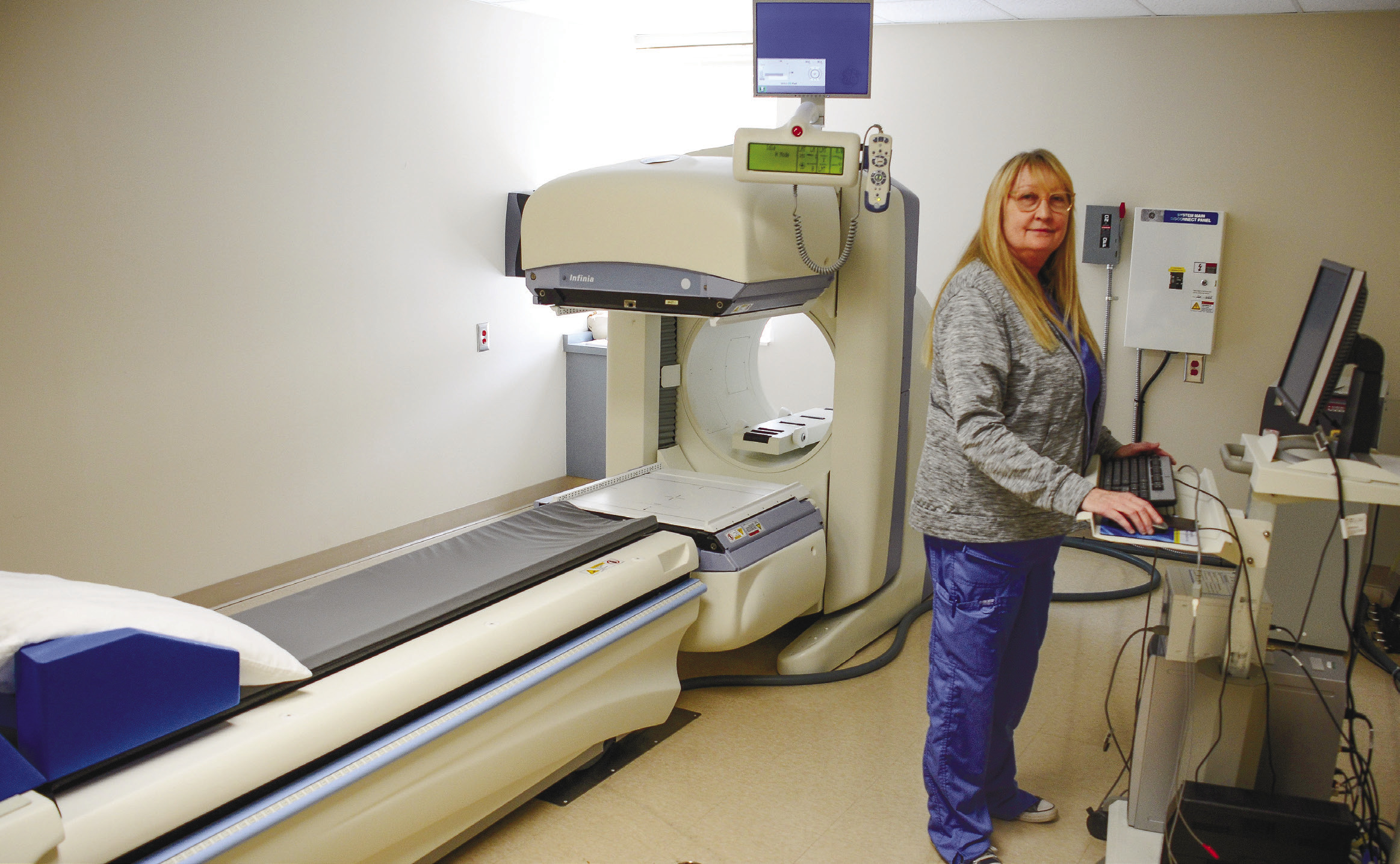
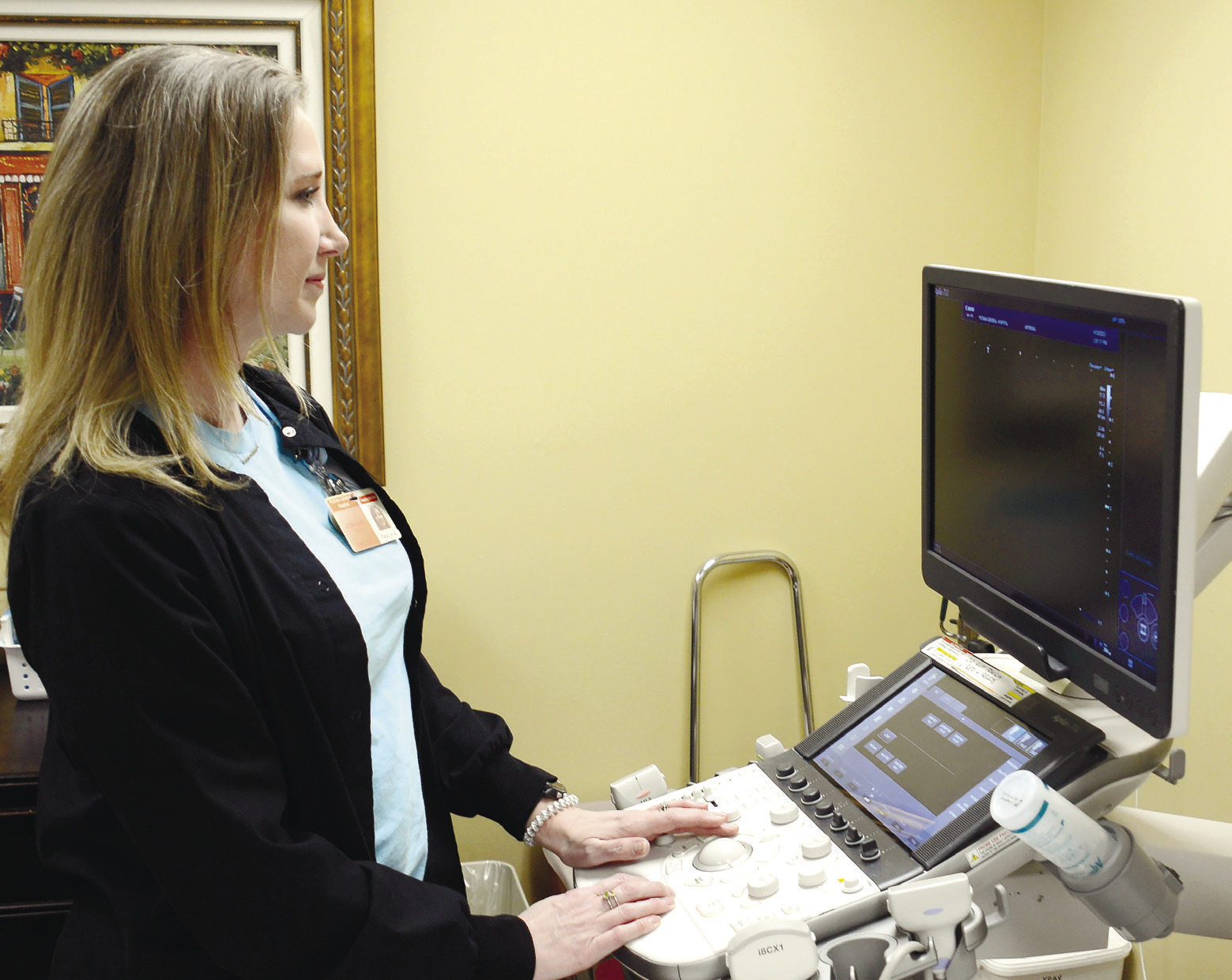
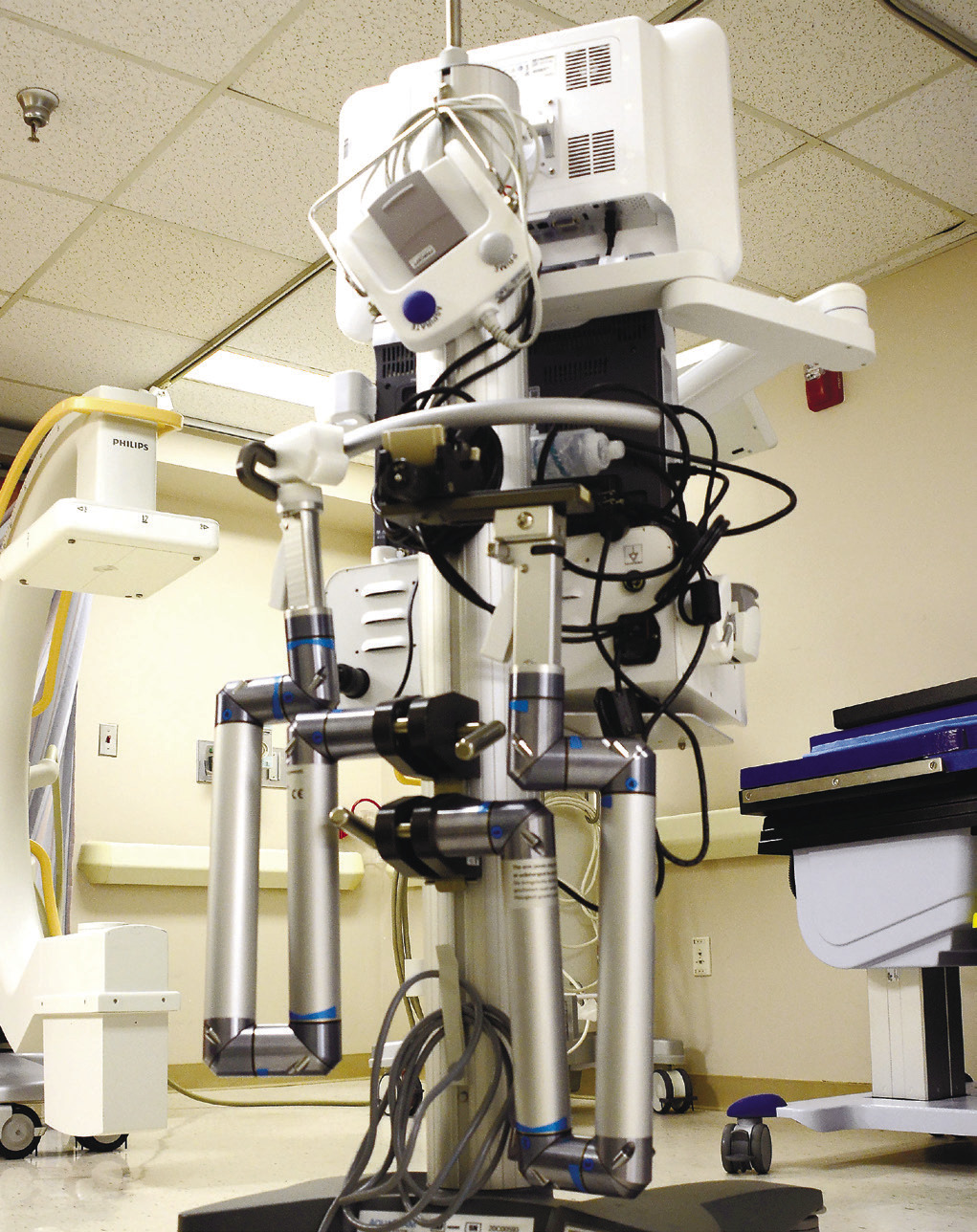
Among the departments at PGH is a Radiology/ Imaging unit that in addition to common X-ray machines also maintains an in-house 32-slice CT scanner, a mobile MRI unit that’s onsite “probably five days a week,” according to Stickley, a 3-D mammography machine, ultrasound bone density testing, echocardiography, nuclear medicine, and nuclear cardiac studies, and ultrasound-guided breast biopsies, among several other capabilities.
There also are respiratory therapy, cardiac rehabilitation and medical/surgical inpatient facilities, along with all-important 24-hour, seven-days-a-week emergency room services for when minutes and even seconds can count so much for an injured or suddenly stricken patient.
All licensed staff in the PGH emergency department are certified in advanced cardiac life support (ACLS), as well as pediatric advanced life support (PALS), with many also specifically trained and certified in trauma nursing.
PGH is prepared to stabilize and treat many injuries or conditions on site, but also routinely prepares patients and arranges emergency transport to larger, more specialized facilities when necessary.
After being named local Business of the Year in 2017 and Corporate Citizen of the Year in 2021 by the Eatonton-Putnam Chamber, Horton and Stickley agree the biggest recent boost for the hospital came just last year when it was able to pay off approximately $6 million in debt to Navicent Health, thanks to the Georgia HEART (Helping Enhance Access to Rural Treatment) program that allows state taxpayers to designate up to $5,000 of their expected yearly tax burden ($10,000 limit for married filing jointly or many businesses) to support the rural hospital of their choice.
To learn more about HEART visit online at georgiaheart.org or call Stickley at 706-923-2028.
“This is the ideal way to support your local rural hospital,” she said. “This represents money you would have to pay anyway, but through HEART you can designate your money stays in your community, or in the community of your choosing, say if you live in Atlanta but still want to support your hometown hospital or a hospital like ours near your lakefront home.”