


Georgia College & State University and the Middle Georgia Regional Library partnered to gather the oral history of Central State Hospital through a grant program funded by the Institute of Museum and Library Services.
“We met the overall goal to educate the community about mental health care,” said Deputy Director of the Middle Georgia Regional Library Mark Bohnstedt. “Though this symposium is the symbolic end of the grant. It is not the end of the project, to collect and maintain the history of Central State Hospital.”
The symposium 'Remembering Central State Hospital: A Community Memory Project' was the finale of the grant, bringing the community together at the Chapel of All Faiths on the CSH grounds. At the beginning, Bohnstedt gave an overview of the project.
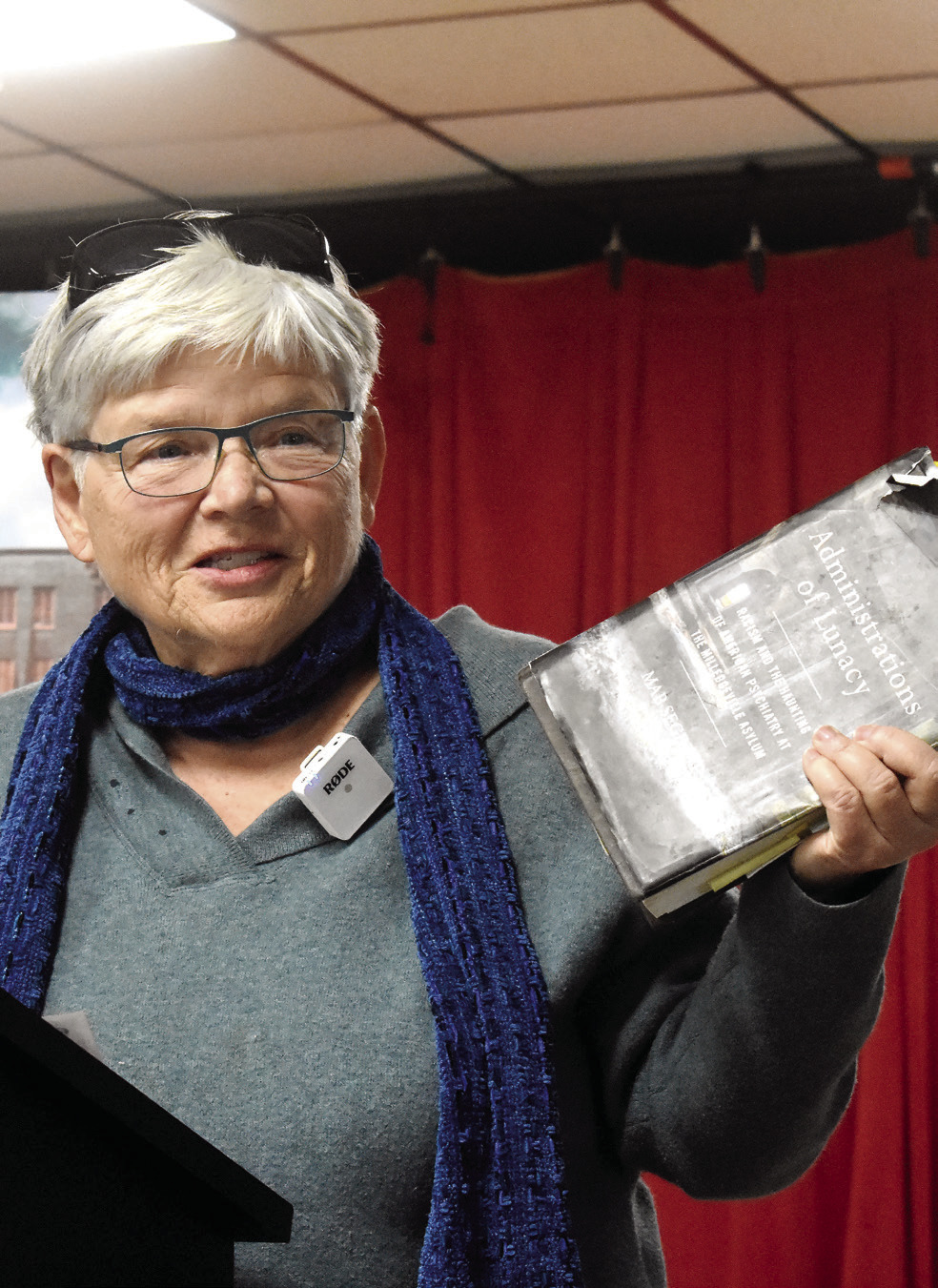
Then, seeking Asylum photographer and curator of the Fast Fading History of Central State Hospital Museum Jessica Whitehead, along with author Mab Segrest of Administrations of Lunacy: Racism and the Haunting of American Psychiatry at the Milledgeville Asylum, served as keynote speakers of the event.
Whitehead is a local historian, photographer, and board chair of Georgia’s Old Capital Heritage Center at the Depot.
Over the years, she has recorded CSH’s disrepair through her Seeking Asylum exhibit and her photography book, which is still being edited. In May, Whitehead opened the first exhibit in the heritage center, which is a mini museum dedicated to the history of Central State Hospital.
“My photography could be described as moody and dramatic, which seems fitting, all things considered. When people came to view Seeking Asylum, they spoke of the beauty in the shadows and the vibrant colors. Many told stories of the hospital’s beauty before the buildings were deserted and left to decay. For those who worked on the grounds, I’ve been told incredible stories that are both shocking and disturbing. I’ve also been told stories of beautiful relationships between caregivers and patients,” said Whitehead.
“Central State Hospital is the story of extremes. Overcrowding, understaffing, limited resources, and cruelty were issues that faced the hospital in its earliest years. There is also no denying that in its walls, there has existed an unwavering kindness and gentle care for patients and a loving community that supported those who lived and worked within the institution,” Whitehead added. “This reality is the story of many old and new institutions. This alternating reality is also the case of mental illness as well. The height of happiness and the lowest despair, the lucidity and the delusions, the multifaceted faces of those with the severe mental diagnoses juxtaposed with those who can function in society with limited care.”
Whitehead advocates mental health and worked in the industry for over 14 years. While Whitehead spoke about her museum, her photography, and the Depot renovation project, the focus of her speech was about her own journey with mental health and the struggle with mental health, even as an educated woman.
“I am Jessica Whitehead Smith, bachelor of science in psychology, master of science in human services with a specialization in counseling, certification in professional counseling, single mother to Jayden and Izabella, president of Georgia’s Old Capital Heritage Center at the Depot, chairwoman of the executive and programs committees, interim supervisor for Alex Gray and Evelyn Evans, judicial assistant to Superior Court Judge Terry N. Massey, curator and director of the Central State Hospital Museum, and mental health advocate. I am diagnosed with Attention Deficit Hyperactivity Disorder, Dissociative Disorder, not otherwise specified, and Post Traumatic Stress Disorder,” said Whitehead. “My photography tells the story of Central State Hospital, once the largest mental asylum in the world. It tells the story of the mentally ill. It tells my story. It may tell your story, and we are all seeking asylum.”
Whitehead connected her story and the stories she’s been told and discovered over her journey of establishing the museum to the title of her photography. Seeking means 'to search for,” and asylum refers to “an institution offering shelter and support to people who are mentally ill.”
Seeking Asylum pays tribute not just to those who sought refuge in CSH but to those in the modern day who seek a place of support, as Whitehead did throughout her childhood.
On the other hand, Segrest spoke about her research journey and the connection of racism to CSH. Her book explored the history of the “racist origins of psychiatry, through the story of the largest mental institution in the world,” according to its Amazon biography.
Segrest, who grew up in Tuskegee, Ala., during the civil rights movement, felt empowered and called to tell this story as a woman affected by the conversation and fight for human rights. Her previous works pay tribute to the LGTBQ+ community and her work “in the 1980s countering Klan and neo-Nazi movements in North Carolina,” according to her biography.
“I know a story when I see it, and it’s a hell of a story to tell,” said Segrest. “It’s a story for the people of Georgia. It (Central State Hospital) deserves history.”
In Segrests’ speech, she highlighted that the institution was “built on native land and paid for by the federal theft of native land” and that slaves built it on top of the history of those who lived and worked there.
She expressed sadness at the way the institution has been treated since closing. As she closed her speech, she called everyone present to action to fight to preserve the memories and lives lived and lost at CSH, whether it be by recording its history, creating a memorable send-off for the buildings that will be torn down, or something else.
The symposium represented this sentiment: the end of one project to preserve its history and a call to continue this preservation and memory beyond the grant cycle.