

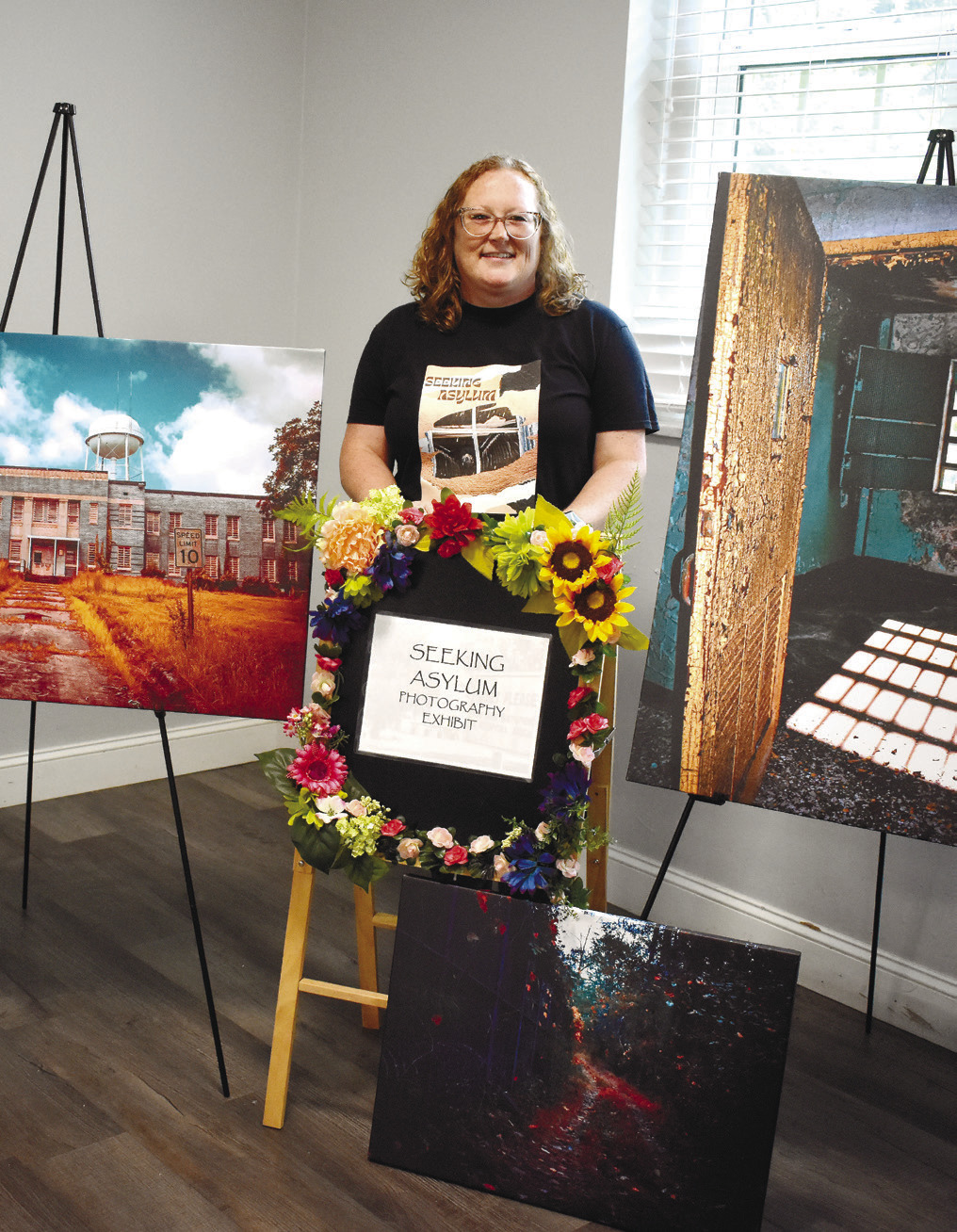
Seeking Asylum LLC., a Central State Hospital photography exhibit, sponsored the screening of Central State Hospital: An Oral History at the Chapel of All Faiths, on the Central State Hospital (CSH) campus, July 22.
Central State Hospital: An Oral History is a documentary on one of the largest mental asylums in the country, its history from 18422013, and how mental health was handled years after its closure by Daniel McDonald, Stephen Price Jr., and Joe Windish.
The documentary consists of multiple interviews of former patients, locals, family members of patients, leaders in programs that support mental health and a range of professionals in the mental health industry. Interviews were conducted between 20102015 and the footage of the buildings and grounds was gathered during private tours in the summer of 2012.
“I went to a screening of the movie that they previously reached out about to Georgia’s Old Capital Heritage Center and connected with them to host a screening here on the campus in Milledgeville,” said Jessica Whitehead, photographer and founder of Seeking Asylum. “This event was another part of Seeking Asylum’s mission to educate not only about the history of Central State Hospital but about the journey of mental health.
This documentary encompasses both journeys well.” In 1837 Georgia politicians passed a bill calling for the creation of a State Lunatic, Idiot, and Epileptic Asylum, which would become known later as Central State Hospital. It was established in Milledgeville in October of 1842, during the time it was the state capital, and the hospital admitted its first patient later that year. By its closure, the hospital was noted to have housed about 15,000 patients across its 200 buildings.
Superintendent Dr. Theophilus O. Powell, who served from 1879 to 1907, led to the rapid expansion of the hospital.
The documentary delves deeper into the expansion of the hospital and how the influx of patients led to the decline of well-being and treatment. From its beginnings to its end, the documentary notes that the hospital went from a ratio of one doctor to 279 patients to about one doctor to 600 patients each.
As this occurred, advocates for mental health, including Rosalynn and Jimmy Carter, searched for avenues for getting patients back into society.
A U.S. Supreme Court case, Olmstead v. L.C. in 1999, would allow hospitals to release patients if community treatment was possible and the patients desired it. Community treatment became a larger need and advocates pushed for the increase of community treatment opportunities.
The documentary touches on Assertive Community Treatment and its benefits for those involved. Most notably two peer advocates, individuals who suffered through mental health, have recovered, and are governmentally trained to help others, spoke about their journey, the benefit of these programs, and how peer advocacy helped them and has allowed them to help others.
“You are a person with a solution, not a person with inserted mental health problems,” said peer advocate Leanne Branch in the documentary as she spoke on the identity of a mental health problem versus an individual’s identity.
As the documentary retells, mental health moved from a medical model to a social remediation model. As the mental hospitals and asylums closed, many of the interviewees stated that prisons became the new mental asylums and despite the push for community-based programming, many still do not have access to that option.
“Mentally ill get treated but don’t get treated well,” said one interviewee during a voiceover.
Another interviewee adds, “When decentralization occurred the promise was to give treatment in the community, but it never happened.”
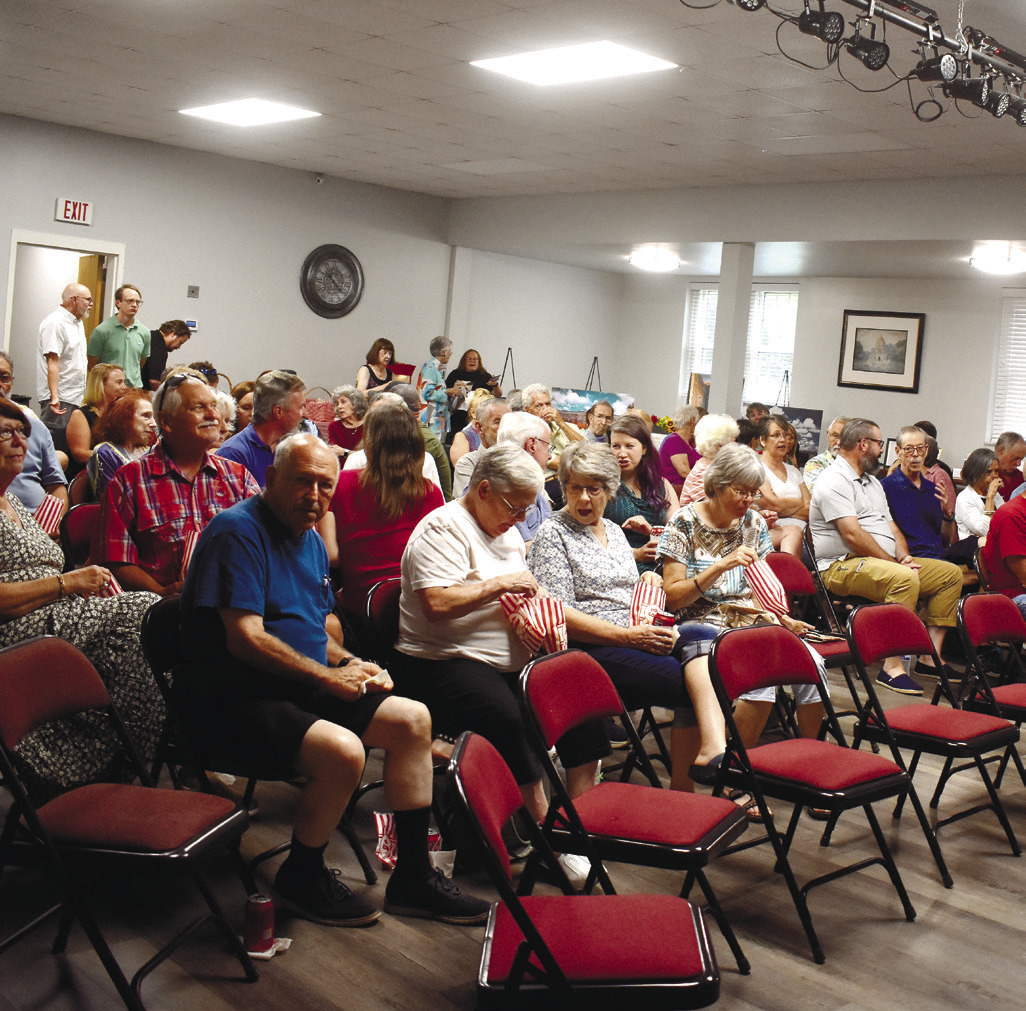
With the chapel packed full of attendees, many guests had questions for the writers and for the Central State Hospital Redevelopment Authority chair Johnny Grant after the conclusion of the film.
Many questions focused on how the decaying buildings on campus could be saved and who may have led to the campus’s current state of disrepair.
“There is no one person or moment to blame for the decay,” said McDonald. “Blame lies in the mirror. Politics mirror our priorities, and those priorities guide the decisions made.”
Grant answered a few questions about the current state of the campus and said that about 45 of the smaller buildings on campus are in use.
For anyone to be able to use one of the buildings owned by the Redevelopment Authority, they must present an economic plan to make use of the building. As of now, however, Grant remarked that the Redevelopment Authority does not have interest in the larger buildings, due to funding that would be required to repair the buildings.
“The buildings have a hold on our hearts, and I would like to see them maintained,” said an audience member. “It’s our fight to keep these buildings.”
To learn more about the re-purposing of the campus, anyone can visit renaissanceparkga.com and to learn more about the history and view photography of the campus, visit Seeking Asylum located at the W.H. Smith Building in downtown Milledgeville.