
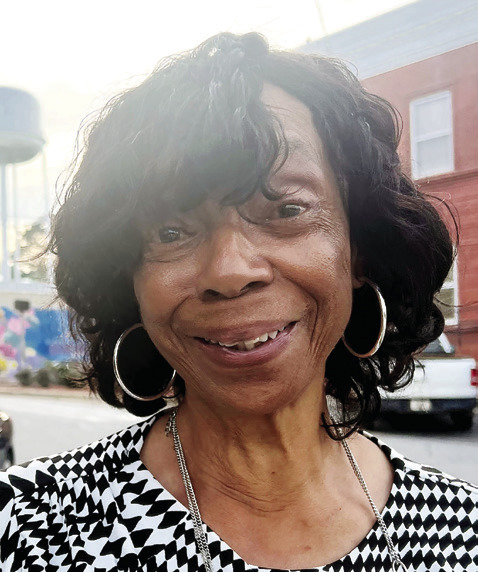
Sandra Dean, executive director of Beyond the Bell, visited Eatonton last Wednesday for a meeting with several community leaders at the new Sips coffee shop on East Marion Street.
At issue was high drug use, specifically of opioids in the county, and what might be done to educate and help citizens either dealing with issues themselves or wanting to help addicted family members or friends.
Dean said Putnam County was recently identified by the state as having significant opioid issues, prompting Beyond the Bell to apply for and receive one of approximately 40 recently established grants to help tackle the problem. The initiative includes town hall meetings aimed at raising awareness and educating the community about drug use, with panel discussions involving law enforcement, medical professionals, and other experts.
She added that the program encourages all community members, including those not directly affected by drug use, to participate and learn about the issues impacting their communities. The meetings provide a safe space for attendees to ask questions and seek help without fear of legal repercussions, Dean stressed.
“We also work with underage drinking and marijuana, and we work with senior citizens on some of their issues,” Dean explained about Beyond the Bell’s mission. “But specifically, what we’re doing in Putnam right now is an opioid contract.”
Among others attending the meeting were Eatonton Mayor John Reid, Eatonton City Councilmember Janie Reid, Eatonton Fire Chief Jamey Williamson, Eatonton Police Chief Howell Cardwell, and Putnam County Sheriff Howard Sills. During the meeting, which lasted about an hour, most attendees spoke briefly, with several mentioning how the scourge of opioids affects or influences their departments.
An agreement was reached to hold a series of three town hall-style meetings in Eatonton over the next few months. The first of the meetings is scheduled for 6 p.m., Tuesday, June 17, at the Putnam County Courthouse.
Dean explained that each presentation will feature a panel arrangement to present facts and suggestions on how to address and overcome opioid use or other drug abuse problems.
“Panel members will include law enforcement, the medical field, someone from the DEA, and the health department. They’ll be there to tell what’s going on in the community and then take questions from the audience," she said. "They will share whatever data tells them what’s going on in the community with the drugs, whatever the drug is, whether it’s opioids or something else. But they will take questions on anything else, too.
“It’s strictly an awareness program. You need to know what’s going on in your backyard, which is your community. That’s why we want people to come out, whether you have had experience with opioids or not, just to get the knowledge of what’s going on in your community.
“Even if someone is pretty confident that it’s not touching their lives directly, I’d still encourage them to come out and educate themselves. That’s one of the biggest hurdles we go through. People think, ‘Well, that doesn’t apply to me.’ But you need to know; you really need to know.”
Dean also stressed these meetings are not intended to trap or identify drug users at any stage of use or addiction. She insisted that anything discussed would not be used to entrap or pursue drug users who want to improve their lives.
“All we’re trying to do is educate the community. We’re not here to bash anybody or to do anything like that. It’s education. That’s all we are here for,” Dean stressed. “We are not in the business of trying to get anyone arrested. We’re here to get people help, just to provide knowledge so you’ll know what’s going on and what help is available.”