
The U. S. Open is not supposed to be something easy to win; inherent in its challenge are adversity and stress. If you want an easy track, stay away from Oakmont and ply your time at some muni course in some obscure, no-name town.
Nowhere is there a greater test of golf than at Oakmont when the United States Golf Association narrows the fairways, and with cooperation from the weather, conditions the greens to where competitors wonder if they are putting on glass. Rains softened the course last weekend, but majestic Oakmont, nonetheless, kept red numbers off the scoreboard.
That is why tight fairways with greens so fast that a Stimpmeter is in shock are expected to be the norm at the annual championship, making pars something sacred.
When the USGA has the opportunity, it prefers to see a competitor who is a consummate craftsman in the winner’s circle rather than a bomber, although long knockers who are accurate off the tee do have an advantage in Open competition.
It didn’t hurt that Jack Nicklaus and Tiger Woods combined accuracy with distance to win their seven Open Championships, with Jack winning four and Tiger three. Ben Hogan was never referred to as a bomber, but he was long enough to compete with the best and on any golf course. What set him apart, however, was his remarkable accuracy.
Hogan won four Opens and lost one in a playoff. He also won the Hale America Open. The USGA gave him a gold medal for that win as the U. S. Open champion. Counting that championship, he is a five-time winner of our national championship.
Bob Ford, the longtime head professional at Oakmont, recalled earlier this week, the controversy at the 1953 Open at Oakmont when the club’s furrowed bunkers caused tour players to threaten to boycott the Open. The issue was solved when officials agreed to only furrow bunkers around the green.
Ford and Oakmont officials made a trip to Ft Worth in 1991 regarding the upcoming women’s Open, which was to be played at Oakmont. Hogan came to a cocktail party organized for the Oakmont visitors.
Ford remembered someone asking Hogan about the furrowed bunkers, and he said, “I don’t know, I was not in ‘em.” That is how you win an Open championship. Stay out of trouble, and nobody has ever been better at that than Hogan.
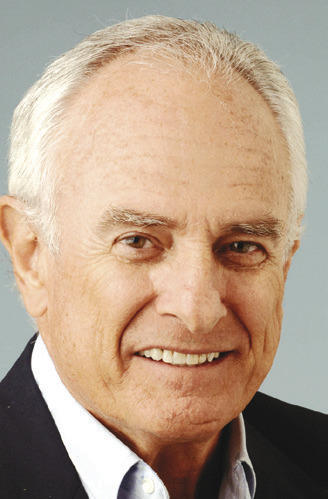
Any reference to Oakmont brings about a review of the contribution of Bill Griffin, who grew up in Rutledge, Georgia, and was a member of the chainsaw gang at Oakmont (there were nine principals). This group met and decided that the golf course fell far short of what founder Henry C. Fownes had envisioned — essentially, the hardest course in the country.
A tree-planting campaign to beautify Oakmont had utterly transformed the character of the golf course. Knowing how controversial it would be, the powers there arranged for a tree-cutting plan to take place under the cover of darkness.
“We took out a thousand trees before we got caught,” Ford says.
“Eventually, we took out 15,000 trees and the course has retained its original look,” Griffin adds.
The fact that Griffin was president of Oakmont for six consecutive years underscores how well this soft-spoken Georgian was received in the Pittsburgh community and especially at Oakmont.
“Bill is a gentleman that everybody respects,” Ford says. “He loves the game of golf and was able to provide leadership that was great for our golf club. The people at the USGA hold him in the highest regard.”
Griffin also had become a seasoned player who could hold his own in friendly competition. With Latrobe only 40 miles away, he got to know Arnold Palmer, whose game he had admired when he followed him at the Masters while Bill was a student at UGA. Little did he know then that he would someday be invited to join Augusta and become friends with Palmer, playing with him a half dozen times over the years.
While Bill did not enjoy Arnold’s celebrity, he certainly shared a similar lifestyle and personality, as he genuinely enjoyed people and could relate to everybody, which has boded well for the University.
He has raised millions of dollars for his beloved alma mater, and the momentum continues. His work with Aruna, a clinical-stage biotech company led by Dr. Steve Stice, is focused on developing neural stem cell-derived exosomes to treat stroke and other central nervous system diseases.
Golf has been an extraordinary vehicle for Bill Griffin to achieve his goals and objectives, and the beneficiary of his good works has been the University of Georgia.