

The Steffen Thomas Museum of Art held its annual Founder’s Day Celebration on Saturday to honor the memory of Sara Douglass Thomas, who in 1997 opened the museum in rural Buckhead to showcase and honor her husband’s prodigious efforts in many varied art disciplines.
The highlight of each year's Founder’s Day event is presenting the Charlie Bonner Award for Advancing Education, which is given to an exceptional, Georgia-based art educator.
The 2025 STMA Bonner Award was presented posthumously to Richard “Ole” Olsen, once a 21-year-old Vietnam helicopter pilot who was wounded in combat there.
The former Army flyer later enjoyed a 28-year career at the University of Georgia’s Lamar Dodd School of Art, teaching drawing and painting in Athens until his passing in February of this year. He was also on the board to accept the final design of the Veterans Walk at the Athens-Clark County Courthouse and helped develop the veteran’s monument at Athens’ Memorial Park.
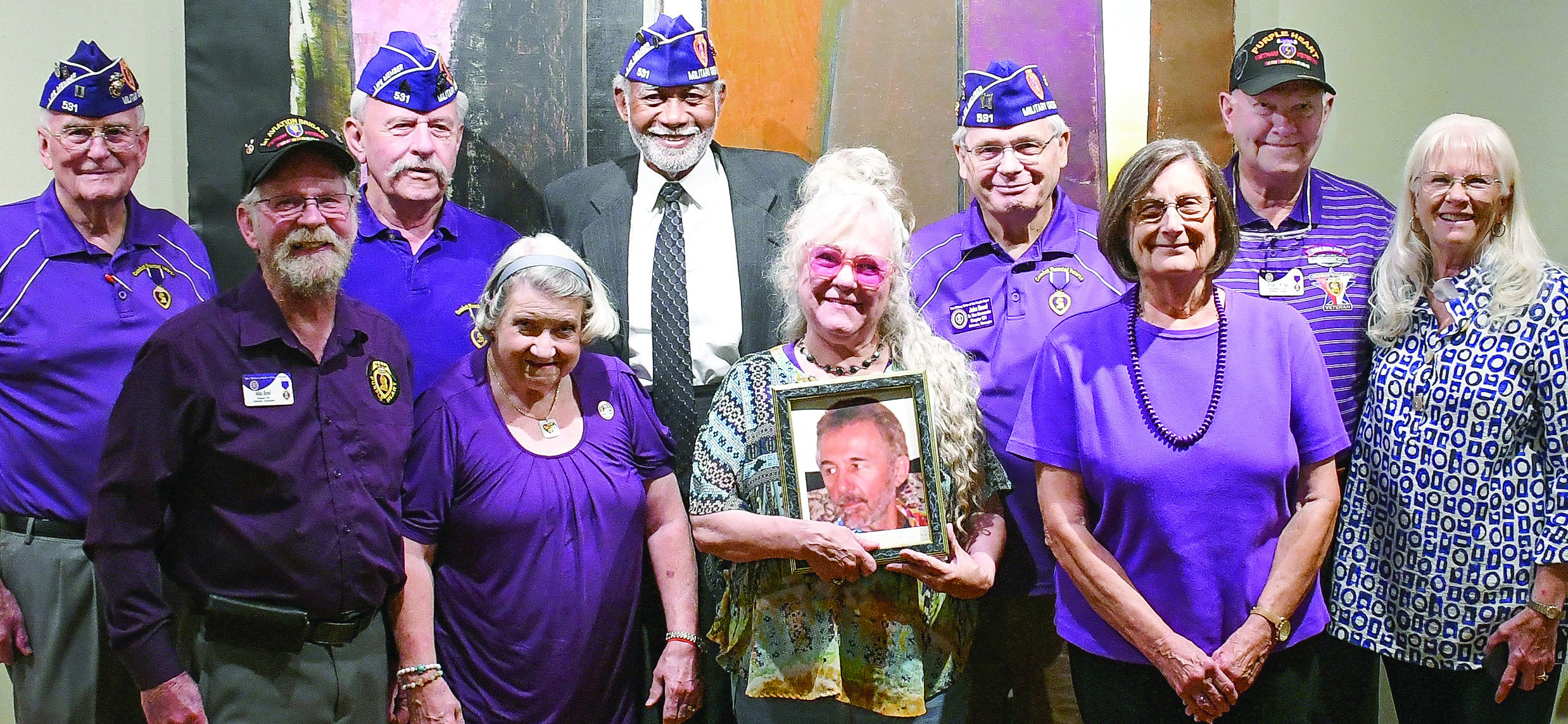
“Ole had been made aware that he was going to receive this award, and he was excited about it,” said Jim Wood, a member of the Athens-based John W. Hancock Memorial Chapter 531 of the Military Order of the Purple Heart, of which Olsen was a founding member in January 1987.
“He was really happy. It was a big deal to him. He told us all about it at our meeting, but then his health broke and he was gone,” Wood recalled.
Current Purple Heart Chapter 531 Commander Brian West called Olsen “a real character, just a lot of fun, a special person.”
Accepting the Bonner Award on behalf of Olsen was his adult daughter, Dana, who expressed gratitude to everyone who attended and stated that she was certain her father would have greatly valued the honor and thoroughly enjoyed the event at STMA.
“He appreciated everybody and would’ve loved seeing everybody here,” she said.
Then, turning her attention specifically to the Purple Heart group’s table, she added, “He loved you guys; he really did.”
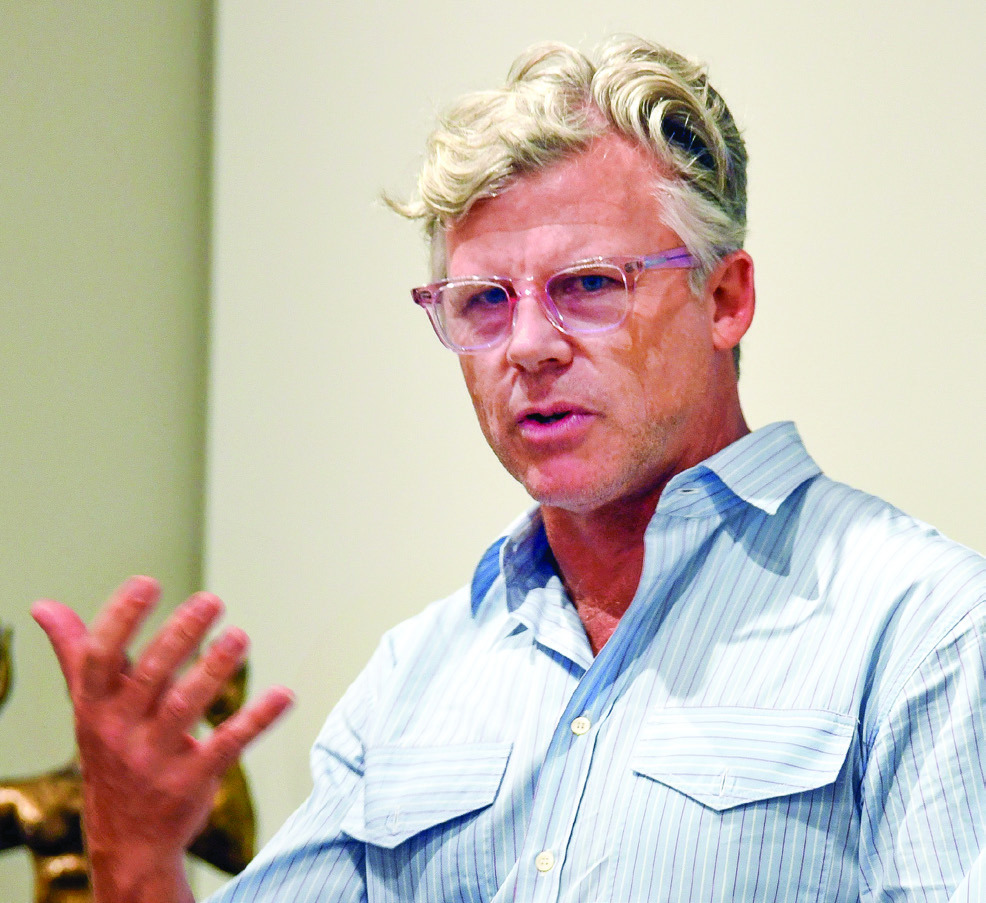
Also speaking on Olsen’s behalf were two of his past students, Chris Wyrick and John Cleveland. After being a student, Wyrick also had represented Olsen, helping to get his paintings seen and acquired beyond Athens, as well as previously serving as interim director of STMA.
He said, however, he wanted to focus on Olsen’s “brilliance as an educator and as a mentor.”
“Ole developed a process in his years of teaching that was referred to as scheme and calculation, which was a collaborative group exercise to determine one’s creative starting point, the scheme, and the subsequent path forward to making art calculation,” Wyrick said.
He further explained that Olsen often drew from his experience as a collegiate wrestler alongside his twin brother and later as a U.S. Army captain to structure this training regimen.
Wyrick said Olsen began the process by providing the literal dictionary definition of “scheme and calculation and stress,” which he claimed would designate a plan or program of action, “especially a crafty or secret one.”
“Ole’s schematic calculation was more akin to group therapy than a traditional art class,” Wyrick said. “An art student might find in mining the self that perhaps they were not meant to make art. Perhaps they were meant to be a musician, a dancer, a poet, a farmer, a banker. If the process was taken seriously, the end result was a clarity of purpose that superseded any artistic wants or strivings. Anything unnecessary or trivial was purged.”
Wyrick said he went through this process with Olsen three times during his graduate art studies at the University of Georgia, and each time he benefited from honing his personal strengths.
“Ole’s guidance allowed me to build a full career as an artist and travel the world with my wife. I’ll be forever indebted to him for his patience, his strength, and if you knew Ole, his unstoppable enthusiasm,” Wyrick said, followed by enthusiastic applause from the audience.
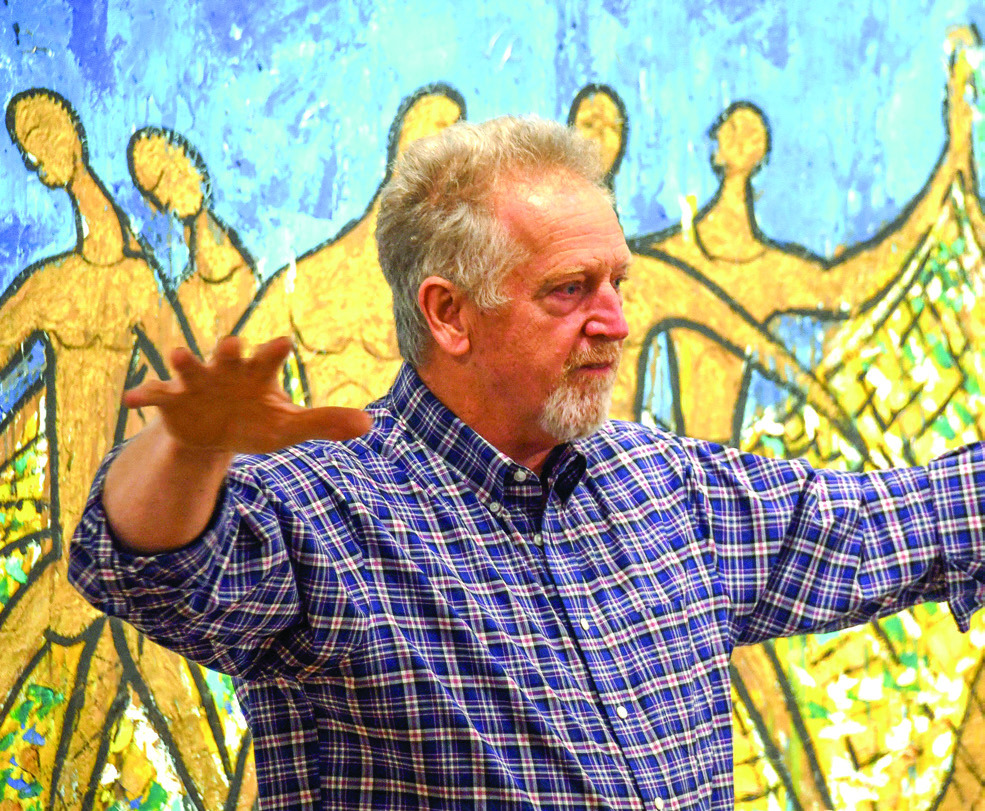
Cleveland spoke next, describing himself as “a non-art student who started taking art classes and realized this might be what I’m supposed to be doing. Ole is one of the people that I can think of, the day I met him, how my life changed and turned at a point.”
Just 20 years old at the time, Cleveland said he and Olsen never talked about anything but color. Never about what to paint, how to paint, or how to be an artist, he said. Instead, they discussed creating art as a form of work.
“Best advice he ever gave me was, life will conspire to take away your art; that it’s not enough to just want to be an artist. You have to work, you have to sacrifice, you’re going to have to give up things that other people have so you can work,” Cleveland said. “And he set me on fire.”
Meanwhile, Cleveland said, he later realized Olsen was actively working behind the scenes himself to help further Cleveland’s career. Cleveland said it was 20 years later when he learned that Olsen and another teacher had filled out a successful application to graduate school on his behalf.
“I actually was accepted to UGA and never knew it,” he said to a round of laughter from the audience. “In those papers when I got them, what he had written in my recommendation simply was, ‘John Cleveland’s going to do something, we need to help him.’ He never told me what he said. I only found out long after the fact.”
Ultimately, Cleveland said, he wasn’t sure he really knew Olsen.
“I knew him as my mentor. I knew him as my leader,” he said.
“I once made a trip to Vietnam because of Ole,” Cleveland continued. “I wanted to do something to make him proud, make my friends proud. And also to remember all these men who had sacrificed in such a meaningful way to do something for somebody else.
“And I talked to Ole about it, and he got excited, and I knew I had a limited amount of time, but I didn’t ever expect Ole not to be here because he was such a force of nature.”