
Here in Columbus, the waters of Georgia’s most romantic river — the musical Chattahoochee — bring a lively atmosphere to a vibrant populace bent on creating a city that combines work and play, making it not only an attractive destination but also a place to put down roots.
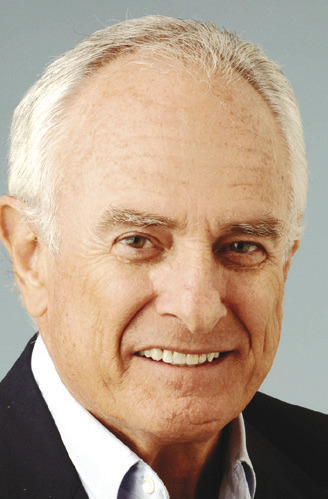
That is what Darryl Jones did when his National Football League venture ended after stints with the Green Bay Packers and the Denver Broncos. He wanted to stay close to the game and, along with Georgia teammate Dale Williams, began producing television shows and documentaries that brought recognition to the many young sports stars in the Muscogee and West Georgia communities along the Alabama border.
Jones signed on with the University of Georgia in 1980 and was a member of the national championship team that went undefeated and beat Notre Dame 17-10 in the Sugar Bowl. He was a teammate of Herschel Walker while earning his keep as a defensive back who combined speed and quickness with a reckless abandon that made him one of the most highly regarded DBs in the Southeastern Conference.
They were overachievers, a team of destiny that listened with commitment as defensive coordinator Erk Russell kept saying, “Just one more time!” The Bulldogs continued to rise to the occasion, winning the SEC title and securing the No. 1 ranking as the season progressed, before defeating Notre Dame in the Sugar Bowl to claim the national championship.
It made that team the most appreciated team in Athens since 1959 when Fran Tarkenton led Georgia to the SEC title and a victory over Missouri in the Orange Bowl — another high moment of serendipity.
“That season will always resonate with the players themselves,” said DJ, as his many friends commonly refer to him. “We learned that teamwork, leadership, and an unselfish attitude can enable a team to achieve its goals.”
A lot of water has gone under the college football bridge since that time, and Darryl has dedicated himself to promoting high school athletics in his hometown.
“We see so many deserving kids out there, and we believe in spite of all the problems and challenges, there are many deserving kids who are interested in the game and want an education.”
An interesting circumstance occurred during practice for the 1984 Cotton Bowl in Dallas, when the Bulldogs pulled off a memorable 10-9 upset of Texas. It was bitterly cold during much of the trip for this game.
“When someone complained about the weather, Coach Bill Lewis scolded us and said, ‘Be quiet. You could be in Green Bay.’ A few weeks later, I was drafted by the Packers. I learned to adjust to the weather. Many Southern boys played for the Packers, and they seemed to manage. Playing in Green Bay was a terrific experience. They won a lot of championships, and there was an attitude that if you come to Green, the community will support the team, and that winning tradition with the Packers is something they don’t take for granted.”
Darryl found a similar fan base in Green Bay, one he was accustomed to when he played for the Bulldogs.
“The entire state, same as it is in Georgia, is interested in and supportive of the team. I always felt that was the way it was in the state of Georgia with the Bulldogs.”
Tradition is something DJ appreciates. He honors the work ethic and is motivated to find ways to highlight promotions and programs that support high school students. The leadership principles he learned at Georgia are part of the objective to host banquets and promote scholarship objectives for the high school teams he covers in the Columbus area.
When he talks to high school kids about winning championships, he emphasizes that the key ingredients of a successful program are team loyalty, hard work, and leadership.
“And selflessness,” he adds. “One of the things that meant so much to our 1980 team was that we had a special togetherness that brought results. We literally didn’t care who got the headlines; we were interested in complementing each other on the field.”
Darryl has often pointed to the remarkable display of sportsmanship and altruism that came with the attitude of his teammate, Herschel Walker.
“Herschel was always paying tribute to his linemen,” Darryl says. “Because he was so unselfish, his linemen would literally run through a brick wall for him. Other players were just like him, too: Nat Hudson, Frank Ross, Terry Hoage, and Scott Woerner.”
Darryl points out that the members of this team have maintained close contact with each other, unlike any other team in Georgia's history. Ros, the captain, is constantly organizing reunions and get-togethers.
“We are getting long in the tooth,” Darryl says, “but we still enjoy finding time for reunions so we can relive and sort the great memories that we have. There are many times when I am riding to Athens for a game, and I recall the big games and highlights of that season.
And then I think about how nice it would be if every player could enjoy that experience. And you know, some players on the high school level this year will have that experience. They will be able to succeed at a high level and enjoy memories like we had in 1980. It was unforgettable.”