
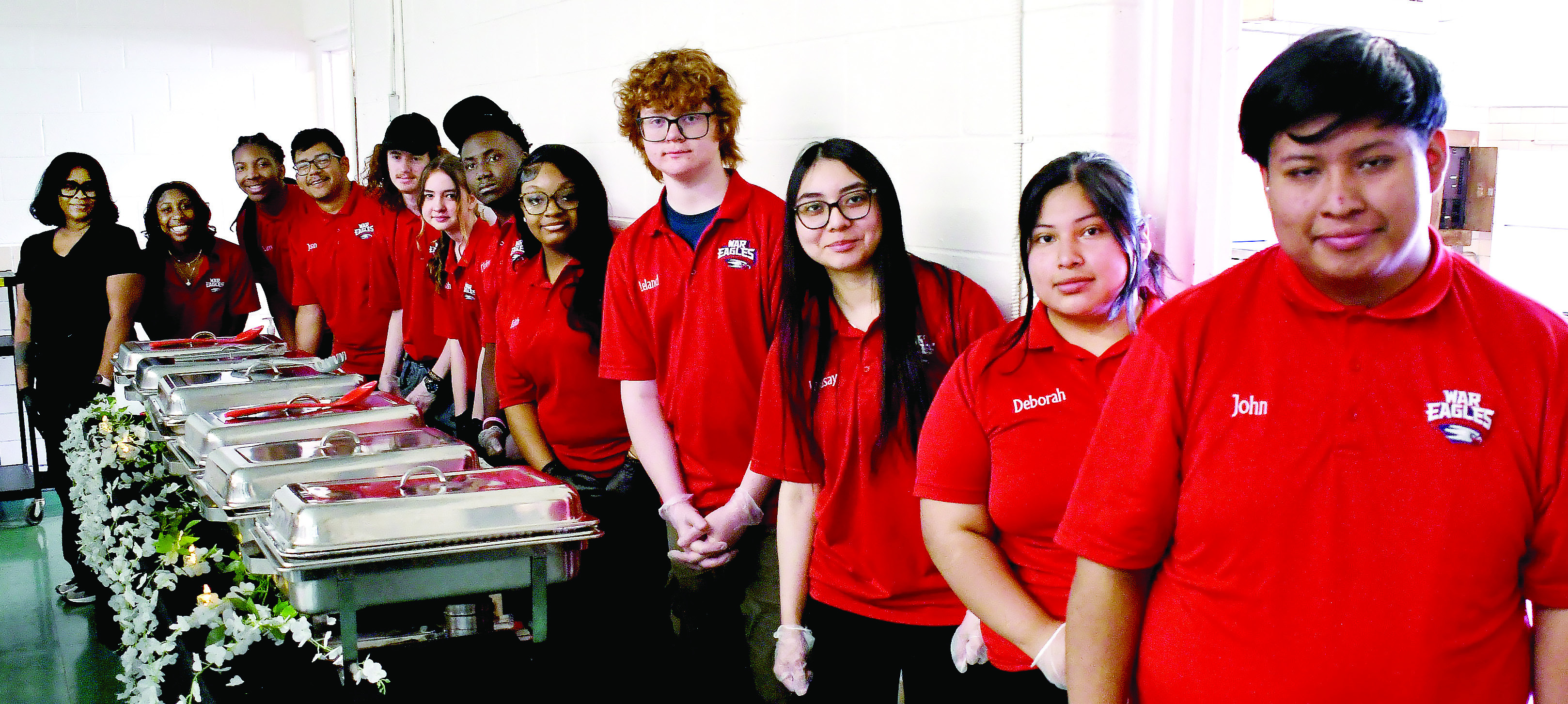
Alumni, family members, and community supporters gathered last Saturday at Eatonton’s historic Butler-Baker School for the Butler-Baker Alumni Project Inc.’s (BBAPI) annual Luncheon of Remembrance — an event honoring the legacy of Putnam County’s historically Black school.
The turnout was strong, with nearly 300 attendees filling the space, a testament to the lasting impact the school has made on generations of students. Members of the Classes of 1956 (the school’s first grads), 1961, 1966, 1971, and 1976 were individually introduced and celebrated during the event.
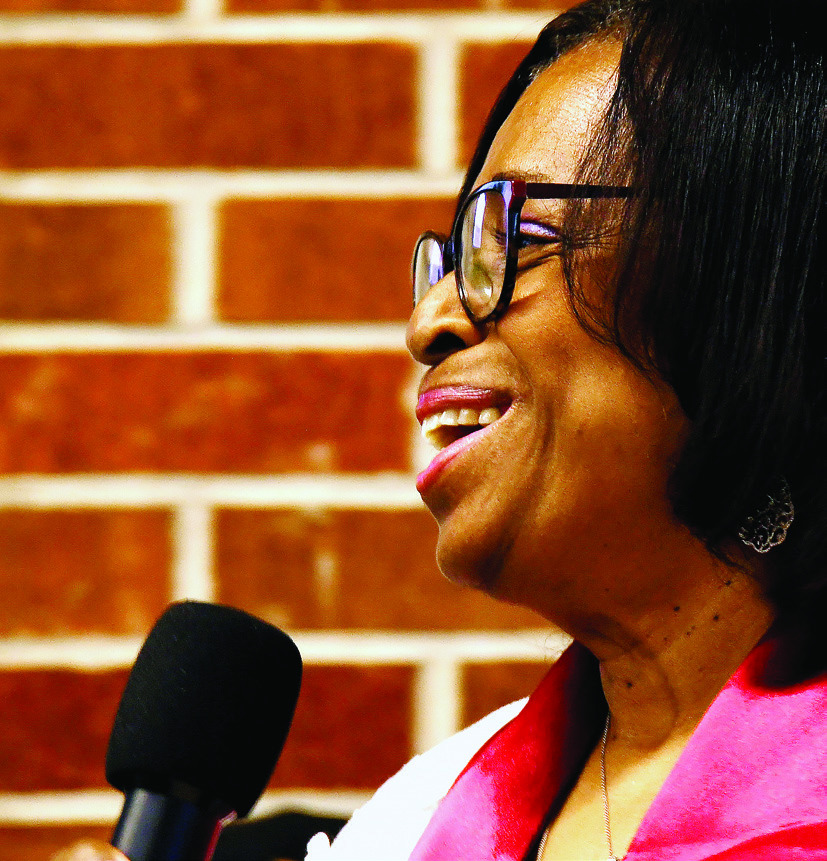
Sandra Parham, secretary of the organization and chairman of its business and administrative committee, said the luncheon has become both a reunion and a vital fundraiser for ongoing BBAPI restoration efforts.
Built in the 1950s as part of the South’s “equalization school” system, Butler-Baker served Black students from across the county until integration in the early 1970s. This year’s featured class for the luncheon was the Class of 1971, which had about 15 graduates from that year attending, among them current Eatonton Ward 2 Councilman James Gorley.
Though the facility is no longer an active school, Butler-Baker alumni have worked for years to restore and preserve the building and its history.
Saturday’s luncheon reflected that mission, but the focus remained on alumni themselves, as representatives from various graduating classes were recognized and invited to share their memories.
“We went away from having a keynote speaker,” Parham explained. “People said it made the program too long. This way, the classes are the center point. That’s what people really come for anyway, to see each other.”
The event also introduced a new twist this year — an after-party in the school’s gymnasium — to give attendees more time to reconnect.
“We’re just trying something new so people can just talk, hug, dance,” Parham said. “Just to enjoy being together.”
For many attending, Butler-Baker represents much more than just a school. It represents a full educational journey, with many students attending from first through 12th grade under one roof, with one principal overseeing everything.
“If you lived here, you went to one school your whole life,” Parham said. “You started in one hall, and as you got older, you just moved on down through the building.”
That continuity helped create a close-knit environment that alumni still remember fondly.
“It was just such a family atmosphere,” she continued. “Our teachers were like idols. They were like surrogate parents, and we wanted to make them proud.”
Before Butler-Baker opened in 1956, Black students in the area often attended smaller, scattered schools, including church-based classrooms. The new facility consolidated those students into a single campus, marking a significant shift in local education.
Even so, Parham noted resources were not always equal.
“We got the cast-off books. They already had white children’s names in them,” she said. “Sometimes the answers were written in.”
She described a scene in which a couple of her girlfriends took it upon themselves one summer to go through the textbooks, page by page, erasing as many marks and answers as they could before school resumed.
Despite those challenges, Butler-Baker offered opportunities that were rare for Black schools at the time, including an indoor gymnasium complete with regulation basketball hoops.
“When teams came here from other counties, they were amazed,” Parham said. “They were used to playing their games, league games, outside on dirt.”
Butler-Baker remained in operation until integration brought about major changes, nationally, regionally, and locally within Eatonton at the then-new high school in Putnam County. The high school built in 1968 was the property's original tenant, decommissioned as an elementary school last year. It’s now destined to serve as the City of Eatonton’s government and services complex.
But Parham said Black students who transitioned to the “new” high school in 1971 after starting their senior years at Butler-Baker frequently faced open hostility at the nearly all-white school.
“They had to endure spitballs, name-calling, and things like that,” Parham said. “There were even some students who went earlier, before full integration, and some of them came back [to Butler-Baker] because they just couldn’t take it.”
Given the context, it’s not surprising so many alumni maintain a strong emotional connection to Butler-Baker.
“I always say I’m more Butler-Baker than I am Putnam County High School,” Parham proudly stated.
That sense of identity remains a driving force behind BBAPI’s work today. After years of vandalism and neglect at the school, the group has made steady progress in restoring the campus, in particular bringing the auditorium and gymnasium back into usable condition.
The organization is now working with preservation groups to secure historic designation and grant funding to continue those efforts for classrooms and other facilities within.
“We’re in the process now,” Parham said. “We’re trying to get on the [historic] registry so we can apply for grants and keep moving forward.”
Future plans for the site include potential community uses, such as hosting youth programs. But for now, events like the Luncheon of Remembrance remain central to keeping Butler-Baker’s story alive.
“We just want people to see the value of preserving this building,” Parham said. “It’s meant so much to so many for so long now.”