
‘To never see the light of day again’
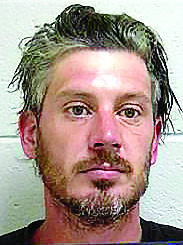
When Corey Andrew Hickey was arrested in October, Putnam County Sheriff Howard Sills described the criminal acts he was accused of as “vile and disgusting.”
A Putnam County jury and a Superior Court judge appeared to share that assessment. On Thursday, May 21, the 38-year-old Hickey was found guilty on 31 child sex crime charges and sentenced to multiple consecutive life sentences, plus an additional 220 years.
“So, he’s going to die in prison,” Sills said after the trial. “I believe it’s the longest sentence ever handed down in the Ocmulgee Judicial Circuit, and I’ve been here a long time.”
The Georgia Bureau of Investigation’s Child Exploitation and Computer Crimes (CEACC) Unit opened its investigation into Hickey’s online activity in early October after receiving a CyberTipline report from the National Center for Missing and Exploited Children, according to a GBI press release at the time. GBI Assistant Special Agent in Charge Renea Green told The Eatonton Messenger that CEACC supervisors reviewed the tip and evidence and “determined to escalate the investigation and immediately take action.”
The trial was held May 18–21 in Putnam County Superior Court before Chief Judge Alison T. Burleson. Chief Assistant District Attorney Allison Mauldin and Assistant DA Carter Harwell prosecuted the case, while Chief Public Defender Kristin Waller represented Hickey.
The GBI’s Internet Child Exploitation Unit Special Agent Ethan Brown led the investigation and also sat at the prosecution table during the trial.
Prosecutors said Hickey, who worked intermittently as a construction worker in Baldwin County, had been living for nine months with a roommate whose 7-year-old daughter became his victim.
“His roommate’s entire family trusted Hickey,” Mauldin noted.
According to prosecutors, Hickey photographed the child and uploaded the images to ChatGPT, an artificial intelligence chatbot used for tasks such as brainstorming, summarizing information, analyzing images, and explaining complex topics.
“Hickey used ChatGPT to create an image from those pictures, and he asked ChatGPT how to groom a child for sexual abuse and how to keep that child quiet so she wouldn’t tell anybody she was being abused,” Mauldin said.
Prosecutors said the images were ultimately flagged to the National Center for Missing and Exploited Children, which used facial recognition technology to identify the victim. Investigators then linked Hickey to the account through a Gmail address associated with the ChatGPT profile.
Because investigators believed the child was in imminent danger, Agent Brown obtained emergency orders to verify Google records, and Hickey was taken into custody three days later. After his arrest, Brown seized Hickey’s cellphone.
On the device, investigators found more than 4,800 files of child sexual abuse material, Mauldin said, including videos and images. Of those, 658 involved the victim. Prosecutors said the material showed multiple sexual acts over a period of time.
“He videotaped them all,” Mauldin said. “The jury had to watch all of it. It was very disturbing. A number of both male and female jurors cried when we played the videos.”
Investigators also recovered a backpack Hickey carried regularly, which contained 30 pairs of girls’ underwear. The victim’s mother identified many of the items during trial testimony, according to prosecutors.
The mother also testified she frequently purchased replacement clothing and searched the home with Hickey for missing items, unaware of what was occurring, Mauldin said.
After Hickey’s arrest, the child was taken to The Crescent House in Macon, where she was interviewed twice. Prosecutors said she disclosed the abuse after viewing the evidence and did not testify at trial because the video evidence was presented in court.
Hickey did not testify in his defense, and no witnesses were called on his behalf. The defense strategy, according to prosecutors, was to hold the state to its burden of proof.
“There was so much evidence that I didn’t even introduce it all at trial because it would have been too much to comprehend,” Mauldin said. “I just narrowed it down to the most impactful evidence.”
Mauldin, a prosecutor since 1990, said the case was unlike others she has handled due to the extensive video evidence.
“This one had the crimes on video, which takes it to the next level,” she said. “In other cases, you generally have testimony, maybe medical evidence. This case was all visual.”
Sheriff Sills also reflected on the case, comparing it to the Dwight Malachi York case involving the Nuwaubian trials.
“The York case and Nuwaubians were certainly the most significant, but because of the videos that Hickey, the defendant, took, this one was certainly the worst I’ve ever seen,” he said.
Hickey was convicted on charges including three counts of rape of a child under 10, four counts of aggravated child molestation, three counts of child molestation, and 21 counts of sexual exploitation of children.
“The jury was out for 45 minutes,” Sills said. “I guess it took them a while to vote 31 times and write ‘guilty’ 31 times.”
After the verdict, Judge Burleson told jurors that counseling resources were available through the clerk’s office if needed. She then addressed Hickey directly, saying the sentence ensured he would never return to society, according to prosecutors.
Burleson imposed two consecutive life sentences without parole, along with three additional consecutive life sentences with the possibility of parole, plus 220 years in prison.
Hickey will turn 39 next week.