
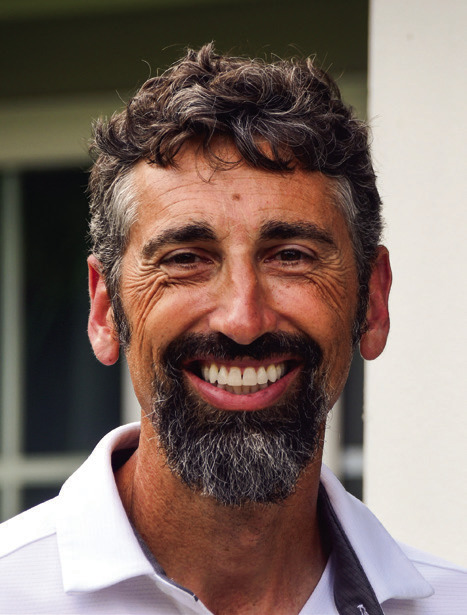
Facing perhaps the most organized opposition his company has encountered, Hans Dawson of Wisconsin-based Land and Stone Products and co-owner of Putnam County Stone (PCS) said the controversy surrounding a proposed granite quarry in Putnam County has become as much about communication as engineering, environmental studies, and land-use planning.
Dawson spoke on Wednesday during a public meet-and-greet information session at the Sebastian Cove Clubhouse, where he and other company representatives continued efforts to explain the proposed quarry and answer questions from nearby residents and other attendees. The meeting was the latest in a series of local outreach events as the company seeks county approval for a granite quarry along Dennis Station Road, across from the Interfor lumber processing plant.
The proposed quarry has generated significant public interest since it was announced in February, drawing packed public meetings, prompting the formation of organized opposition groups, and becoming a frequent topic on social media and in local political discussions. Residents have raised concerns about groundwater, blasting, truck traffic, dust, noise, property values, and the potential impact on the area's rural character.
While Dawson said public concerns about industrial operations are common, he believes the level of organization surrounding the Putnam County proposal stands out. He theorized that some of the opposition may stem from a failed quarry proposal more than a decade ago, combined with the unique character of the Lake Country region, where many residents place a high value on preserving the area's quality of life.
Over the past several months, PCS has sought to address those concerns through public meetings, technical studies, direct outreach to neighboring property owners, and revisions to the proposal. Earlier this year, the company reduced its rezoning request by more than half, redesigning portions of the operation to increase buffers between quarry activities and nearby properties.
For Dawson, one of the biggest challenges has been convincing residents that the proposal under consideration differs from what many people envision when they hear the word "quarry."
"We've learned over time to take in as much information as we can, listen deeply to people's concerns and incorporate them into our plans," Dawson said. "I think it's okay if people have concerns."
At the same time, Dawson said he believes there is a significant gap between the proposal's technical details and public perception. Closing that gap has become a primary focus of the company's outreach efforts.
"There's a pretty big deviation from what our quarry will actually do and some of the fears that people have about it," Dawson said. "That's why we've been spending so much time on getting the word out about the facts."
Those efforts have included hiring communications specialists, expanding the company's social media presence, and creating materials that translate lengthy engineering and environmental reports into information the public can more easily understand.
Dawson also acknowledged the company may have underestimated the importance of that effort.
"I always believe we could do a better job sharing our story," he said.
The experience has highlighted what Dawson described as a common challenge for large development projects. While technical reports may contain hundreds or even thousands of pages of data, he said, public opinion is often shaped by conversations, social media posts, and personal experiences.
The controversy has also unfolded during a local election season, adding another dimension to an already emotional debate. Dawson, however, said politics is an unavoidable part of pursuing a project that can take years to move through the approval process.
"There is always an election around the corner," he said.
Rather than focusing on political dynamics, Dawson said PCS intends to continue to explain its proposal and address concerns through the county's regulatory process. He pointed to the engineers, scientists, and consultants involved in the project as evidence that the company is relying on technical data throughout the review process.
Underlying that approach is a philosophy Dawson said he learned from his grandfather: treat people with respect, regardless of whether they support or oppose the project.
"My grandpa had a saying," Dawson said. "'Whether or not somebody is upset with you or happy with you, always treat them as if they're your best friend and do the right thing by your neighbors.'"
As debate over the proposed quarry continues, Dawson said he believes firsthand experience would do more to ease concerns than any presentation or technical report.
"I'd love to give a tour of our quarries," he said. "I think if people could see what we actually do, the care we put into our operations, how good we are to our neighbors and how good we are to our employees, I really think they would think differently about us."
Whether that message resonates remains to be seen. For now, Putnam County Stone continues its effort to persuade a skeptical community that the quarry it proposes differs from the one many residents fear.