
groundwater recharge, among other issues considered.
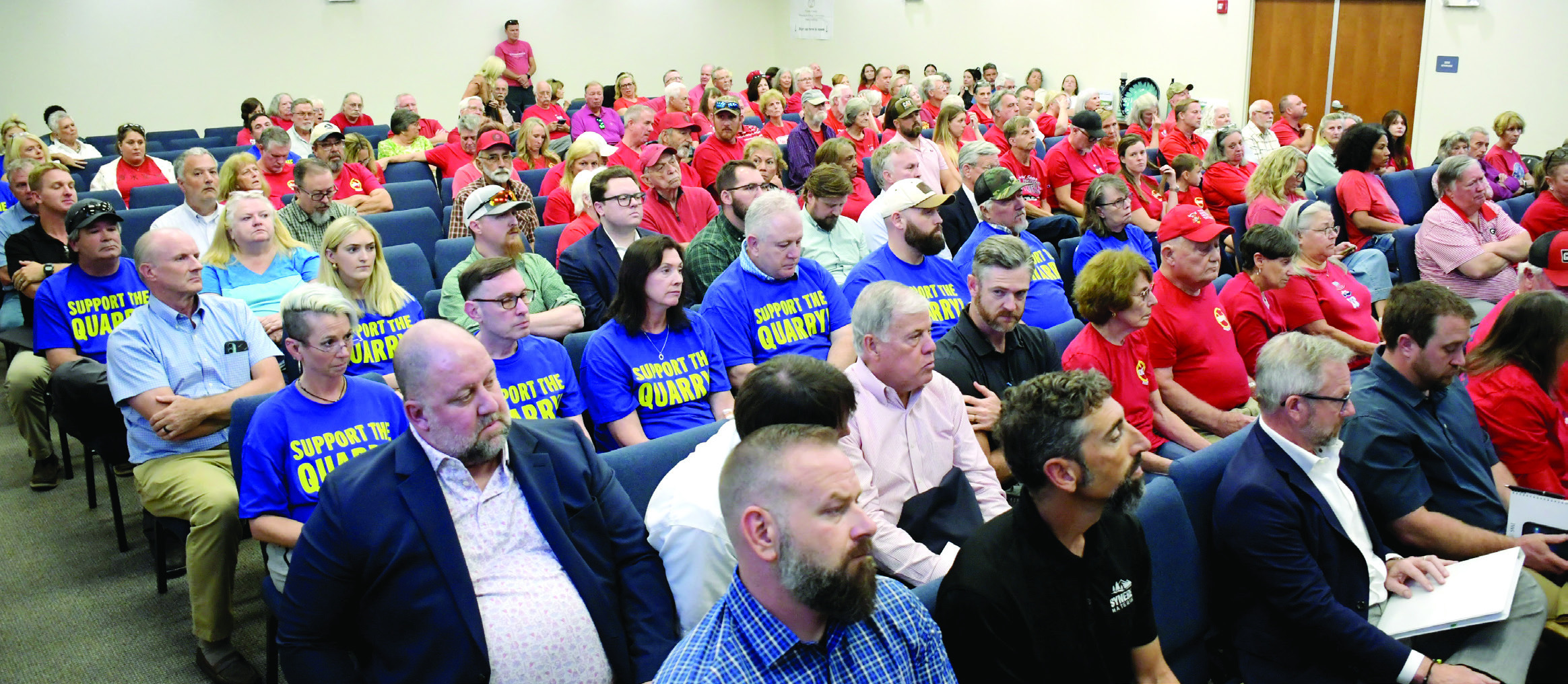
The 5-0 recommendation followed nearly three hours of presentations, questions, and public comments on Putnam County Stone (PCS) LLC’s request to rezone approximately 343 acres of Weyerhaeuser Putnam County’s Planning & Zoning Commission voted unanimously last Thursday evening to recommend denial of a proposed quarry alongside Dennis Station Road, citing concerns about heavy truck traffic, incompatible land use, and property from agricultural to industrial manufacturing. P&Z Commissioner Shad Atkinson voted yes in absentia after leaving the meeting.
The Board of Commissioners will consider the request Oct. 20 at 6:30 p.m. P&Z’s action is advisory only.
“That recommendation will be forwarded to the county commission,” Chairman Charles Gray said after the vote.
At the conclusion of more than 40 speakers, both in support and opposition of the quarry, county planning staff recommended denial, describing traffic information as “woefully insufficient” to establish Dennis Station Road could safely accommodate large trucks from both the quarry and the existing Interfor sawmill, alongside existing residential traffic.
Staff also said the rezoning would substantially expand industrial development in a predominantly rural, agricultural, and residential area, departing from the county’s comprehensive plan. They also mentioned PCS requested acreage more than three times Interfor’s approximately 96-acre property.
Commission member Harold Jones moved to recommend denial based on staff’s findings, then amended his motion to include groundwater recharge concerns raised by David Erickson.
“That is my most significant concern,” Erickson said, pointing to the proposed pit and other facilities within an area designated on the state’s groundwater recharge map.
The applicant’s representatives disputed both the land-use and environmental objections.
Representing PCS, attorney Jay Dell said the revised proposal met the county’s detailed requirements for extractive industry and addressed concerns raised during earlier reviews.
“We’re not asking you to accept our word over theirs,” Dell said. “We’re asking you to look at the evidence, to look at the application.”
Hans Dawson, a major partner in Putnam County Stone, said the rezoning request had been reduced from more than 900 acres to approximately 343. The pit and processing plant would occupy only about 90 acres, he said, with much of the remaining land devoted to buffers and other uses.
Engineer Daniel Cheek described expanded stream buffers, stormwater facilities designed for a 100-year storm, and groundwater monitoring. Although part of the pit appears within the state recharge-area mapping, he said field investigations showed a different picture.
“It’s shown on HA-18, but that does not mean it is a significant groundwater recharge area,” Cheek claimed.
Air-quality consultant Brad James said modeling indicated dust exposure would remain below health benchmarks.
“Some of what’s been shared publicly describes the hazards of silica and radon without considering how much exposure the quarry would actually create to people nearby,” James said.
Opposition attorney Bill Larson argued against the quarry’s scale and sediment runoff, and suggested potential groundwater problems.
“We believe this project’s wrong for Putnam County and is incompatible with residential, agricultural, and recreational appeal of the Dennis Station area and the larger community,” Larson concluded.
Fletcher Sams, executive director of Altamaha Riverkeeper, also urged denial.
“Our greatest concern is possible groundwater contamination on the site due to it being located on a significant groundwater recharge area where water enters the aquifer,” Sams said.
Audience comments reflected concerns about wells, blasting, dust, property values, and the quarry’s potentially adverse affect upon Lake Sinclair. Meanwhile several -- though not nearly as many -- quarry supporters emphasized jobs, regulation, and the company’s operating record as welcome benefits.
Resident Heather Vaughn, citing experience in mining environmental health and safety, said she believed the company would operate “safely, responsibly, and in a manner that benefits both the community and the environment.”
However, real estate professional Tammy Lankford warned against permanently changing the area’s appeal.
“Once that character is lost, you can’t rezone it back in,” she said.
Despite the P&Z recommendation, immediately after the meeting ended, Dawson appeared to remain cautiously optimistic.
“We’re clearly disappointed with the vote, but again, I believe a lot in our project. I believe in the merits of what we’re doing. I know we can be a good neighbor and I think that we can actually be a really wonderful community partner,” Dawson said. “So, we’re hoping that the board of commissioners sees it differently.”