
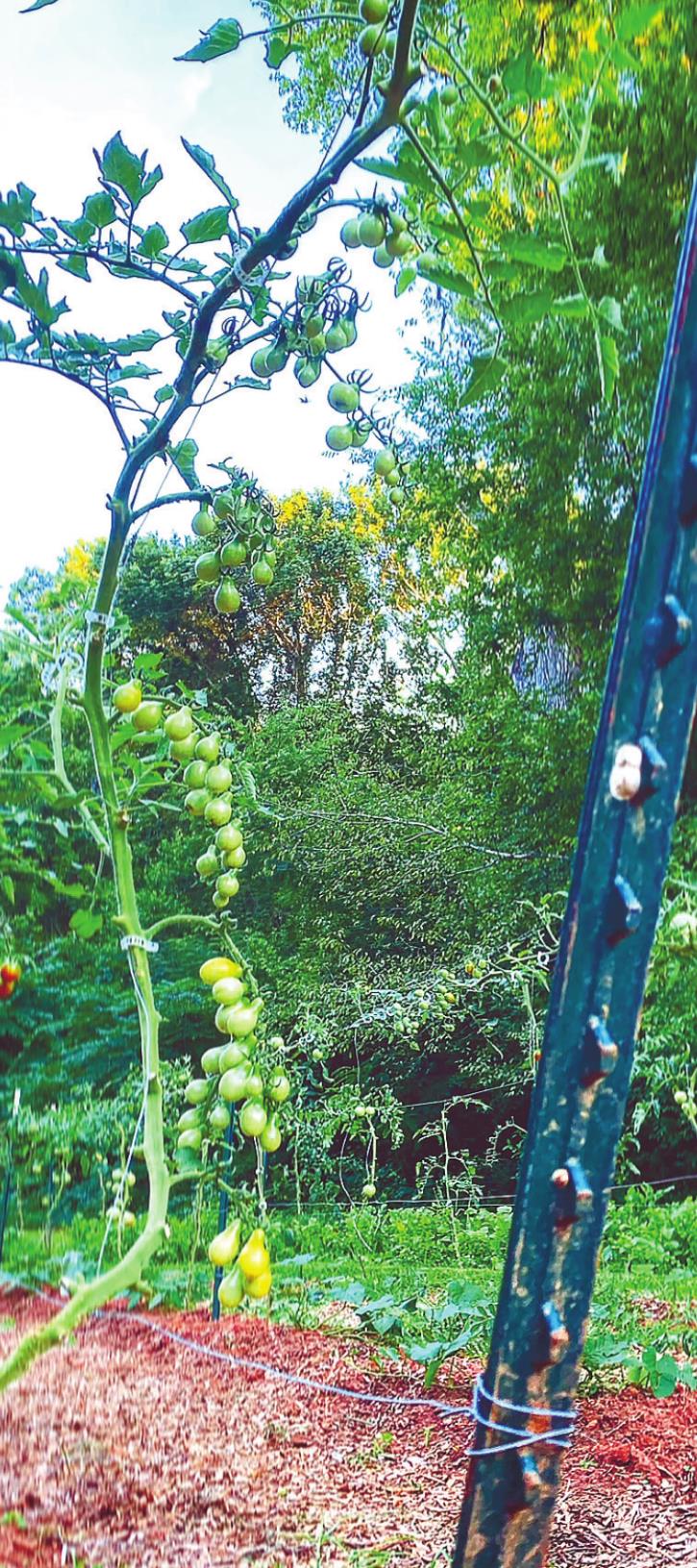
Spring planted tomatoes are bearing heavily. While color creeps across the fruit, drapes of sticky leaves conceal caterpillar hordes. Black castings rain down on fruit and leaf below. Some sad starts, stunted, diseased, and dying, never felt the springtime vigor of the better vines. Sevin-dusted beefsteaks bust out of their collapsing steel cages, tomato towers of Pisa, picture-perfect orbs glow in the sun. Bract and branch tear from vine under the weighty strain. The tomato war rages again.
Tomatoes, despite their aura of drama and passion, almost boringly demand regularity. Consistent daily amounts of light, water, and temperature, combined with effective pest management, provide a solid foundation for healthy plants. Commercially grown hot-house tomatoes are cultivated like clockwork, all these variables tightly controlled. Our Middle Georgia summers are anything but regular, any one of these variables can change significantly from day to day, though generally we have consistent heat. For success in my organic vineyard, I have found there is no substitute for skeleton pruning and a sturdy t-post trellis to help my tomatoes thrive.
T-Post Trellis
Green 6’steel t-posts spaced 10’-12’ apart, horizontally strung with the bottom wire about 12” above ground level and top wire 8” below the tops of the posts. Vertical wires or string tied to the horizontal runs provide support to climbing vines using tomato clips. Spacing is enough for 2-3 plants between each pair of posts.
Skeleton Pruning (Single Stalk Pruning) and Trellis Training
Suckers are the bright green leafy shoots that grow at a 45-degree angle between the vertical main stem and the lateral leafy branches. Remove them routinely, unless the main stem is damaged, then select the most vigorous looking sucker and treat it as the new main stem. Once the plants clear the bottom wire, train them to the vertical wires with tomato clips and continue removing suckers. After the vine grows past the top wire, gently turn the vine and train it horizontally like a grapevine using tomato clips. Remove any branches that are damaged, those which are pointing straight up or straight down, and any which are touching a neighboring branch. Remove any defective fruit, as well as most of the branches between the horizontal wires. Clean your shears often- use rubbing alcohol if plants are diseased. Prune the growing tip of the vine only when it reaches its neighboring vine.
Routine pruning allows ample air circulation to avoid disease, the openness of the resulting foliage makes daily handpicking of pests an easy chore- when dropped into a bucket of sudsy dish-soap water they drown. The plant’s response to pruning is normally one of vigorous regrowth and a heavier fruit yield over the course of the season.
Until next time,
Eatonton Gardenerd
garden.nerd.31024@gmail.com
The Eatonton Gardenerd is an experienced gardener who works with local organizations like the Butterfly and Blooms Garden, the Garden Club at PCPS and various local farmers’ markets while maintaining his own acre of densely planted food. He has previously worked for USDA-Agricultural Marketing Service and is on his way to completing his first gardening book.