
The salad plate of early season jewels turning from green to red has been replaced by a platter of big meaty honkers. The slow waiting for ripeness given way to innumerable sunbaked treasures that seem to pick themselves as the bucket brushes the vine. The peak of summer tomato production, the high note, the glut of goodness, is here. Kitchens of family, neighbors, and friends gladly receive it. Summer seems like it’ll never fade as fall waits patiently at the garden gate.
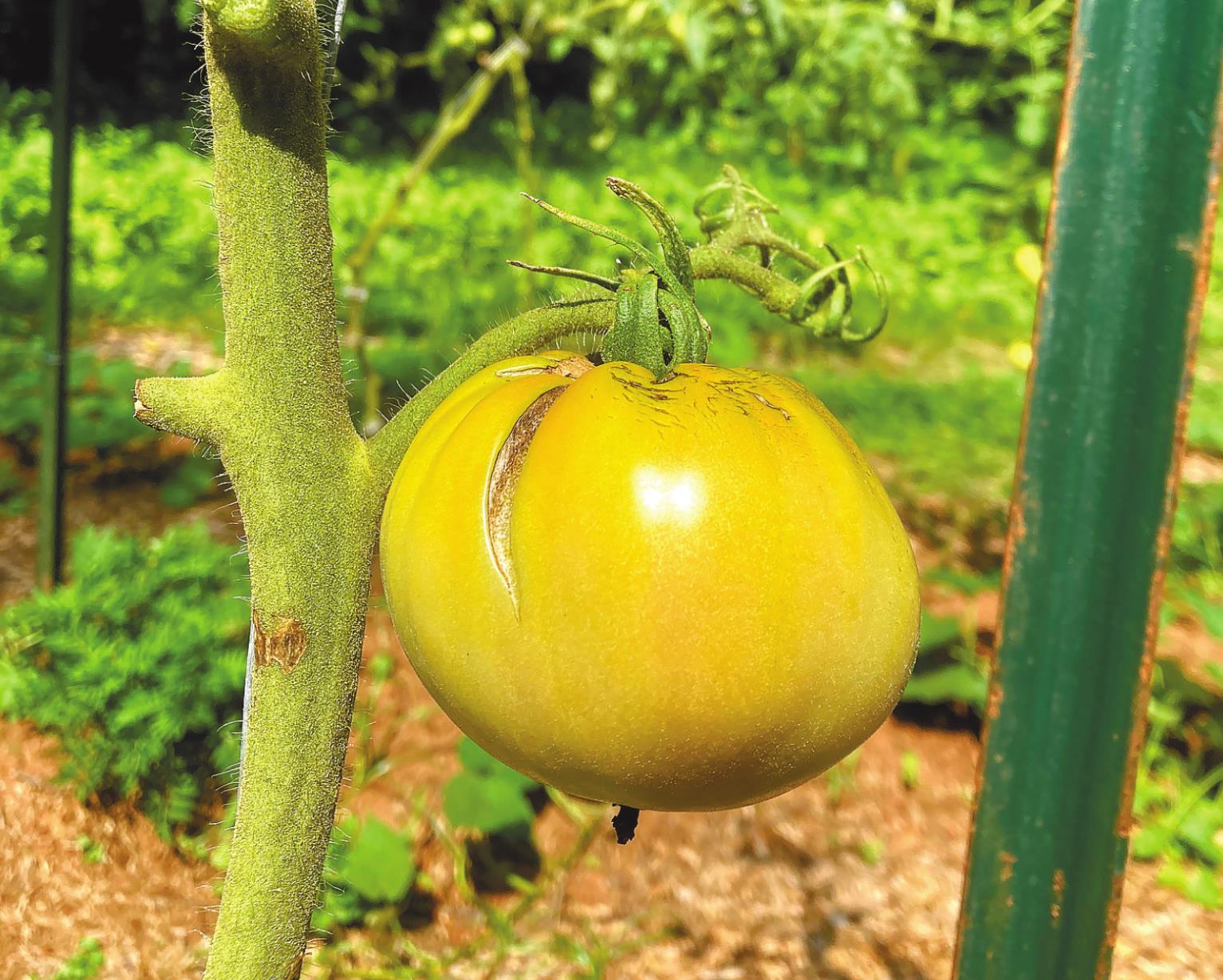
The summer rain is here too, and with it comes cracking, blossom end rot, and easy spread of fungal disease. Good planning and site preparation in the off-season are the best medicine for season-long tomato health, but in the heat of the mid-season battle the key to dealing with common tomato problems is to be present, to walk your tomato patch daily, and to react quickly to mitigate damage.
Cracking and blossom end rot
The afternoon deluge comes often, completely saturating the soil. The plants drink their way out of drowning, taking up water frantically. The internal growth of the fruit proceeds at such a rate that the skin of the fruit cannot stretch fast enough to match, and pop, your tomato cracks.
Blossom end rot is due to a calcium deficiency in the plants, and even if you amend your soil with calcium the plants have trouble taking it up when soil moisture fluctuates too quickly, whether drier or wetter.
Improving drainage along the sides of your rows will effectively treat both problems at once. Using a broadfork or garden digging fork, penetrate the soil as straight down with the tines of your tool as you can manage, rocking it back and forth to loosen it in place without digging.
Continue all the way down the path edge, one fork width is sufficient. Mulch the path deeply with woodchips applied at a depth of six to eight inches that will quickly break down into a two-tothree-inch-thick, water-permeable mat that helps regulate soil moisture and is pleasant underfoot.
Fungal disease
Introduced by caterpillars who carry the spores on or in their bodies, fungi enter the plant through open wounds due to pruning or being chewed upon. If you prune an infected plant, you can transmit the disease to the next plant along the row through your snips or secateurs. Clean them often with isopropyl alcohol to kill spores.
Pull diseased plants the moment symptoms are observed and place them in the trash can—not on the compost pile. It is better to try to get a replacement plant in the ground that may produce by the end of the season than to leave a diseased plant in the patch that will spread infection.
Until next time,
Your Eatonton Gardenerd
This week’s jobs: Pick and preserve peppers, tomatoes, peaches – Compost, just not blighty tomatoes – Pot up seedlings from last week’s sowing.
Send your gardening tips and questions to: garden.nerd.31024@gmail.com