
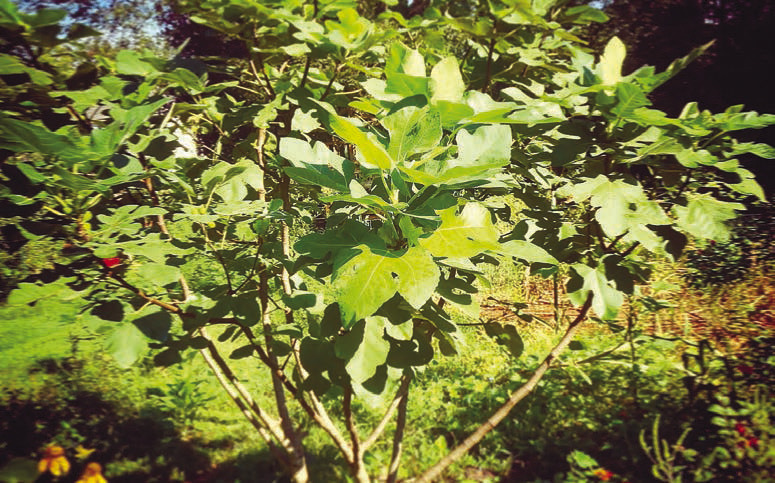
“We have figs that need to be pruned and the birds get all the fruit.”
– From a conversation with Mary Farmer There are two groups of figs that are divided by fruiting habit, much like raspberries and grapes. The lighter colored brown-and-white figs, varieties like Brown Turkey, Celeste, Chicago Hardy and Hunt, all fruit on new growth. We will refer to them as Group A figs, while the black figs like Mission and San Pedro, which fruit on one-year-or-older wood, will be Group B.
The difference between them requires totally different approaches to pruning and shaping of the trees. If you observe a smaller fig fruiting on what looks like vigorous new shoots, it is a Group A tree.
If the fig is large and has a deeply shaded canopy with dark figs growing all over the place on thick branches, it is a Group B tree.
Group A Pruning
At the end of the season, you can cut Group A figs back hard, to just two bud spurs. Observe the base of a branch and cut about a half-inch above the second bud or leaf scar. From just below this cut, two new fruit bearing branches will grow in spring. I wait to prune until the figs no longer put on size, the large fruit never seem to ripen, and the leaves are falling consistently.
This fall-pruning is essential to limit the size of the tree, which makes picking without a ladder possible. If you keep these figs small enough, you can grow them under a framework covered in bird netting, our only consequential fig pest in Putnam County.
Group B Pruning
These figs are best pruned in winter.
Remove dead and diseased branches as well as any crossing or rubbing branches. You can prune them to be small as well, but they don’t respond very well to being cut back too hard, too often.
If you remove more than a third of the branches per pruning, expect poor fruiting next season. If you have the space, let your black figs grow to their full height and size. They are very handsome and provide deep, cool shade with an internal structure that is very fun for youngsters to climb whilst feasting on figgy candy straight from the tree.
Keep it tidy!
All figs like to have a weed-free mulched area a little larger than the footprint of the canopy at the base.
When the leaves fall from my figs, I usually scatter a few shovelfuls of rabbit manure or chicken coop litter on top, and cover it all over with four to six inches of woodchips to keep weeds down and the tree fed. Weeds easily rob the shallow feeder roots of nutrients, so for ample fruit size and high sugar content, keep things tidy.
Until next time, Your Eatonton Gardenerd This week’s jobs: Start thinking about composting – Pick ripe pumpkins and sun cure – Make fig preserves Hey Gardenerds! Send tip and questions to: garden.nerd.31024@gmail.com