
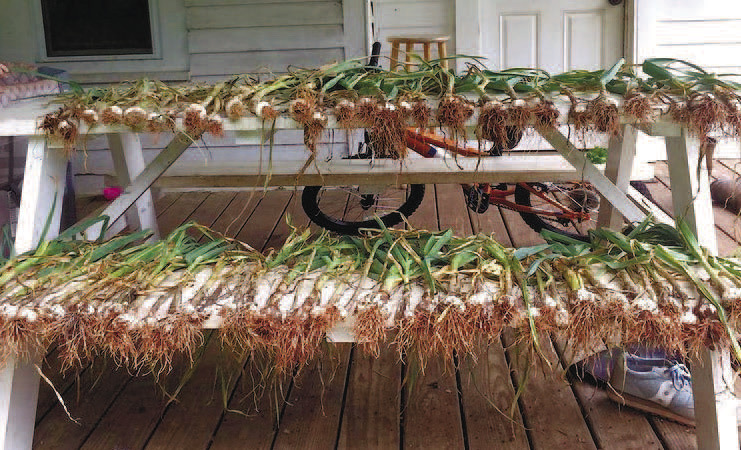
“Why do we plant garlic now?”
– Brooks, member of PCPS Garden Club When children start thinking about Halloween costumes with some urgency, garlic planting time has arrived. If you haven’t tried growing your own, give it a shot! It is a reliable and rewarding crop that takes minimal effort.
Fall-planting results in an initial sprout that stores energy to overwinter the bulb. Most of the time these first sprouts survive our cold and frosts, but if they die back, don’t worry, the bulbs will be perfectly happy through the winter.
When the soil warms and the bulbs send up the main shoots in season, your garlic will have an enormous head start compared to spring-planted cloves. When planted too late in spring, or in too heavy of soil, the bulbs will be scrawny at best.
Know thy bulb
There are 11 different horticultural classifications of garlic which are organized into two main types: Hardneck: Asiatic, Creole, Glazed Purple Stripe, Marble Purple Stripe, Porcelain, Purple Stripe, Rocambole, and Turban types.
These grow cloves around a central hard stem that will produce a scape, an edible flower stem, in spring. Harvest scapes after they curl around once, before the flower opens and they turn tough, and use them like green onions; they impart a mild garlicy flavor that has nutty undertones. Hardneck varieties are very cold hardy and mature faster, but do not store well enough to make it to next summer’s harvest.
Softneck: Artichoke, Middle Eastern, and Silverskin types. These grow soft central stems; they are the kind you see braided into long bunches. They hardly ever bolt before harvest, so you don’t get spring scapes, but they generally yield heavier than hardneck varieties, and offer a much longer storage potential when properly cured.
Planting and cultivating
Planting garlic straight into our gritty clay increases the risk of bulbs rotting when summer rains come. Amend your soil with as much compost and grit as you can manage, working it into at least the top 6 inches of soil to improve drainage.
If you have a patio garden or potager, use a good potting mix in a free-draining container, 12-inch terracotta pots are ideal. Plant individual cloves 2 inches deep and 6 inches apart. As a rule, plant only the largest cloves out of a bulb, doing so will increase size season-upon-season if you replant from your own garlic bulbs. I plant two cloves of softneck for every clove of hardneck to suit our needs.
Side dress the shoots with fertilizer or compost in spring. The goal is to get the largest shoots possible.
Both types do well in Eatonton.
Hardneck scapes on first-early potatoes are a treat, their cloves are used summer through fall in our kitchen. A softneck braid carries us through winter and spring, right up to harvest and curing time again.
Until next time, Your Eatonton Gardenerd This week’s jobs: Water compost piles – Counter-ripen tomatoes – Make sweet potato pie Fellow Gardenerds! Send questions, concerns, and tips to: garden. nerd.31024@gmail.com