
PUTNAM COUNTY
Editor’s note: The symmetry of 52 weeks in a year and 26 letters in our alphabet inspired us here at The Eatonton Messenger to embark on an alphabetical journey of Putnam County every other week this year, looking at something – or someone – unique, significant, unusual, or just plain interesting.
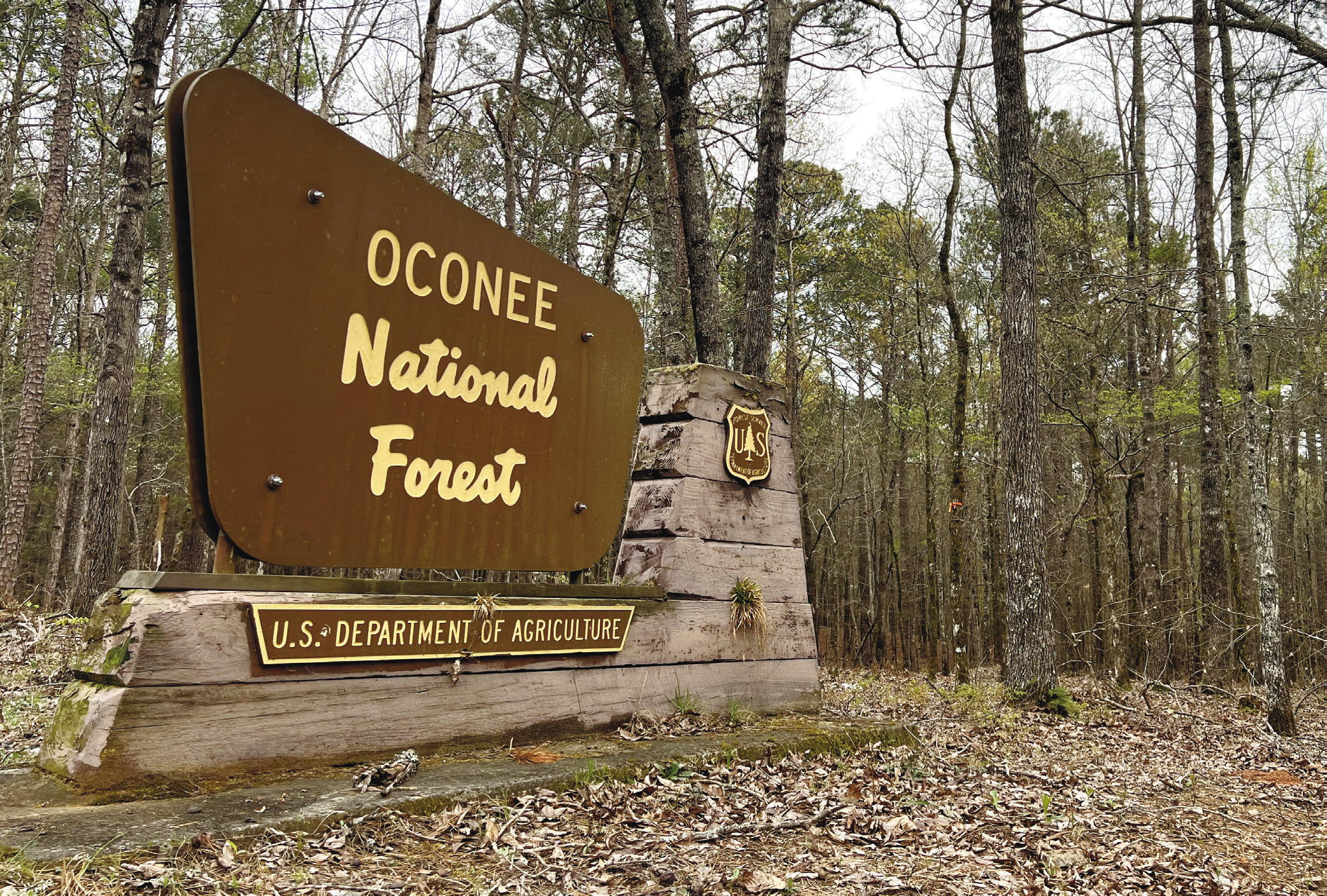
By far, the largest landholder in Putnam County is the federal government, with 37,981 acres of the Oconee National Forest (ONF) lying within the county’s 231,040 total acreage.
The Oconee National Forest dominates the western landscape of the county, extending beyond Putnam’s southern border well into Baldwin and Jones counties, as well as crossing over into Jasper County along Putnam’s western edge while reaching as far north as, but not including, the Rock Eagle Monument compound.
Originally created in 1959 when President Dwight Eisenhower proclaimed 96,000 acres in west-central Georgia as a national forest, the entire ONF now occupies parts of eight counties and totals 116,392 acres, though not physically continuous. Putnam County holds the largest portion of the forest, followed by Jasper County at 30,517 acres and Greene County with 26,659 acres, congregated at the northern end of its boundaries. Somewhat ironically, Oconee County encompasses the smallest segment of the ONF at just 157 acres.
Both Lake Sinclair and Lake Oconee have ONF shoreline, but Lake Oconee’s is limited to north of I-20 in Greene County, while Lake Sinclair is bordered by several hundred acres of forest near Putnam County’s Twin Bridges area, including a designated park with a boat ramp, plus camping facilities, a public beach and several hiking trails.
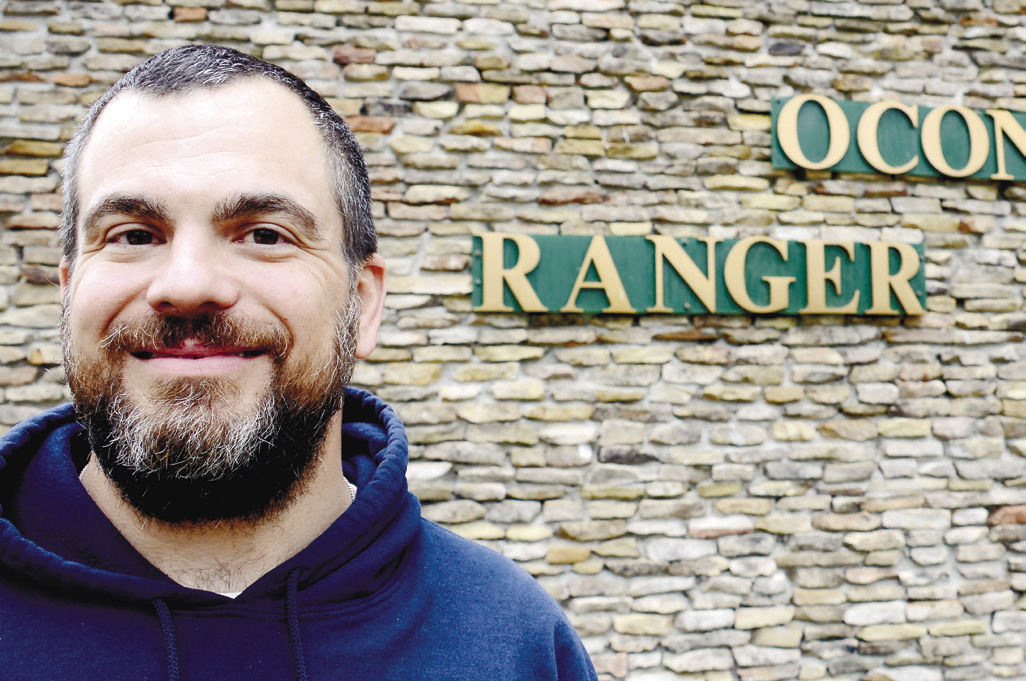
As the onsite archeologist for the local Forest Service Oconee District Office (1199 Madison Road, Eatonton), Andrew Wells is charged with searching for, finding, collecting, and categorizing any artifacts found in the forest that stem from when it was primarily arable farmland in the previous century when cotton was king before the boll weevil arrived in 1915. Within a decade, Georgia was essentially forced out of cotton growing and Putnam County in particular had transitioned into becoming the dairy capital of the state.
Meanwhile, the forest gradually grew where farmhouses, barns, and small businesses once stood, leaving Wells a target-rich environment to mount meticulous, year-round, science-based excavations. He cautions, however, that under federal law, anyone hiking in the ONF should not gather or remove anything found.
“All artifacts and all archeological sites on federal lands are protected under the Archeological Resources Protection Act, commonly known as ARPA,” Wells explained. “And there are some pretty hefty fines, I think up to $100,000 even, and jail time for illegally collecting artifacts or damaging historic sites on federal property. Basically, if somebody comes across something, they can take a picture of it and if they like, just contact us and make sure we know about it because there are plenty of sites that we haven’t come across yet.”
Wells said he doesn’t want to discourage anyone from enjoying the forest, though. With rare exceptions vehicles are not permitted off clearly established roads in national forests, but anyone is free to walk and enjoy what the ONF offers.
“All the forest is open to foot traffic,” Wells confirmed. “You can walk cross country wherever you want to within your own safety and comfort level. And you can get into some pretty far-out places if you just start walking in one direction.”
According to Wells, the ONF is predominantly populated by loblolly pine trees, with short-and-long-leaf yellow pines also widespread, along with fire-resistant hardwoods like oaks and hickories, and to a lesser extent sweet gum and maples.
As far as wildlife, Wells said deer are the most obvious animals to come across locally in the Oconee National Forest, along with ‘possums, armadillos, rabbits and squirrels. He said coyotes and wild pigs also roam the woods, with beavers and otters common in lakeside areas, as are quail and waterfowl like cranes and various duck species. He’s been told of black bears in the county, too, but he's never seen one in six years working out of the Eatonton station.
“No doubt, we’ve got quite a bit of forest where you could walk from point A to point B and still be on Forest Service land for the entire time. But it can get pretty rugged,” Wells cautioned. “You can get down to some creek bottoms, get into some pretty high hills, or you can get into areas where it’s really thick and hard to travel, but there really are some pretty areas out there that you just kind of come upon when you’re walking through the woods. It’s a great resource that people need to use more.”