

Editor’s note: The symmetry of 52 weeks in a year and 26 letters in our alphabet inspired us here at The Eatonton Messenger to embark on an alphabetical journey every other week in 2023, looking at something – or someone – unique, significant, unusual, or just plain interesting in Putnam County, Georgia, home to 10 different locations listed on the National Register of Historic Places – including the Putnam County Courthouse as part of Eatonton’s official historic district.
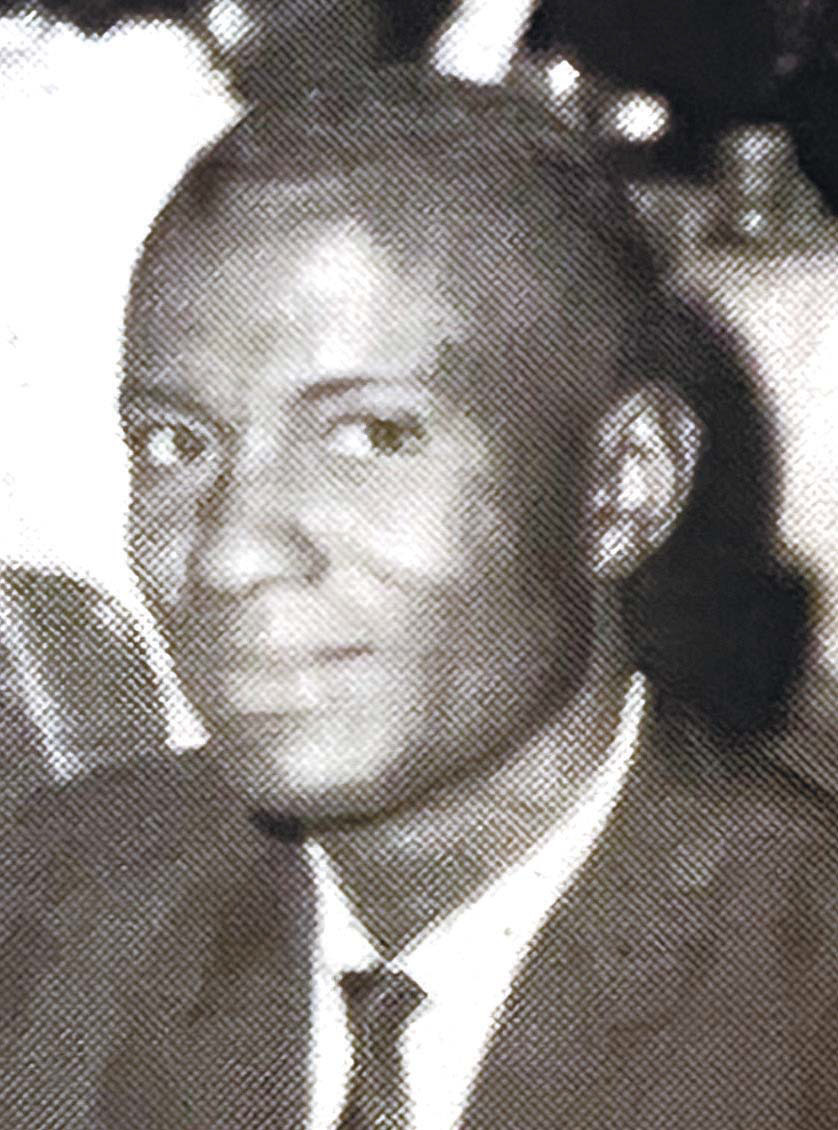
If Jimmy Davis, one of Putnam County’s first two Black commissioners, were alive today, there’s little doubt he’d be fighting tooth and nail to preserve the Eatonton park named in his honor.
Not out of some sort of personal pride, but in dedication to doing what’s right for his constituents, something that presently appears in question at the center of a city versus county standoff over the park’s future.
“He was a politician that would listen. That’s just how he was,” recalled Cynthia Davis, the second of Davis’ four daughters, who now lives near Conyers. “And whatever he could do in the county to make things better for children, that was always his focus.”
Sadly, many local kids are now without a place to play safely and residents of the predominantly Black neighborhood less than a mile southeast of Eatonton’s downtown have nowhere pleasant and clean to gather for shared walks, weekend barbecues, or just quiet reflection. Jimmy Davis Park has become a political football while steadily falling into disrepair as a result of municipal neglect.
“We, my sisters and I, we were all very proud to have the park named for him, especially when he passed, because that’s where we held the reception, at the park,” Ms. Davis added. “That’s why it hurts now to know that as much time and commitment he had for the youth and providing a place for them to be able to safely play and have activities that they could be a part of, that it’s no longer, it’s not being maintained.
“It’s aggravating. And it brings back memories of when Dad would go to the commissioner’s meetings and he’d come back and he would bring us up to par on what was going on and his feelings about it,” she continued. “The one big concern he had, and I shared this in the last meeting that I came down to about a month ago, is that he said it was going to be a fight to keep the commissioners, the politicians, from sending all the money down to the lake and not putting it into the city.
“He said, ‘I’m fighting as hard as I can, but the city is not getting what it deserves,’ and the very things that I listened to him talk about are the things that I see here now. I was like, ‘No, they wouldn’t do that, Dad,’ but he would say, ‘Oh yes, oh yes they will.’ And now, here we are. It has come to pass.”
Jimmy Davis was born in Eatonton in 1927 and volunteered as a teenager to serve in World War II, even earning his high school diploma while stationed in Germany with the U.S. Army.
Shortly after returning home, Davis began dating Elean Benjamin and they married in 1948, with Davis just 21 years old and his bride not quite out of her teens.
Cynthia Davis said her father was “a natural entrepreneur” and became a respected Eatonton businessman, owning a used-car dealership on the east side of town.
That led to him eventually breaking the county commission color barrier alongside George Thompkins after both won their August primaries in 1982 (Thompkins after a runoff, while Davis easily advanced). Both then ran unopposed in the general election and were confirmed that November.
They each took office early in January 1983, which boosted the county board from three to five members, a configuration it retains today.
“My dad was very well respected in the community because of the relationships that he had built in both races. So, when he came in as a commissioner, I think the way people saw him was not just as a Black commissioner, but as a commissioner for the people, because he helped as many whites as he did blacks,” Ms. Davis recalled.
“That was the atmosphere that we grew up in at home. We always had people of different races at our homes. My dad’s business always consisted of people of different races. So, when he became a commissioner, I think for me, I saw it as a continuation of what he was already doing. It just gave him a different platform to be able to do more for the community.”
As a father, Cynthia Davis said her dad always remained “involved and definitely present” in whatever she and her sisters were going through while growing up.
“He was a supporter of what we were involved in, what we were doing,” she said. “He was not a man of many words at home, but he carried a lot of strength. We knew that we could depend on him without fail, and it wasn’t just about meeting financial needs. It was anything we needed, direction or assistance. He was just very, very much there to support us and to help us through whatever we found ourselves involved in.”
Jimmy Davis died in 2012 and now lies interred alongside his wife in the East Eatonton Cemetery, directly across Hogan Boulevard from a park that bears his name, but hardly reflects his lifelong civic pride and sense of duty.
It remains now to be seen if local leadership will step up to honor this Eatonton war veteran, businessman, and pioneering councilman’s life by taking responsibility for care of the lone physical reminder of his legacy.