
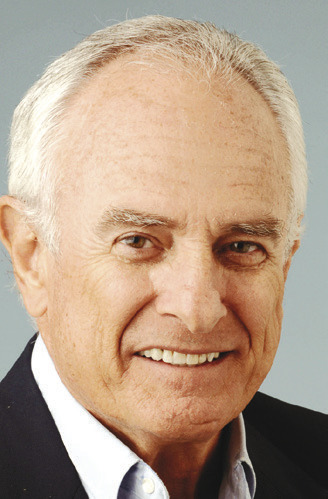
Owing to a golf friendship, there was an annual trip to Kansas City in June for several years, which allowed me the opportunity to explore the Show Me State, which reminded me so much of our own Peach State.
Missouri and Georgia feature almost identical geography. Seriously, grab a map and take a look. You’ll find the western and eastern borders of both are quite similar. And you may be familiar with the “hanging toe” in Southeast Georgia which incorporates the Okefenokee Swamp.
Well, Missouri has a hanging toe, too, and it’s in pretty much the same spot.
Like Georgia, Missouri has produced or provided residency for several big-league baseball players, the headliner being Hall of Famer Satchel Paige, born in Mobile but who lived out his adult life in Kansas City.
I was able to spend time with Satchel, not in K.C., but in Springfield, Illinois, of all places. I had arranged to drive over one day for lunch with Cardinals icon Stan Musial at his restaurant in St. Louis. His lunch partner was a minor league owner of some repute, A. Ray Smith.
When I explained to A. Ray that I frequently sought out baseball ole timers, he suggested I come to Springfield and spend some time with Satchel.
That turned out to be one of the most fortuitous invitations I ever had. On my next trip to Kansas City, I arranged to fly to Springfield and do just that. One of my prized possessions remains a taped interview with Satchel pontificating – unbridled. Such insightful commentary!
What fun!
Trips to Missouri also allowed me time with Mickey Owen, the Brooklyn catcher who dropped the third strike against the Yankees in game four of the 1941 World Series.
That gaffe led to a rally by the Yankees and enabled New York to come from behind and win the game, starting a tradition of World Series heartbreak for the Dodgers that lasted into the ‘50s.
Still, he noted the Brooklyn fans did not turn on him – especially the girls who sent photos of themselves in bathing suits! His wife, he laughed, just ripped them up. At the time, Owen was the sheriff of Greene County, Missouri. We talked about baseball for most of the afternoon.
From Springfield, it is 110 miles to West Plains, home of the crafty Dodger pitcher, Preacher Roe. He compiled a 127-84 record with three big-league teams, once posting a 22-3 record with Brooklyn. Roe later admitted he threw the spitter, though as I recall, he neither confirmed nor denied it in my interview with him.
One of my regrets was that by the time I began hanging out in Kansas City, colorful team owner Charlie Finley had moved the A’s to Oakland, where they won three World Series.
Everybody seemed to dislike, even hate, Finley, who advocated for orange balls and bases but never could pull it off. He did succeed, though, in getting the owners to sign off on playing night games in the World Series and influenced the adoption of the designated hitter rule. I hated him for that.
Finley also made draft picks for his team, wrote copy for the team yearbook, designed the uniforms, and even made out the song list for the stadium’s organist. Basically, it was all about Charlie.
With a phobia that never subsided, Finley always tried to keep a phone within arm’s length. He even had phones installed in the A’s head office bathrooms. According to an A’s public relations rep, I once met, it became a source of great joy to staff who loathed the owner to see him make a bathroom stop. They would wait a moment, then dial the phone and hang up as soon as he answered.
“As his temper erupted,” the P.R. man said, “we had the time of our lives knowing there was nothing he could do but cuss a blue streak.”
Not only was the interaction with these famous names in baseball a fulfilling personal experience, I got the biggest kick out of traveling to Missouri and seeing the fields, farms, and small towns. I stopped at many crossroads and general stores along the way to share conversations with the locals.
You’d see kids playing games at recess, farmers on big, green tractors preparing the land for spring planting, and in Amish country, near Seymour, they still used horses to farm.
Or at least that’s the way I remember it.