
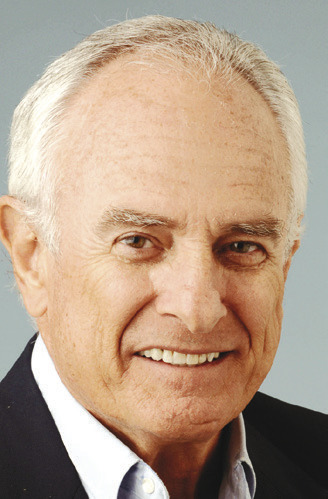
Harmon Wages was a football player and a very good one, often underrated, but always with a flair for the dramatic, turning heads and causing headlines to sometimes drip with hyperbole. Even when there was a faux pas, it seemed to make him more popular with the Atlanta Falcons’ fan base.
That’s because Harmon was honest. Like his first time on the air as a sportscaster when he bleated out to viewers: “I know what you are thinking; that I am terrible,” but adding a proviso that he would work at it and improve. He did and became a long-running Atlanta TV celebrity as a result.
His nickname was “Charmin’ Harmon,” a moniker courtesy of Coach Norman Van Brocklin, whose graphic Jekyll-and-Hyde personality kept the pot of controversy boiling as long as he was coach.
An assistant coach, Lew Carpenter, a friend of Paul Hornung, gave Harmon No. 5, Hornung’s number, and told Wages that he reminded him of Hornung – but the “off-the-field” Hornung. There was something common about the two stars in that they owned up to their mistakes. Hornung, suspended for a season for gambling, apologized and did not succumb to bitterness.
Like Hornung, Wages dated pretty women – the one he was sweetest on got a mink coat to match the one Charmin’ wore himself. He hung out at watering holes that attracted the social elite of Atlanta.
Sometimes there was peace and tranquility on the home front, but as sure as Stone Mountain shall not be moved, Van Brocklin would not leave smooth water alone. He had to stir things up by benching Wages out of spite.
Following a particularly bitter loss to the St. Louis football Cardinals, Van Brocklin picked a fight with Wages in the men’s room during a post-game party, which led to the player decking the coach. It became the NFL’s most-talked-about incident for at least a couple of weeks.
On the other hand, when Harmon’s adoptive father, Leon, was in failing health and came to Atlanta to see his son play for the last time, Van Brocklin put in plays designed to make Wages the centerpiece of the Falcon offense.
On Dec. 7, 1969 – Pearl Harbor Day – Wages became just the eighth player in NFL history to throw for a touchdown, rush for a touchdown, and catch a touchdown pass in the same game. It was a memorable afternoon and the victory over the New Orleans Saints was the last game Leon saw Harmon play. His teammates voted to give the game ball to Wages.
Harmon did not keep the treasured memento, though. He gave the ball to his dad. In failing health, Leon passed away not long afterward, so Harmon and his mother put the game ball from that sensational victory in the casket when his father was buried.
An outstanding high school player at Lee High in Jacksonville, Fla., Wages was a much-sought-after quarterback who now says he should have enrolled at the University of Georgia, but instead cast his lot with the University of Florida.
Following a career with the Gators as a backup to Steve Spurrier, Wages signed with the Falcons as an undrafted free agent. He played five seasons in Atlanta with success as a versatile running back but there also were a lot of ups and downs.
The downs included confirmation that he had fathered a son out of wedlock and having to serve three months in prison for cocaine possession. Prosecutors sought to have him convicted of drug trafficking, but with Atlanta attorney Eddie Garland as his lawyer and home run king Hank Aaron as a character witness, among other factors, Harmon only had to serve time for possession.
Wages never revisited the drug scene, but out of a job and out of the limelight, he became an emotional wreck with a debilitating penchant for Scotch. A serendipitous moment got him back on the straight and narrow, though, when he reunited with his seventh-grade sweetheart, Bonnie, who was divorced and living in Summerville, S.C.
Harmon has settled in with her, which has the makings of a fitting storyline with an opportunity to live “happily ever after.”
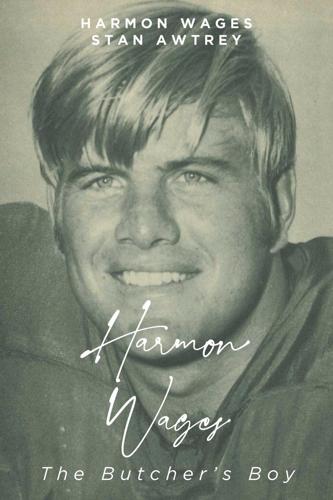
The good news upon reflections from prayerful walks on the beach led Harmon to write a book. In Butcher’s Boy, he doesn’t hold back, disclosing everything in a warmhearted treatise that reveals his flaws and shortcomings.
Written with Stan Awtrey, a sportswriter with The Atlanta Journal-Constitution, and edited by Martha Kavanaugh Hunt, Harmon confirms he has no axe to grind with anyone these days, not even Van Brocklin. What the “Dutchman” did for him when his dad last saw him play warranted the ultimate in forgiveness.
And that’s just part of the well-told Harmon Wages story, warts, and all.