
You probably have to be something of a seasoned historian or a baseball aficionado with a bent toward gleaning the lore of ole timers to recall the father-son pitchers of the Jim Bagby families.
The senior Bagby was born in 1889 in Barnett, 51 miles west of Augusta, a little more than a long toss from I-20.
Beginning in 1912, he played nine seasons in the big leagues, posting a 3.11 ERA. His son, Jim Jr., born in 1916 while his father was pitching for Cleveland, spent 10 years in the majors, finishing with a 3.96 ERA – bringing about one of the most successful father-son combinations in baseball history.
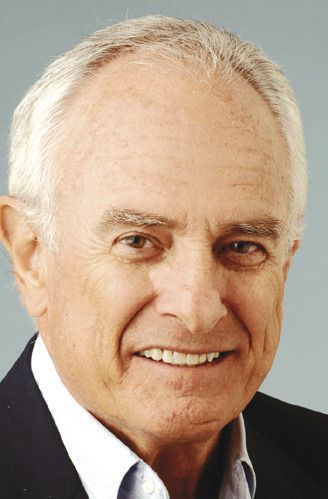
In something akin to a threepeat, Junior’s son, Charlie, was a two-sport student-athlete at Georgia, a basketball forward, and a first baseman-pitcher in baseball. He excelled as fluently and noteworthy as a student as he did in competition.
While Charlie, who competed with thick black goggles, did not make it in the NBA or Major Leagues, he was one of the most accomplished student-athletes at UGA – one linked to the Greek philosophy of paideia, which embraced the concept of the importance of the well-rounded man.
Like Tommy Lawhorne, Billy Payne, Terry Hoage, and the late Dr. Alec Kessler, Charlie was an unrelenting competitor, just as eager to score an “A” in a classroom as to get a timely hit in baseball or fire a shot off from the corner that stripped the net in basketball.
In my mind’s eye, I can see Charlie scrapping on the basketball court, beyond concern for life or limb, or swinging a bat with measured intensity to drive in runs that made his coach Jim Whatley grin. Those scenes, among many others, flashed front and center for me last weekend when I heard the news that Charlie had passed away at his home in Tampa.
While he would not bring up the subject, Charlie enjoyed sharing stories about his familial baseball heritage. His grandfather, Jim Sr., nicknamed “Sarge,” was the first pitcher to hit a home run in the modern World Series. Ty Cobb, Sarge’s fellow Georgian, who many proclaim was baseball’s greatest player, once said that Bagby was the “smartest pitcher he ever faced.”
Charlie’s father, Bagby Junior, will be remembered as the pitcher who ended Joe DiMaggio’s hitting streak at 56 games. On July 17, 1941, the Yankee Clipper came to bat for the last time in the 8th inning at Cleveland when Bagby forced him to hit into a double play and end the streak.
If you consult the Internet and the “Society for Baseball Research,” you will find many interesting facts about the Bagbys, who remain among the most successful father-son stories in the history of sports.
They played baseball for the love of the game as much as anything and had little to show for it. Players of that era were not beneficiaries of million-dollar contracts. There was no pension plan.
Marvin Miller had not yet been engaged by the player’s union. Those were the days when some players quite literally played for peanuts sometimes.
Had Jim Jr. and Sarge had the benefit of an education – as Charlie did – who knows how much that might have enhanced their baseball earnings?
Charlie, nicknamed “The Cobb County Cobra,” by his teammates, was certainly an accomplished athlete. He was captain of the 1964 basketball team at Georgia and made the All-SEC Academic team.
Lettering three years in baseball as a pitcher and first baseman, Charlie hit .455 and led the team in 1962 for wins, innings pitched, strikeouts, WHIP, and ERA. He was named the next year to the National Baseball Congress All-America team at the 32-team national tournament in Wichita, Kansas.
Charlie passed all four parts of the CPA exam before graduation. He was a member of Sphinx, the highest honor a male student could attain, Blue Key, Phi Kappa Phi, Beta Gamma Sigma, Phi Eta Sigma, and president of Beta Alpha Psi honorary accounting society, graduating cum laude in 1964.
Charlie Bagby did not make it to the big leagues as his forebears did, but in his own way, he was every bit as accomplished as his famous father and grandfather were in their days.