
Black History Month

Pulitzer Prize-winning author and activist Alice Walker and the late Tuskegee Airman Hiram E. Little are both prominent Black Eatonton natives recognized with pride in the local community.
But there’s a third person who seems to have slipped quietly under the local “famous” radar who is widely recognized in the international art world and even has a center at a university named in his honor.
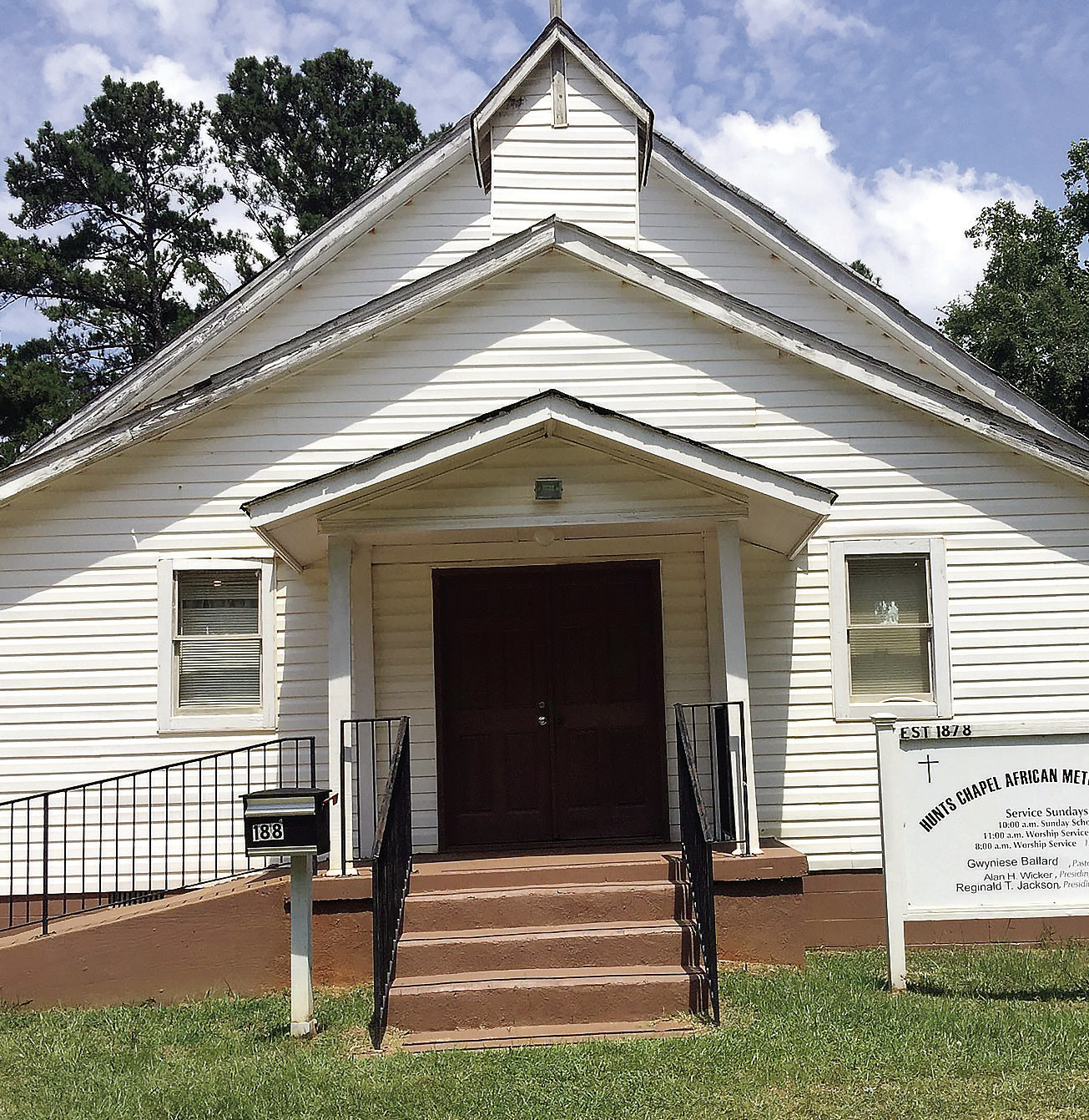
Dr. David Clyde Driskell was born June 7, 1931, in the Hunts Chapel church parsonage in Putnam County, where his father, G.W. Driskell, served as pastor. With three sisters, David Driskell was the lone son born to Reverend and Mary Lou Cloud Driskell.
Although his family moved from Eatonton to western North Carolina when he was 5, Driskell returned to his birthplace in 1989 and again in 2006 to explore his childhood roots.
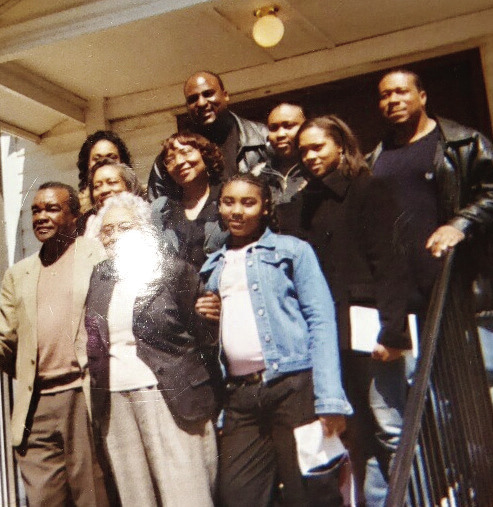
The second time, he visited the Hunts African Methodist Episcopal Church on Hunts Chapel Road accompanied by members of his own family, Atlanta High Museum of Art representatives, and residents Gloria Nelson, Mozelle McKay, and Georgia Benjamin-Smith.
Driskell’s parents made education a priority, so once old enough, he reportedly traveled two hours each way daily to a segregated elementary school. The first in his family to attend college, Driskell earned a bachelor’s degree from Howard University, a Master of Fine Art from Catholic University, and later received 13 honorary doctorates.
Driskell served as an associate professor and as a professor of art and/or chairman of the art department at Howard University, Fisk University, and Bowdoin College before serving as Distinguished University Professor of Art at the University of Maryland until 1998 when he retired.
A deep appreciation for art and working with his hands was cultivated in Driskell practically from the time he was born. His father was a skilled ironsmith, woodworker, and calligraphist, his mother made baskets, quilts, and natural dyes, and his maternal grandfather crafted wood furniture, horse collars, and harnesses.
“Driskell drew artistic inspiration from his father’s sketches and skilled calligraphy, and from his mother’s proficiency at crafting colorful pigments,” Michele Bechtell wrote in a 2020 Lakelife magazine article about him. “He drafted images on blank pages in his dad’s theology books, modeled clay from local brooks, and mixed natural dyes from pokeberry and leaves.”
Early in his career, Driskell responded to the 1955 Mississippi lynching of young Emmett Till by painting “Behold Thy Son” a year later, an oil-on-canvas work now in the collection of the Smithsonian’s National Museum of African American History and Culture in Washington, DC.
Driskell’s heritage in a clerical family and church appears through various Christian images in his works. He once said his “priestly mission” was to tell the story of African American art.
Numerous art studies scholarships and awards are named in his honor, including the prestigious “David C. Driskell Prize in African American Art and Scholarship,” presented annually by the Atlanta High Museum of Art.
It honors and continues Driskell’s work of “changing the narrative of American art history to include the influential role of black art masters and creating a paradigm shift in the landscape of American art history,” Bechtell wrote after twice interviewing Driskell.
At the University of Maryland, the David C. Driskell Center for the Study of Visual Arts and Culture of African Americans and the African Diaspora, known informally as “the Driskell Center,” holds the Driskell archive and often hosts exhibitions on African American art.
“Driskell did not so much discover the best-known African American artists as he did establish African American art as a legitimate and distinct field of study,” Tyler School of Art Dean Keith Morrison said. “Very few scholars in the annals of human history can be said to have established an entire field of study.”
Driskell’s seven decades as an art historian and steward included curating dozens of high-profile and landmark exhibitions by black artists. His artistic works, including paintings, drawings, collages, and prints, have been presented nationwide, too.
Driskell’s numerous awards include, but are not limited to, the Presidential Medal and the National Humanities Medal, presented to him in 2000 by President Bill Clinton. Oprah Winfrey and White House officials have also consulted Driskell on works for their art collections.
Driskell served on the prestigious Skowhegan School of Painting and Sculpture’s faculty, board of governors, board of trustees, and/or advisory committee for decades until his Covid-related April 2020 death at 89 years old in a hospital near his Maryland home. Driskell left behind his wife of 68 years, Thelma Grace Driskell, two daughters, five grandchildren, and four great-grandchildren.
To learn more about Driskell, visit online at lakelife.today/post/ behold-thy-son to read Bechtell’s entire article.