
Under the title “When Blacks and Whites Work Together...” the Putnam County Republican Party hosted a unique event on Aug. 14 at Parkside Main Theater in Greensboro.
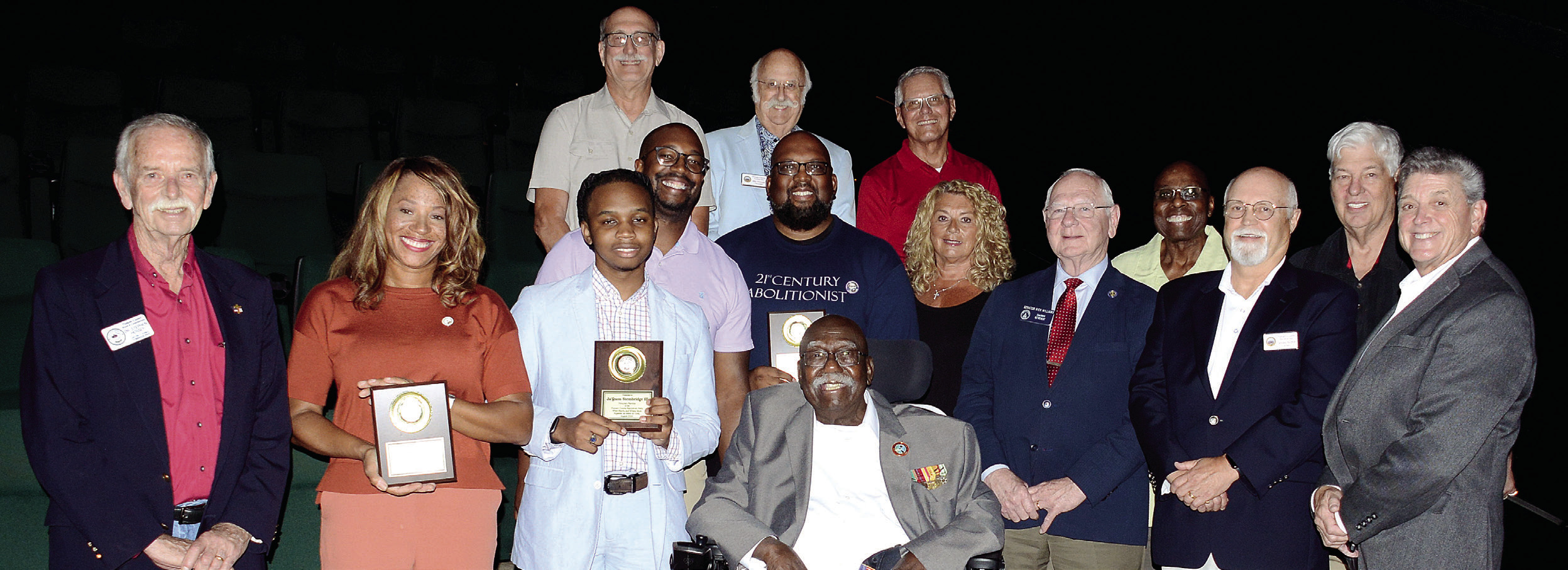
Several Black speakers, including Ja’Quon Stembridge, the 18-year-old founder of Georgia Teen Republicans, Reverend Michael Lancaster of the Frederick Douglass Leadership Institute, Putnam County Board of Education candidate Charles Trumbo, and Georgia State Representative Mesha Mainor addressed an audience of approximately 40 people that also included State Senator Rick Williams, from a stage set up in front of one of the facility’s movie screens.
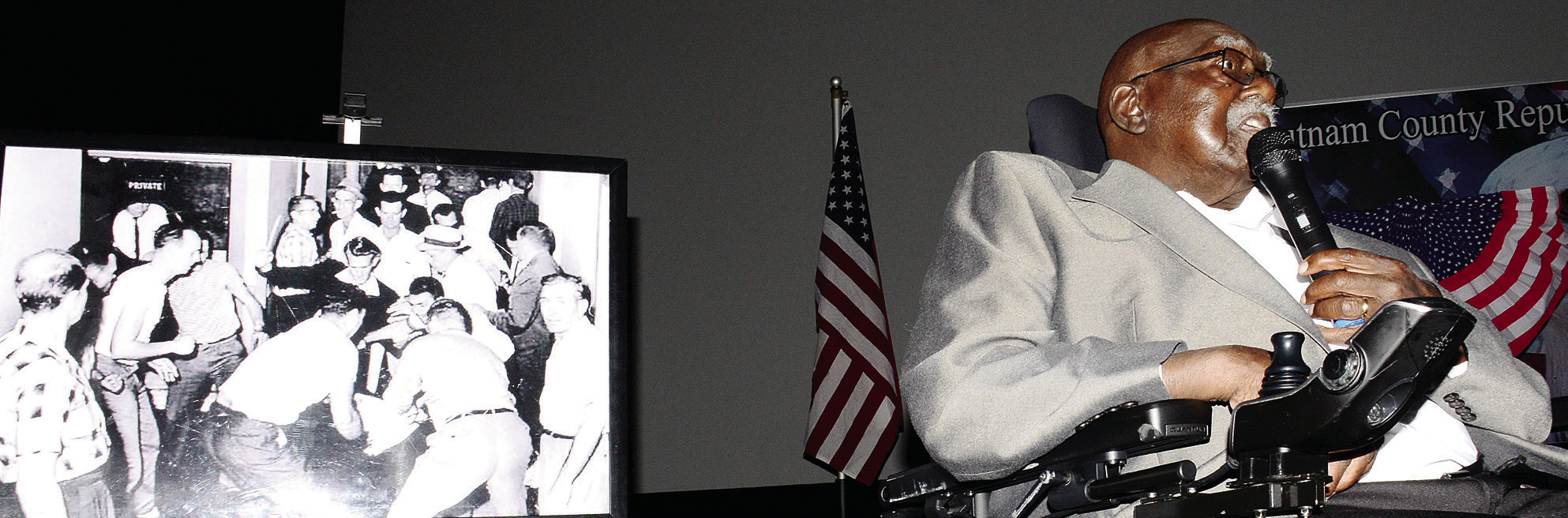
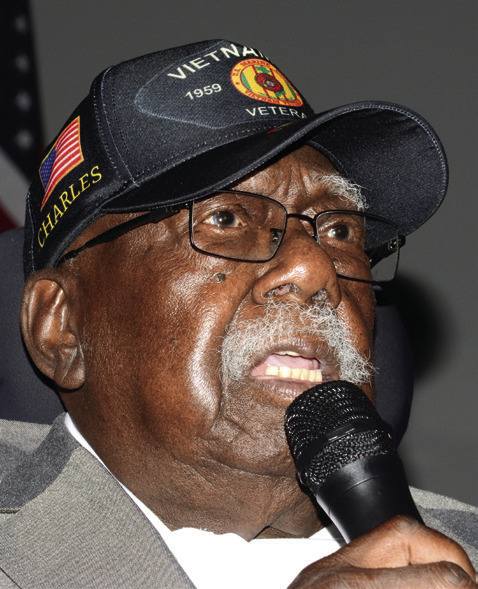
However, the event was highlighted by a keynote presentation from Charles Person, who, at 18 years old, was the youngest member of the original 13 Freedom Riders.
The Freedom Riders, made up of seven Black and six white civil rights activists, in May 1961 traveled by bus throughout the South to test and challenge whatever segregationist attitudes and policies remained. They often were met with ridicule, scorn, and violence.
“I come to you tonight not as a Democrat, not as a Republican, but as an American,” Person said in his opening address, speaking in a strong, determined voice.
Now 80 years old, Person, who lives in Atlanta, spoke confidently and clearly, recalling horrific details of facing racist hatred on his Freedom Ride.
“I’ve been called every nasty name one could think of,” he told a rapt crowd in the theater. “But the first time I was called ‘American’ was not in America. I was in a foreign country, and I was talking with these gentlemen who said, ‘Well, you’re an American. You have a passion for liberty and those kinds of things.’ And they were right. I have a passion for freedom and those kinds of things … and when we got there in 1961, I was very young and optimistic. Tonight, I’m not so young, but I remain optimistic.”
Person described growing up in Atlanta and said he was a good student, good enough to be accepted at Massachusetts Institute of Technology, where he hoped to study and become a nuclear engineer.
But with money tight at home, Person also applied to attend nearby Georgia Tech and Emory universities. Both rejected him—on racial grounds, he believes — so he ended up at Morehouse College, where he quickly became immersed in civil rights activism.
“By the way. I also had a four-year scholarship to Tuskegee, but I wasn’t going to go to Alabama in those days,” Person added.
Ironically, going to Alabama with the Freedom Riders proved pivotal in making Person one of the most memorable Freedom Riders, as he survived vicious attacks and beatings in both Anniston and Birmingham after arriving on a Trailways bus.
Once in Birmingham, Person and James Peck, arguably the most famous and effective white civil rights activist in U.S. history, were selected as the first “testers,” in Freedom Riders’ lingo, to enter the terminal there. They were immediately set upon by a large group of angry white men, Person recalled, with Peck quickly falling while he managed to stay upright, though stunned by blows and bleeding.
“I was able to maintain my balance until a picture was taken. When this picture was taken, it startled (the attackers), and they allowed me to go. I simply walked away,” Person told the Greensboro crowd. “I just walked away and got out to the street.”
Eventually, Person described being flown to New Orleans since no buses — or drivers — were suddenly available to take the Freedom Riders out of Birmingham.
“We buy our tickets, and we wait, and we get on a plane, and there’s a bomb threat,” he continued. “So, we deplane. We return to the terminal, wait, and return to the plane. There’s another bomb threat. We are now ready to wonder if we will ever leave Birmingham.”
They did.
Person said making it to New Orleans just in time for a May 17 rally on the 1954 Supreme Court’s Brown v. Board of Education ruling anniversary.
It was the first to deem state-sanctioned segregation of public schools as a violation of the 14th Amendment and, therefore, unconstitutional.
Following his presentation, Person admitted he was a little hesitant to accept the offer to speak before a partisan crowd. Still, his friendship and respect for PCRP supporter Randall Harman, who made the original invitation, convinced him to make the trip to Lake Country.
“He and I, we agree on several things. So, there was a point where we realized that we could have a conversation and be impartial. I respect his position. He respects mine,” Person said. “So, that was the idea, that you can be of different camps but still have a conversation, and hopefully, we can move beyond just here to where other people realize this work needs to continue being done, and we can make it happen. And not by pointing fingers; we need to work together.”