
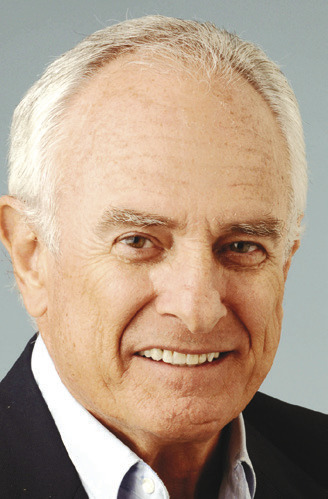
Theron Sapp was among 10 inductees to the Georgia Sports Hall of Fame last month. He was a 200-pound, hard-charging fullback. Undersized for the National Football League — but intangibles such as heart, determination, and any superlative that ranks at the top of the charts, especially when it comes to commitment and courage — enabled him to flourish.
If you make up a list of Sapp’s injuries- broken neck, broken leg, broken hands (left and right), broken pelvis, broken nose, and loss of teeth- you easily could ask the question: has anyone wanted to play football more than this man?
If his story were to take place today, you suspect that following the broken neck, he would not have been allowed to continue playing his favorite sport. The liability factor would just be too overwhelming in today’s litigious society.
But Theron grew up in the “stick your head in there” era. Butt ‘em in the numbers! He spent four years practicing and playing at Georgia and then seven years in the NFL with the Eagles and Steelers. His toughness was never questioned.
Wisely, Sapp did not “stick his head” in any scrimmage or pileup, but his broad shoulders enabled him to gain big yards for his teams. He never lowered his head. He ran upright, which meant his shoulders and lower body took all the blows. It would have been too risky to duck his head.
The quarterback for those Eagle teams, Sonny Jurgensen, always gave Sapp high marks as a runner and included a nuance that made for a colorful insight. Known as a “Drought Breaker,” Sapp had a habit of imitating a car’s motor when the ball was handed to him. Imagine a child playing with a toy car and revving up the motor vocally as he moves the car across the floor. That was part of Theron’s modus operandi as a running back.
A Macon native, Sapp was nominated for the Georgia Hall years ago by his longtime friend Harley Bowers, sports editor of the Macon Telegraph, but Sapp showed no interest. He never succumbed to currying favor with any Hall official or influencer. The last thing he would do is to campaign for the honor. He exclaimed with the same thunder that his feet created when he ran the football that he did not deserve membership in the Hall. I’ve never known a nominee for this honor to take such a stance. Many resort to self-promotion.
With total disinterest from “Thundering Theron,” his candidacy went dormant until he was recently renominated. He became the sentimental favorite of the Honors Court last October.
Now 89 and experiencing memory challenges, Theron lives in Evans, where he built a home and stables for his late wife, Kay, a Doris Day look-alike and an equestrian aficionado. The acreage provided room for barns and outbuildings to accommodate Kay’s riding habits.
There was a pool and acres of shade trees, a recreation haven, the centerpiece being a house with bedrooms for each of the Sapp’s offspring: Jan, Theron Jr., Wade, and Molly, with all coming to the induction ceremony with the highest of appreciation for the honoring of their father, their All-American hero.
Halls of Fame are challenged by narrowing elections down to a manageable number.
There will always be issues, even controversies, about who gets elected.
Or who doesn’t. It is easy to conclude that in many cases, such Halls are recognized for those they keep out, rather than those they include.
In Sapp’s case, he initially resisted admission out of unassuming modesty, but a supporter got his nomination reconnected to the process.
This time around, there was great sentiment to honor him with his admission into the Georgia Sports Hall of Fame.
Theron immensely enjoyed the weekend, though he was ready to return home soon after he arrived.
After all, he became a confirmed homebody some time back and couldn’t wait to return to Evans. However, the interlude when he signed hundreds of autograph requests brought about gratitude for being in the limelight when his days of yore were recalled.
While his one-yard run on Grant Field in 1957 to end an eight-year losing streak to Georgia Tech was not his most outstanding performance, it became associated with greatness because of what it represented.
He became beloved by the Georgia people. The State Hall of Fame induction banquet confirmed how much the “Drought Breaker” remains beloved.