
A couple of years ago, our rescue beagle led me to another orphan taking refuge on the Rondarosa — in the garage.
He was a baby possum, just old enough to be on solid food. Tink, fortunately, was out of town to shoot a TV series.
Otherwise, I doubt he’d stood for a baby possum living in a box in the garage.
I tamed the possum, who I named Pokey, by talking gently to him, petting him and holding him. When he was old enough, I took him to the edge of the woods where he scampered off. Still, every night, he returns to eat. He has become a sizable possum.
By the time Tink returned, Pokey was living on his own but Tink could watch him on the outdoor cameras. One night, I let our two dogs out, as usual. I have learned this: dogs have three kinds of barks: people bark, animal bark, and welcoming bark. It was pitch black when I heard their animal bark.
It was furious.
After a moment, I snapped into reality. They had probably cornered Pokey. I grabbed my phone for a flashlight, then barefoot in my pajamas, raced toward the barking. Sure enough, they had encircled Pokey who was playing possum.
His tongue was hanging out and his eyes were tightly closed.
I spotted blood on his side. One of the dogs, most likely our dachshund, had nipped him. I called Tink. When he answered, I said, “Bring the purple medicine and come help me with the dogs. They’ve attacked Pokey.”
I was raised on gentian violet which my parents called either “purple medicine” or “horse medicine.”
This is because we used it on the cows and horses.
I’ve seen my Daddy hitch a rope to the feet of a newborn, tie the rope to the front of his farm truck, then gently pull the calf from its mama’s womb.
This happened rarely but it saved both the mama and her baby. Once, the vet performed a Cesarian to deliver the calf then sewed her up. Then, every day, Mama went to the barn to paint the incision with purple medicine. I so clearly remember the cow laying on her side in the stall, covered in ink-like purple medicine.
It was only much later that I learned it’s actually called gentian violet.
Every time one of us had a sore or a cut, Mama pulled out the bottle.
On the Rondarosa, we are well stocked with bottles of purple medicine in the barn, garage, and the house. Tink, refusing to come any closer than five feet that night Pokey was injured, kept muttering, “Yuck. I need a shower.”
Before leaving, he took a photo of Pokey, playing possum.
“I’m going to post this,” he announced.
I cautioned, “You’d better be careful. You never know how people will react.”
Sometimes, I innocently post something then am astounded when people start stoning me.
To my astonishment, Pokey quickly became a fallen hero. Hundreds of people applauded us for taking care of Pokey. One man, a wildlife specialist, offered to visit and help.
Advice poured in from others.
It was surprising to learn how well-versed people are on possums.
Most knew that they eat mosquitoes and poisonous snakes. Since possums are not carriers of rabies, they are good friends to have around. They don’t bite.
That night, Pokey played possum for a couple of hours. I kept going out to check on him until he finally shook himself out of his stupor and crawled back into the woods. The next night, I was thrilled when he came to the garage for supper. He is a fat, well fed possum.
Possums have a relatively short life because they cross roads, looking for food. Pokey never has to cross the road. He comes from our woods and eats safely.
At seven years old, he may be the oldest possum in history.
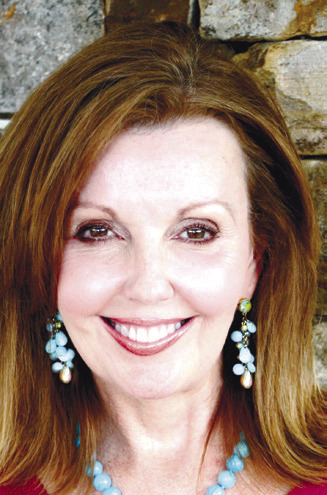
Ronda Rich is the best-selling author of the Stella Bankwell series.
Visit www.rondarich. com to sign up for her free newsletters.