
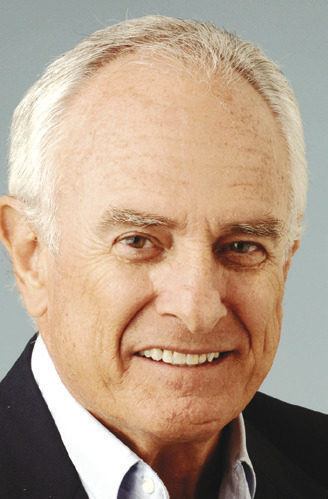
If you’re an Atlanta Falcons fan, you likely know about Brian O’Neal Jordan. You also are familiar with his career if you are a Cardinals or Braves fan – in fact, if you are a serious sports fan, you probably know about this two-sport star who spent 15 years in the major leagues and three seasons in the NFL.
Jordan didn’t make the splash that two-sport stars Deion Sanders and Bo Jackson did, but he was no flash in the pan. Football was his first choice, but Jordan believed baseball offered the greatest longevity, recognizing the hard knocks of the gridiron took a striking toll on his body.
He is proud of his baseball legacy, batting .282 with 184 home runs and 821 runs batted in. Not Willie Mays or Hank Aaron numbers, but statistics good enough for him to flourish in the bigs for a decade and a half.
He is proud, too, of the fact he led the Falcons in tackles for one of his three years with the team. He also had five interceptions and four sacks in his preferred sport.
Regardless, Jordan is most proud of his foundation which honors his mother, an educator who taught kids with special needs. “I watched her when I was in high school teach those kids with the greatest of passion and saw her put her heart and soul into giving those kids hope that, despite their disabilities, they could achieve in life,” he said.
In 1998, the Brian Jordan Foundation came to be. It has since awarded more than $1 million dollars in scholarships to special needs kids. That’s the statistic that makes Jordan smile the most. The good news is that as support for his foundation grows, those scholarship figures will increase with time.
“To see the smiles on those kids’ faces and see them become successful in life; that is what it is all about. And I am happy my mom instilled in me the need for me to support special-needs causes.”
Jordan knows how fortunate he was, growing up in Baltimore with parents who influenced him to do the right things, and taught that education should be given the highest priority. Once settled in at the University of Richmond, playing football and baseball, and owing to the greatest of commitment, he was able to graduate in just three-and-a-half years.
When he counsels young athletes and prospects on the verge of signing elite financial contracts, Jordan reminds them that no matter how much money they get on the front end and how well they manage it, education should remain a priority. “You never know how long you will be able to play professionally, and education will enable you to enjoy fulfillment in life,” he tells them.
This is a man who could write the definitive manual on the concept of giving back. He has been doing it all his adult life. A man of many talents, Jordan has enjoyed television gigs, written three children’s books, and champions literacy causes with the deepest of passion.
He reaches out to schools and kids and finds the greatest sense of accomplishment when he teaches a kid to read.
Jordan is not only a man with the ability to fund such initiatives; he functions with heartfelt sincerity in the process.
He cares about the educational needs of kids.
When taking note of a successful athlete, so often people don’t know the “rest of the story” in his or her life. Then there are the many athletes whose stories are forgettable.
Bad headlines befall many successful sports stars.
Bankruptcy is a common theme with many, which is why the Brian Jordan story remains so refreshing and inspirational.
Forget, for a moment, what he accomplished between the white lines, which is exceptional. His off-the-field resume is just as brilliant.
Jordan uses his fame from being a two-sport star to do good in the world by forever extending a helping hand based on his guiding principles of life: 1) When an opportunity to prove your worth arises, grab it, and use it to the best of your abilities;
2) Adversity happens, whether in the form of a disappointing decision or injury. Learn to meet those challenges by getting back in the game as soon as you can rather than letting them defeat you;
3) Remain confident in your own abilities. Don’t let other people tell you that you aren’t good enough;
4) When obstacles arise, stay focused on the goal beyond those obstacles and insist on pushing your way past them;
5) When people look down on you – whether due to your age, your race, your social status, or any other reason – use that negativity as a motivation to prove them wrong;
6) Find people who inspire you;
7) Follow your faith and let it guide you;
8) Believe in your ability to achieve your dreams; 9) Make education your highest priority, because it is your surest path to lifetime success;
and 10) Understand that disappointments are not God’s way of testing you, but rather God’s way of giving you a different opportunity.
Jordan plays in a lot of charity golf outings because he enjoys playing golf. But there is another critical reason. He knows charity golf outings provide support for organizations with a bent for altruism. And, he can be evangelical with respect to the empowerment of youth.
“What greater investment could we make today than into the kids in our communities?” he asks. Brian O’Neal Jordan. A model athlete and a model citizen.