
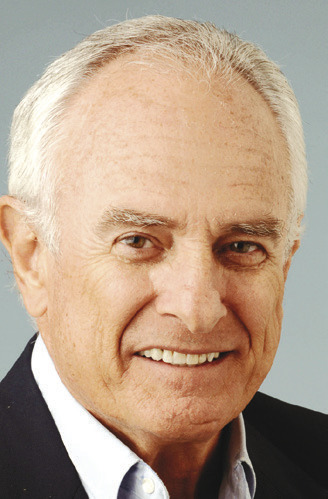
Erk Russell had rare and extraordinary leadership skills. Across the Southeast and beyond, hundreds of football players would quickly attest to that.
Erk had remarkable instincts to get his point across graphically and made every player, regardless of ability, think he was the “little train that could.” Erk invoked humor to relax and to communicate. He gave of himself like no other. He cared for his players – and they knew it. This set him apart.
His leadership acumen, coupled with his mastery of the Split 60 defense, enabled Erk to earn an exalted reputation as an accomplished defensive coordinator at Georgia and head coach at Georgia Southern. He was in demand as a clinical lecturer. He began every clinic by writing K-I-S-S across the chalkboard: “Keep it Simple, Stupid.”
The signature ingredient to Erk’s success as a sage defensive swami was motivation.
Although he might use an off-color joke, befitting locker room vernacular to make a point, he never used profanity to teach his players, despite evolving from an era when “cussing” reigned supreme. It was also the put-down era, in which for some coaches, it was commonplace to belittle athletes. Make ‘em feel unworthy.
Erk was the antithesis of that style. He whispered encouragement in his ears on the practice field. “I know you can make that play,” he would tell an eager young player whose physical stature might suggest he was at a disadvantage.
If any man could walk with kings without losing the common touch, it was the “beloved” Coach Russell, who was a natural-born leader. He had a sixth sense for making everybody’s day.
The defensive players were the envy of the offensive players, which is why head coach Vince Dooley always found time, especially on Fridays and game days to have Erk speak to the entire team. His humor and inspirational talks inspired those on the offensive side of the ball, too.
Erk believed in slogans, truisms, and humorous vignettes to connect with his players. Early in his career with the Bulldogs, he started headbutting his players in warmups, causing his bald head to bleed and glimmer in the sunshine of an early fall afternoon.
“That was the greatest inspiration to us,” said Frank Ros, captain of the 1980 National Championship team. But that tradition began long before Ros got to campus. Erk didn’t head butt his charges every Saturday afternoon, but for a big game, he often let them know, he would shed a little blood for the men he went to battle with.
Erk’s humor was graphic and telling, instinctive and poignant. He was always looking for that psychological edge.
Head butting wasn’t Erk being a showman; it was his way of communicating that football is a hardnosed game and you gotta play tough. Take the fight to your opponent. Employ extra effort and put the team first. That resonated with players across the board. Without thinking about it consciously, they realized their coach was forever putting the team first. He forever gave of himself.
However, Erk worried about his image. Not that he aspired to be suave and handsome; he just didn’t want his gladiator look to turn off a college president in search of a football head coach. While he might have looked the part of the enforcer, he was the opposite.
His players knew that he hurt when they hurt. He was frustrated when they were frustrated. He cried when they cried.
Following victory between the hedges, Dooley always deferred to Erk, whose parting shot was: “There’s nothing like being a Bulldog on Saturday night.”
There was nothing like being one of Erk’s boys. Now the Georgia Athletic Association and the Football Letterman’s Club are embarking on a fund-raising campaign to name the lettermen’s club at Sanford Stadium for the late Bulldog assistant coach. This should be a piece of cake.
A former player, Shaun Chapas, is the man on point for the campaign. While he didn’t play for Erk, Chapas knows of his image and legend. You don’t need to have played for Erk to participate in this campaign.
If you ever laughed at one of Erk’s jokes, you can help perpetuate his memory by writing a check, which will add your name to the donor plaque. It will be like going behind the Green Monster at Fenway Park and signing your name like Red Sox players and opponents have done over the years.