
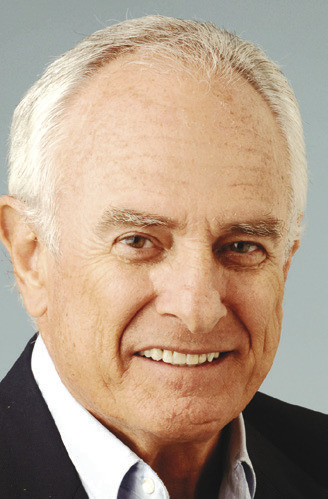
There is redeeming serendipity when you interact with a former player who had his day in the sun, overcoming stiff challenges but maturing into senior citizen status with humility and thanksgiving.
Horace King today is enjoying retirement, which includes the benefits of nine years in the National Football League’s retirement program, his marketing and sales career with General Motors, and Social Security.
Life is good.
There is a deep and abiding appreciation for the University of Georgia. This institution would have rejected him for unfortunate but obvious reasons if he had been five years older. Horace doesn’t dwell on that, choosing instead to focus on the positive and expressing gratitude and respect “for a great institution.”
Horace was one of the first five Black football players on scholarship at UGA. He went from Coca-Cola sales, which allowed him to get into the games for free (provided he sold all his Cokes), to scoring four touchdowns against Ole Miss in 1974, which tied the school record for TDs scored in a game.
Three years earlier, he “lost money,” when he paid for his rack of Cokes and made no effort to sell them. Georgia was hosting Houston in a hyped-up game, owing to the fact that the Cougars had several Black players on their roster, including big-name stars like running back Paul Gipson, and Elmo Wright, a wide receiver and the player who performed the first end zone dance.
It never crossed Horace’s mind in those segregation days that he would show up between the hedges wearing a red jersey and listening to the supportive yells of 60,000 fans, which is why he forgives and forgets.
Growing up on the west side of Athens, Horace learned the basics of “doing right” from his parents, Harry and Minnie. His father was a rigid advocate of a no-nonsense protocol. “He did not spare the rod,” Horace laughs as he reflects on his growing-up years.
Strict discipline was required in the King's household. Horace had chores and responsibilities. And woe be unto him if he shirked any requirement. While his dad meted out discipline for bad behavior, his mom was in his ear about making good grades. One thing was written in stone. Don’t disappoint her because that might cause her to bring Daddy into the discussion.
The King property at 462 Henderson Extension allowed for a productive vegetable garden. Horace’s father grew vegetables, not only for the family, but to sell to families in the neighborhood. This honorable enterprise taught Horace the value of managing his money and looking for opportunities to supplement his income.
It didn’t take long for him to find an outlet for his teenage energy — high school football.
Horace had natural skills that complemented his ability to run the ball.
It also didn’t take long for him to start at halfback for Clarke Central, the newly created high school following integration.
As he was maturing as a halfback for the Gladiators, integration of the public-school systems was taking place, too. Across town, Vince Dooley decided to go all out in recruiting Black football players. The first five scholarship Bulldogs were King, Clarence Pope, Richard Appleby, Larry West, and Chuck Kinnebrew. Their photos are prominently displayed in the Butts-Mehre Building.
Horace has gone all out to support the UGA Football Lettermen’s Club. For home games, he arrives early to help with cooking at the parking lot near the Oconee Hills cemetery.
“The Lettermen’s Club is a brotherhood,” Horace says. “It has been great for me to meet and learn about the guys who played before and after me.”
Younger players are sometimes overwhelmed when they are exposed to Horace’s resume.
Following his career at Georgia, he was chosen in the sixth round of the 1975 NFL draft by the Detroit Lions. Horace played nine years in the league and was the team’s leading rusher in 1977. His best season came in 1978, though, when he started 15 games and totaled 1,056 yards, with 660 rushing and 396 receiving.
Today, Horace plays as much golf as possible and supports many charitable causes, forever grateful for his UGA experience.
“When I signed with Georgia, I heard the same thing from Coach Vince Dooley that I heard from my parents. Give as great of an effort in the classroom as you do on the football field,” Horace says. “I am so proud of my Georgia degree. It is one of the most important things in my life.”