
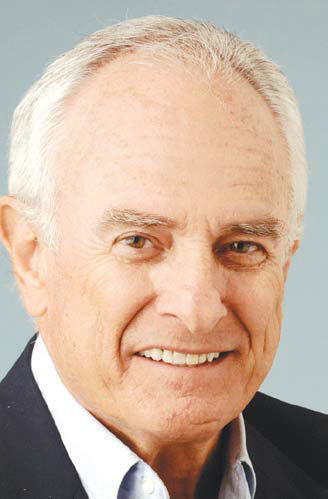
The upcoming induction of three Bulldog icons into the “Circle of Honor” in late August will be especial in that in the prime years of their Georgia careers, they were the best of their time: Herschel Walker was the best running back in the country; Jeff Wallace was the best women’s coach; and Manuel Diaz was the best men’s coach.
When you reflect on Diaz’s career, you can’t adequately tell his story without invoking a couple of vignettes that incorporate the influence of his coach and mentor, the late Dan Magill.
Magill recognized, as he reached his late 60s, that his protégé, the young Manuel Diaz, his assistant, was ready to become a head coach. Overtures from various schools, seeking an “indication of interest,” were becoming more and more frequent.
The Bulldog coach was in perfect health and in the prime of life, with a deep and abiding emotion to continue coaching. He had given up his other two major interests, managing the statewide Bulldog Clubs and serving as UGA Sports Information Director. He could concentrate on coaching and recruiting with no distractions or interferences.
However, this remarkable man, who was the ultimate loyalist, knew that some enterprising institution would hire Manuel. Time was of the essence. Magill chose to relinquish the job which he had made as good as there was in the country for men’s tennis, so that his beloved alma mater would not lose the best young coach to some other school, perhaps a hated SEC rival.
So, the ultimate loyalist did what only ultimate loyalists do — he stepped aside, yielding the reins to the championship program he had built from scratch with his own hands to the brightest young assistant coach in the game.
The woods are full of successful coaches who stayed too long and wore out their welcome. The classic example is Joe Paterno of Penn State. Magill never put himself above his alma mater. Georgia always came first with him. His judgment regarding his assistant was more than validated.
Manuel became as iconic of a coach as his predecessor. The Diaz file reflects these salient facts and milestones: He is the SEC’s all-time winningest coach with 781 victories; He won Four NCAA national team titles; plus two indoor national championships; he won 29 SEC titles and was the Intercollege Tennis Association coach of the year three times; he has been inducted into three halls of fame: Georgia tennis Hall of Fame; State of Georgia Sports Hall of Fame, and the ITA Hall of Fame, (founded by Magill).
In addition to his overachievement as a player and coach, and a lifetime affiliation with the University of Georgia, Manuel supported other UGA teams and leveraged Bulldog success in football to his advantage in tennis recruiting. He was a most valuable citizen in the community and was a “Damn Good Dawg” like his mentor.
Born in Puerto Rico, Manuel grew up with aspirations to compete on a U.S. college team, and his route to Athens was promoted by a former Puerto Rican tennis prodigy, Tony Ortiz.
Magill recruited Ortiz to Athens in the late sixties. Ortiz was considered a rare talent during that era. He, like most everybody else, was enraptured with Magill’s legend, coaching ability, and reputation.
There was only one problem. Getting up and going to class was never on his agenda. Magill was tasked with waking him up and taking him to the buildings that housed the classes he was expected to attend. Magill later said when recounting Ortiz’s time on campus, “When I dropped him off at the front door, he immediately went out the back door.”
One of the most significant recruiting stories in the University of Georgia's annals became a byproduct of Tony Ortiz's legacy.
While he had no interest in classroom function, Tony returned home to Puerto Rico, where he became Manuel’s coach. When he became familiar with Manuel’s potential as a junior tennis player, he began to work with him and became his promoter. He knew that Manny was a gifted athlete and began telling him about Magill and the University of Georgia.
One day, Magill opened a letter from his old friend who extolled the virtues of a “great prospect” for UGA tennis. Numerous facts and poignant recommendations confirmed Manuel Diaz was a prized recruiting prospect, but the last line of the letter immediately focused Magill on recruiting his old friend’s mentee.
“Manny Diaz,” Tony wrote, “is as good a boy as I was ‘sorry.’” Magill said, “I knew from that recommendation, I had to recruit Manuel post haste.” You know the rest of the story.