
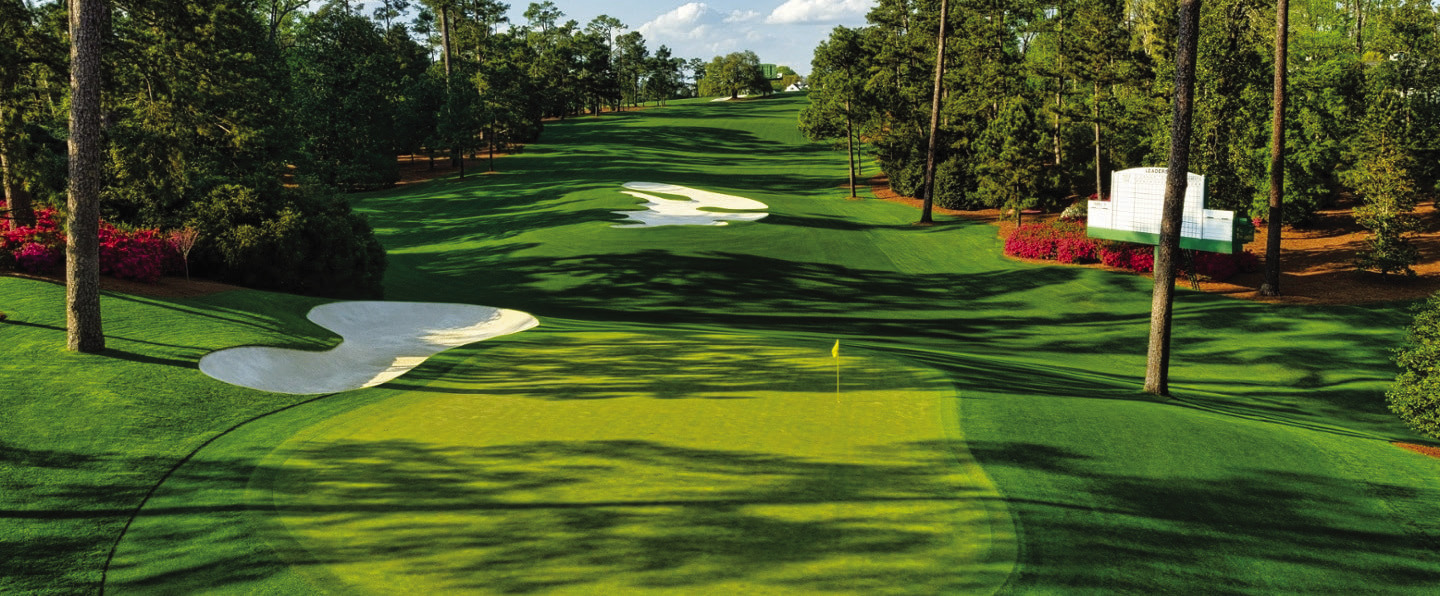
No one knows what the Garden of Eden was like. Still, Masters aficionados, without the slightest hint of irreverence, certainly wonder if that remarkable and stunning place was more beautiful than the grounds of the Augusta National Golf Club at its peak in April.
Augusta is simply a place that looks good and smells good, with all the floral blooms creating the most pleasant of atmospheres. The start of the tournament generates overwhelming excitement, which continues through Sunday’s final round, making us regret that we must leave this lush and tranquil sanctuary.
There is no setting in sports to compare. Augusta is a venue with no equal. Wimbledon and the Kentucky Derby are in Augusta’s sphere but cannot surpass what we experience the first full week of the calendar’s fourth month. Some critics have tried to find fault over the years but failed miserably, a reminder that some would find something to carp about after dinner with Aphrodite.
How fortuitous it was that co-founder Bobby Jones happened on the property of Fruitland’s nursery, developed in 1858 by the Berckmans family. It was known for its great variety of plants and ornamental trees. Throughout its history, club officials have underscored an affection for nature, naming each hole on the golf course after a tree, bush, shrub, or flower grown on the incomparable layout.
This is a course that has no easy hole when competition is at its keenest, especially on Sunday afternoon. The first nine holes are less dangerous than the second nine, but when the battle is joined, any competitor knows he cannot go to sleep on these waterless holes.
As with every Master's innovation and routine, all decisions emanating from the time of the original chairman, Cliff Roberts, and President in Perpetuity, Bob Jones, have stood the test of time.
At first, the nines were reversed. The front nine today was the back nine when the course opened for play in the mid-1930s. There was a good reason for the change. The holes that make up “Amen Corner” are near the bottom of the low-lying Rae’s Creek. This tree-shaded area took longer to dry out after early-morning frosts, often delaying the start of play.
While the Masters has the ultimate in drama, historically, its aura and setting have enhanced its exalted reputation. When the best in competition is showcased amid stunning blooms, scents, and nature’s best offerings, a special ambiance makes competitors and patrons feel there is no greater shrine in the sports world. You feel blessed to be in this elevated environment.
The Masters has something of an “old home week” feeling. The former champions come back, highlighting the emphasis on amateur and foreign competition that was so important to Bobby Jones.
Celebrities of all walks show up. One year on the 13th hole, I walked up to a guy whose hat was pulled low, slightly covering his face, and began a conversation about the splendor of “Amen Corner.” As he walked away, I realized it was Bing Crosby.
The most fun was to mingle with the stars of the game in the old lower locker room, listening to their banter and lighthearted humor. I have tape recordings with former champions Gene Sarazen, Sam Snead, Byron Nelson, and Arnold Palmer, among others, who sat down on the porch of the main clubhouse for lengthy interviews.
At one time, the Masters' purse was the biggest in golf. That was big with the competitors, and of course, they were big fans of the golf course, too. And I have heard many thumbs-up testimonials from former winners about the efficiency and organization that was found at Augusta.
It was the Masters that gave us red letters, denoting under-par scores for the scoreboards. The Amateurs still stay in the Crow’s Nest in the main clubhouse. Free parking has always been available for loyal patrons. A pimento cheese sandwich costs $1.50, the same as it did a quarter century ago.
Dating back to the beginning, Masters officials have always accommodated the press. After all, the grand old man of the keyboard, Grantland Rice, was a founding member.
With April dates, the tournament enhanced coverage by major sportswriters who were returning home from spring training. They would take respite in Augusta for the tournament, with its over-the-top hospitality. Southern cooking — dishes like fried chicken and greens, accompanied by iced tea — was another “look forward to” perk. Legend has it you could find access to the best moonshine available, too. Then, on Monday following the tournament, the press was allowed to play the course.
This will be my 67th Master's tournament, and I reach this point every spring with great anticipation and thanksgiving, feeling fortunate for the classic journey that has come my way.
As sports editor of the Athens Banner-Herald in the ‘60s, I was entitled to a working press credential, two season tickets, and parking. Breakfast in the old Quonset hut by the first fairway featured Krispy Kreme doughnuts, which took care of breakfast. When lunchtime came, there were those famous pimento sandwiches, and also ham and barbecue.
The Banner-Herald would not pay for Western Union to wire my stories, so I wrote on a manual typewriter in the press building, took my copy down to the Augusta post office, and mailed it to Athens via special delivery, which cost 35 cents. A tank of gas for the week for my ’50 Ford cost about three dollars.
With that plan, I could cover the Masters for less than $10, but back then, I felt like a rich man for a week. When I say my prayers, I always give thanks for being the beneficiary of the most serious accident of geography a man could ever have.