
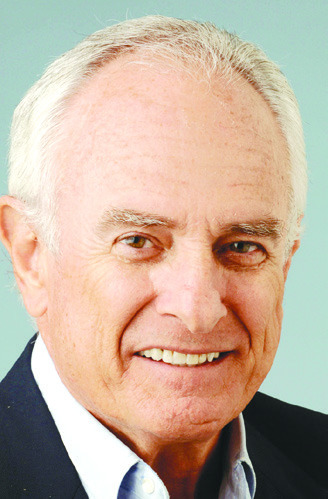
There are many Biblical references to incompatibility in the afterlife for those who accumulated wealth on earth, and while no living person, sinner or saint, knows what awaits, I believe Tom Cousins will be in the quarters reserved for the most special of people.
He certainly was a good and faithful servant.
A stranger, perusing his resume, would easily conclude at first glance that this was an extraordinarily accomplished man who was given a healthy dose of altruism at birth.
It is hard for super successful people not to be about themselves. Tom was just the opposite. He was never about trophies, plaques, awards, and 30-point headlines. He was the ultimate dealmaker, helping change Atlanta’s skyline, but he never took any bows.
He appreciated the game of golf and grew up playing East Lake, the home of Bobby Jones, the celebrated 1930 Grand Slam champion. The four major championships of Jones’ era were the Amateur and Open championships of the United States and Great Britain.
With time, East Lake fell into disrepair as the Atlanta Athletic Club moved to Duluth with new facilities which included two 18-hole courses designed by Rees Jones. East Lake, designed by Donald Ross, was continued by the many friends and aficionados of the legendary golf layout.
It reached a point where it was not safe to play on the golf course. Golfers were robbed at gunpoint, which contributed to the closing of the course.
When Cousins learned the East Lake property would be sold at auction, he bought the course and set about restoring it to its original design and making the community classic and viable.
The East Lake Meadows apartment complex was so crime-ridden that it was known as “Little Viet Nam.” Cousins wanted to do more than restore the East Lake golf course to prominence — which he did, eventually getting the PGA Tour to establish the Tour Championship in Atlanta — he also wanted to rehabilitate the community.
He did that, too, partnering with the Atlanta Housing Authority and community leaders to construct mixed-income housing, a YMCA, and an elementary school. When he was honored with the Bob Jones Award by the United States Golf Association in 2001, he expressed humility at receiving the award. He said, “I am just a part of a dedicated team with the East Lake Community Foundation with the purpose of changing people’s lives for the better.”
This initiative became known as “Purpose Built Communities,” which other cities have adopted and is changing lives across America. More than 25 cities have a version of the plan that Cousins founded. He was a visionary who took on big projects that changed Atlanta’s skyline and helped make it a truly great city.
A graduate of the University of Georgia’s Terry College of Business, Cousins bought an NBA franchise, the Hawks, and moved the team from St. Louis to Atlanta. He also originated the Atlanta Flames, a National Hockey League team.
In addition to his long-time support of his alma mater, he was also a generous contributor to Auburn, his wife Ann’s alma mater. (Ann Draughon is the daughter of the long-time president of Auburn, Ralph B. Draughon.)
During his peak development years, there were occasions when I would visit Tom at his home base in Buckhead. There were a couple of times when it was for an interview, but sometimes just to talk. You could learn so much from him when he found the time to discourse over lunch.
He was a busy man, but he would take the time to talk about his alma mater and the sports scene. He was a generous and gracious man whose reputation for selflessness was off the charts.
“You meet Tom Cousins and you knew you were with a born leader,” said Jim Nalley, one of his friends and among Atlanta’s premier titans in the automobile business. “He was the rising tide that lifted all boats, which influenced Atlanta’s becoming a major league city in every respect.”
Billy Payne, who brought the 1996 Olympics to Atlanta and became chairman of the Augusta National Golf Club, was also an entrenched admirer of Cousins.
“Tom has the best combination of intellect, ethics, and devotion to his faith of any man I have ever met,” Payne said. “What a wonderful human being he was.”
You will find glowing tributes all across the country for this great man.