
“A book is made from a tree. It is an assemblage of flat, flexible parts (still called “leaves”) imprinted with dark-pigmented squiggles. One glance at it and you hear the voice of another person, perhaps someone dead for thousands of years. Across the millennia, the author is speaking directly to you. Writing is perhaps the greatest of human inventions, binding together people, citizens of distant epochs, who never knew one another. Books break the shackles of time – proof that humans can work magic.”
– Carl Sagan
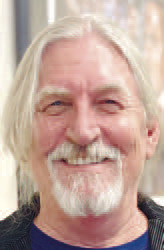
A colleague and friend of mine, who is also a contributor for Lakelife magazine, has suggested that I gather up my favorite columns and publish them in a book, an anthology of sorts.
I don’t know if I am excited or horrified by the prospect of a book containing such nonsense. But for the past several days I have been gathering some columns from the LON archives that didn’t mutate into unreadable drivel as is often the case with my ramblings.
I’ll eventually have to go back to my days at the Monroe County Reporter and retrieve some of those too, I suppose. That’s where I got my start writing these things. But a lot of famous writers had Monroe County connections.
The incomparable Mark Twain (Samuel Clemens) was born in Monroe County, or Florida, Missouri to be more precise. Ernest Hemingway did much of his later work from his home in Monroe County, or Key West, Florida to be more precise.
Harper Lee, author of “To Kill a Mockingbird,” was also born in Monroe County and created the fictional town of Maycomb out of her memories of her childhood home in Monroeville, Alabama, memories that included her childhood friend Truman Capote, who was the inspiration for the character Dill in the novel.
Joel Chandler Harris was born in Eatonton, but not many know he also worked for the Monroe Advertiser, a newspaper whose name was gobbled up by the Monroe County Reporter in the 1980s and used as the flag on our weekly feature pages there.
So, I’m just following in the footsteps of these writers by publishing a collection of my writing, although I suspect Alice Walker might have been happier had I left Harris out of this essay altogether. But that’s a briar patch I have no business entering.
Anyway, as I often say about halfway through each column . . .
But I digress. I wrote my first column for the Reporter in 1998.
Quite frankly, it was dreadful, introductory tripe, clumsy rubbish.
I didn’t write many for a while, but when I became the editor a couple of years later, I fired one of our syndicated columnists and started writing columns myself. My hubris when it comes to writing has always been slightly irrational, truth be told.
The first column I wrote for the Lake Oconee News and the Eatonton Messenger appeared in the April 4, 2014, issue. It was titled “Lost in Space,” which is quite appropriate.
I used television shows for the titles of my first six columns: Lost in Space, Candid Camera, He-Man and the Masters of the Universe, Another World and Let’s Make a Deal. The seventh was called “Cappuccino flavored potato chips.”
Later that year I offered an elegant solution to the problem of the Washington football team’s mascot by suggesting Daniel Snyder could keep the name Redskins if he replaced the feather-wearing man on the helmet with a Spanish peanut.
I first used Selah as my concluding word on June 19, 2015, in a column called “Read this column, get next week’s free.”
As with any voyage into the past, you also relive the tragedies, such as the deaths of Morgan County’s Seth Stapleton back in October of 2015 and Michael Rhodes and Brittany Smith a couple of years later.
I used a photo I shot on the front of the LON sports page of Seth playing on the offensive line for the Bulldogs the night before he was killed. I had also just seen Michael, who played recreation league baseball with my son, a couple of days before his death at the BOE meeting in Madison. Still makes me incredibly sad that people so young are called home so early.
So, right now I am wandering around the archives in April of 2016. And, like Carl Sagan said in the epigraph, I can hear the voice of a younger T. Michael Stone speaking directly to me from those old columns and sports features.
Through the magic of writing, T. Michael’s voice pulls me out of the shackles of time.
But to tell you the truth, I’m sick of him. I wish he’d just shut up for a while!