

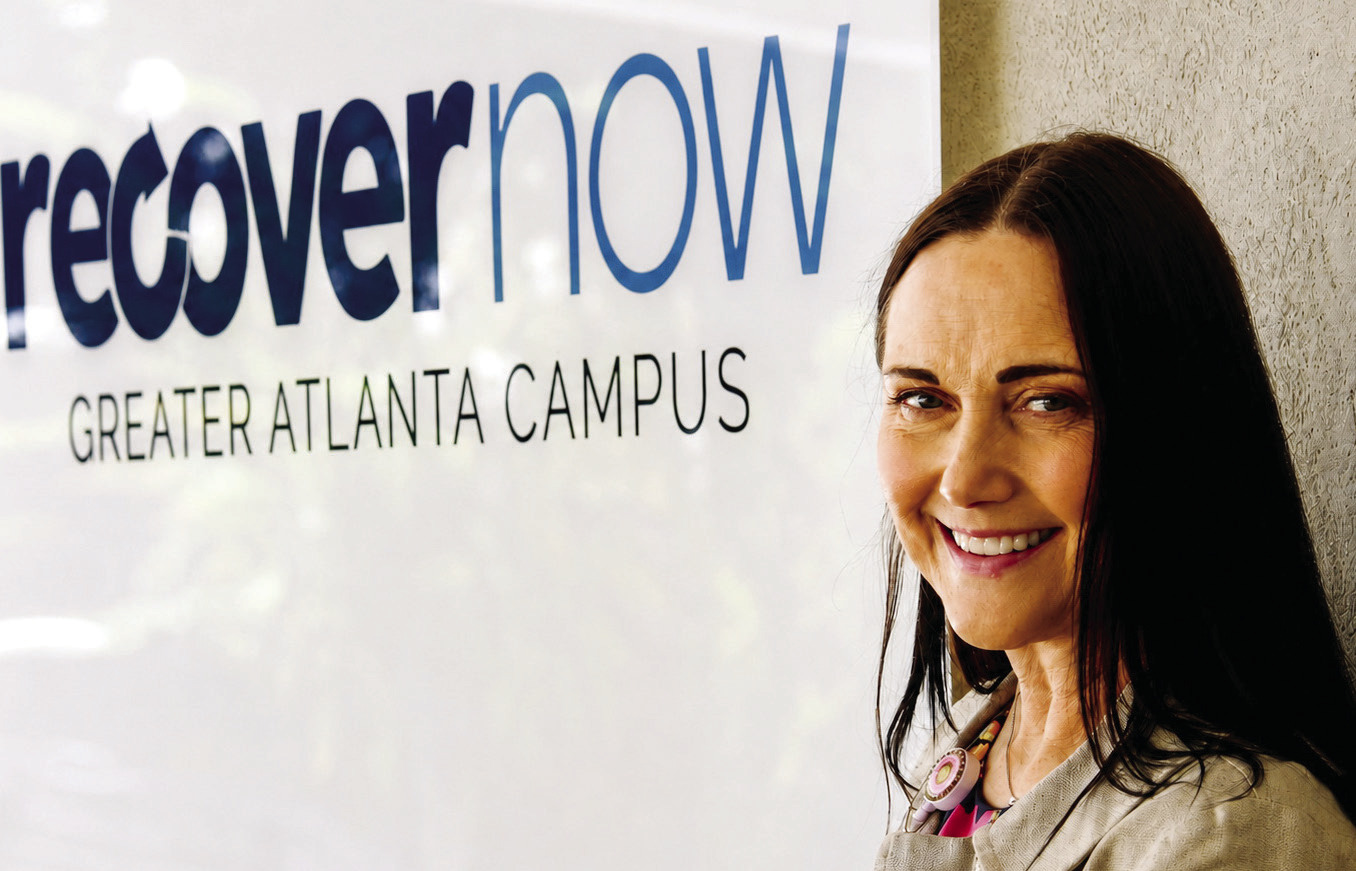
Angela Camp’s path to running an addiction treatment facility began with a member of her own family.
Camp initially considered becoming a juvenile probation officer after graduating from college. But when her grandfather entered addiction treatment in his late 70s — an unusual step for someone his age at the time — she attended the treatment center’s family program and became interested in the field herself.
“He didn’t begin drinking until he retired,” Camp said of her grandfather. “None of us had ever seen him have even a beer.”
That experience helped redirect Camp toward what is now a career spanning more than three decades in addiction treatment. She began working in the early 1990s at an adolescent treatment facility in her home state of Alabama, the same month she entered graduate school. She later worked in admissions, marketing, public education and administration, eventually managing outpatient programs as well as an inpatient facility.
That career eventually brought Camp to Putnam County and RecoverNow, where she currently serves as chief executive officer.
Camp moved to Georgia in February 2025, just three months after RecoverNow purchased what it now calls its Greater Atlanta Campus, despite its location alongside Highway 44, not far past Putnam General Hospital on the way out of Eatonton.
The relatively secluded operation is part of a growing regional treatment company, and Camp believes its rural setting is one of its strengths.
“There aren’t a ton of distractions out here,” she said. “To me, that makes it the best possible area for a treatment center.”
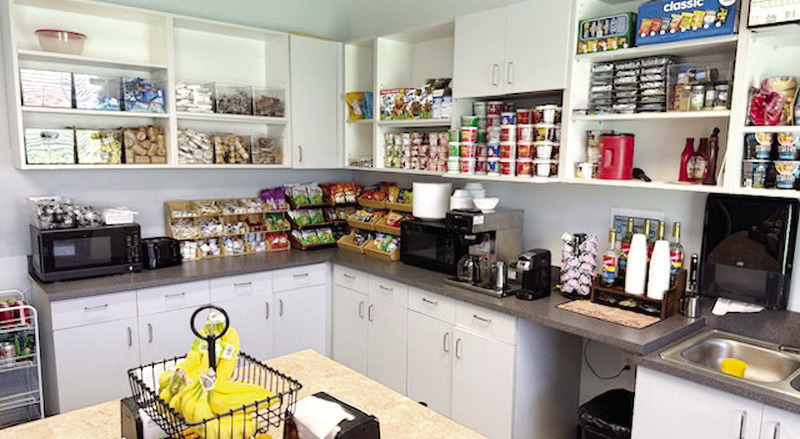
Though originally built as a senior living facility, the property had been operating as a treatment center since July 2021. Today, the RecoverNow facility provides residential addiction treatment for adults 18 and older through a 30-day program. For patients who need it, treatment begins with medically supervised detoxification, typically lasting five to seven days but sometimes as long as 10 days.
Camp stressed, however, that detoxification represents only the beginning of the recovery journey.
“The hard work of treatment begins after detox because that’s when their thinking is clearer,” she said.
Patients then participate in group programming, individual therapy and family therapy to examine the underlying issues contributing to their addiction while simultaneously developing coping skills for life after treatment.
The Eatonton center is deliberately small, able to accommodate just 24 patients. However, it employs 42 staff members with 24/7 coverage year-round. There were 17 patients at the facility last week, though about 20 is typical, Camp said.
That staff-to-patient ratio is another important part of the operation, Camp said.
“A place like this where it’s more small and intimate, someone is working with patients around the clock,” she said. “It just allows for more individualized attention and care.”
Patients typically share rooms two at a time, which Camp said is intentional rather than simply a matter of space. Addiction can be isolating, she said, and treatment includes learning to interact with others rather than retreating from them.
“Addiction is the great equalizer,” Camp said. “It doesn’t care how much money you have, where you live, Black or white, man or woman; it doesn’t care.”
RecoverNow treats both men and women, typically in their 30s and 40s, though patients can range in age from 18 to well into senior citizenship, Camp said.
Though RecoverNow’s Eatonton location is a private treatment center, Camp said most patients use commercial health insurance through an employer or the health insurance marketplace. She estimated the private-pay cost for a month of treatment would be about $30,000 in most cases.
The Eatonton operation is part of a company that has expanded considerably. Following a recent merger with another treatment provider, Camp said RecoverNow now has 14 facilities or distinct programs in Alabama, Florida, Georgia, Louisiana and Tennessee, with some specializing in addiction and recovery. In contrast, others focus on mental health treatment.
In Eatonton, RecoverNow’s treatment extends beyond counseling and medical care. Once patients complete detox, those who meet behavioral requirements can participate in small, supervised recreational outings that may include fishing, kayaking or hiking. On Saturdays, patients often travel to Brave Meadows Therapeutic Riding Center in Gray for equine therapy, too.
Camp said animal therapy forces patients to focus their attention beyond themselves.
“You have to care for and nurture animals,” she explained. “And there are a lot of correlations between being afraid to get on a horse versus what else are you afraid of? And how does that hold you back from your recovery?”
Ultimately, Camp said, the goal is not simply to get patients through 30 days in Eatonton, but to prepare them for what happens afterward. Many, if not most, patients continue into a lower level of care upon leaving the residential program.
Returning home should carry some uncertainty, she said, because recovery means facing familiar pressures without relying on drugs or alcohol.
“Getting ready to leave a treatment center like ours to go back into what I call your real life; it should be a little scary,” Camp said. “Because you’re going back into those situations without the luxury or the crutch of having a substance.”
To learn more about RecoverNow in Eatonton, including admissions information, visit recovernow.com/location/retreat-of-atlanta.