
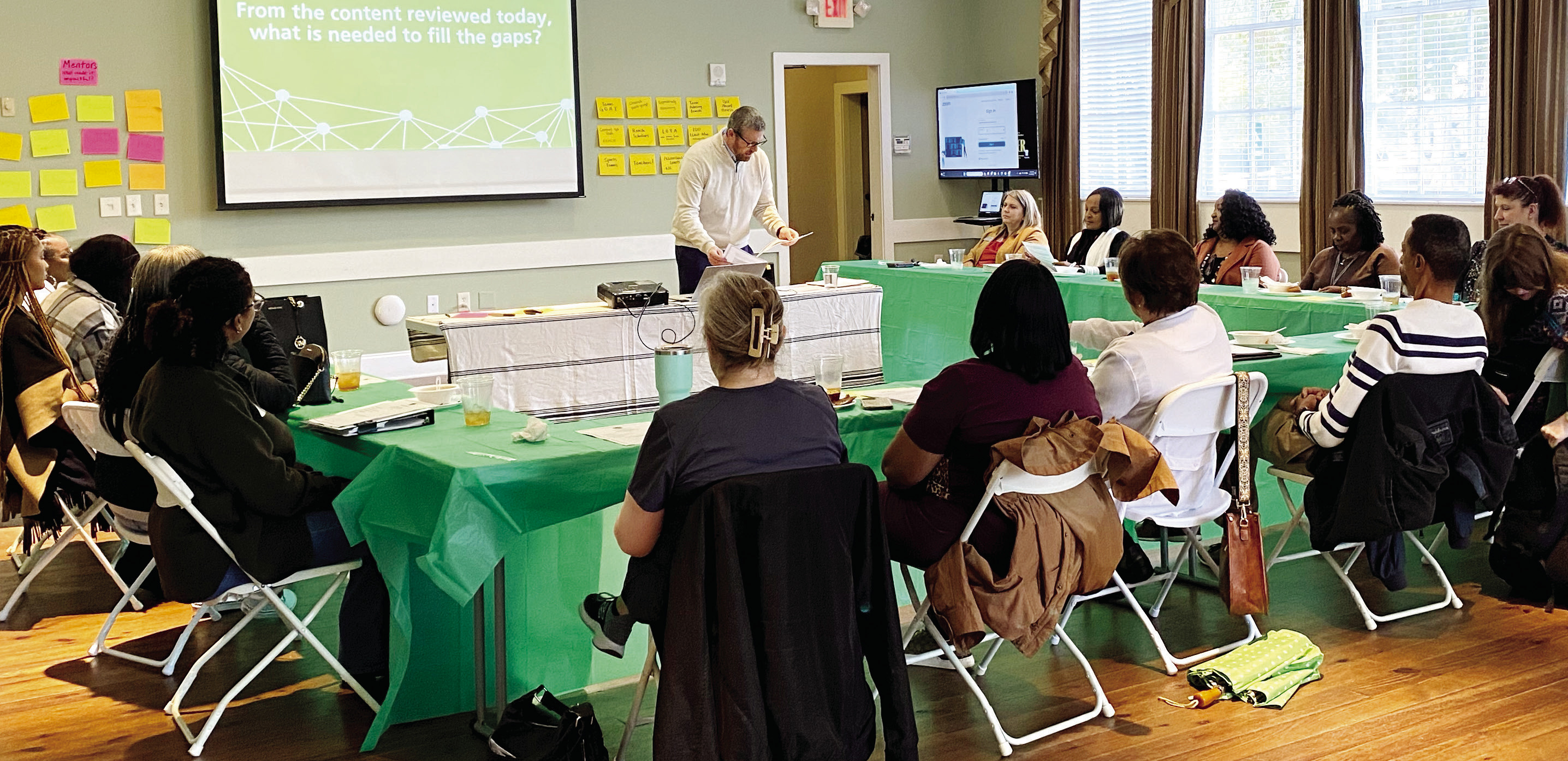
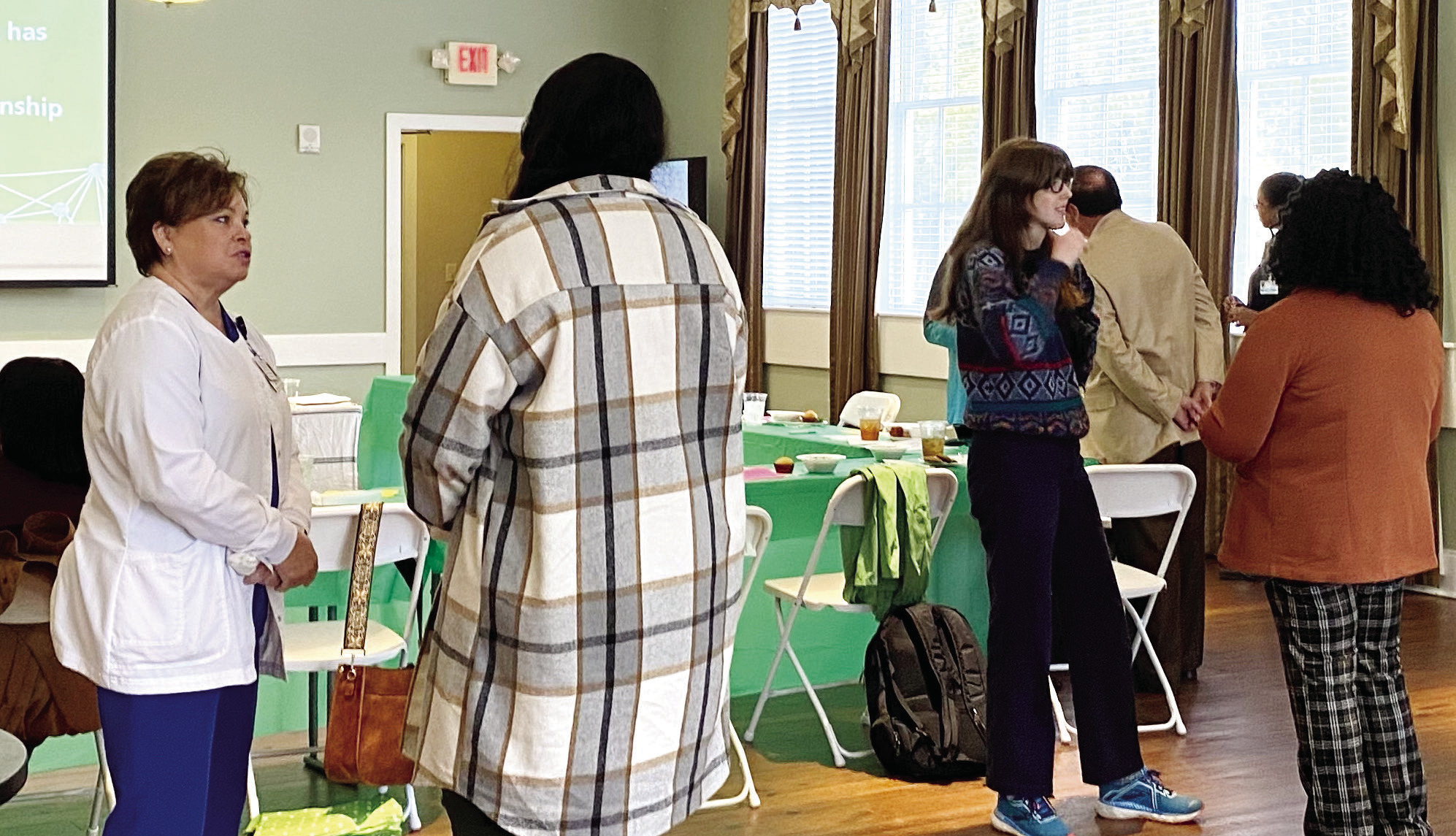
Mentorship was the primary topic of discussion last Wednesday at the Putnam County Collaborative meeting. Approximately 15 people attended in the Plaza Arts Center’s reception hall, including representatives from healthcare, education, churches, non-profits, and local businesses.
The Georgia Family Connection Collaborative’s goal is to bring the community together by connecting families with valuable, local resources and programs in the county. It aims to provide support and spread awareness to make Putnam County a better place to live and work.
Georgia Family Connection Partnership (GaFCP) Regional Manager Adam Swymer began the meeting with introductions, and then began the networking activity.
Attendees were asked to think of a mentor who made a big impact on them and use one word to describe that mentorship.
People were encouraged to share their personal experiences with mentorship, along with the word they chose, with a partner.
These mentors wound up ranging from teachers to mothers, and people described their mentors as “relatable,” “compassionate” and “thoughtful,” among other adjectives that were written and posted on the wall so everyone could reflect on the group’s answers.
“We should be surrounding kids with webs. We want them to be stuck in a spiderweb of people,” Swymer said. “The more adults, the more connections they have, the more likely they are to be successful. We want that net for our youth, particularly our youth that are under-resourced.”
After multiple partners shared, Swymer began his presentation on mentorship. He went over the different mentor models that are most common, including traditional one-on-one mentoring, team mentoring, group mentoring, and peer mentoring. Mentorships also may be based in different areas, including school or the workplace.
Swymer also discussed the process of recruiting mentors for a program and how important it is to screen mentors, have ongoing training, and make check-ins to ensure they are mentoring to the best of their abilities. Mentors must meet criteria specific to the program to provide proper guidance, as well as avoid stigma.
Swymer also asked the group to name mentoring programs in the area.
From these, mentoring gaps could be determined and therefore addressed by the collaborative.
“I’ve probably heard about some of these programs, but I don’t know anything about them. I need to know specific qualifications: where they are, who they are for, and how to get in contact,” one attendee said. She also suggested teachers need to know what mentorship possibilities might exist so they can tell their students how to get help if needed.
Community awareness and communication about mentorship programs already in place were among the main gaps discussed.
Promoting and supporting mentorships was discussed, as was directly contacting those in need of guidance. It was suggested that this may be done through social media or in person, but it must be done in a relatable way to build trust.
“I want people to know I am the same as they are,” another attendee said.
The main takeaway appeared to be that many mentorship programs exist for the Putnam County community, but more people need to know about them, especially at-risk populations who have struggled with issues like homelessness or poverty.
Swymer concluded the meeting with updates about the collaboration. He described the downtown Health Fair, which provided health education and resources accompanied by a fun run and gospel singing last month, as “a success” with more than 100 participants.
Swymer also mentioned the Teen Maze, which potentially will be held in October next year during Red Ribbon Week, which aims to teach teenagers that choices have consequences.
Lastly, October’s meeting minutes were approved. No Collaborative meeting is planned for December, but January’s meeting will be longer as the group will go over data for the county.
The Putnam Family Connection Collaborative is made up of community members who desire to make the county a better place by using local solutions. For more information visit online at putnam.gafcp.org.