
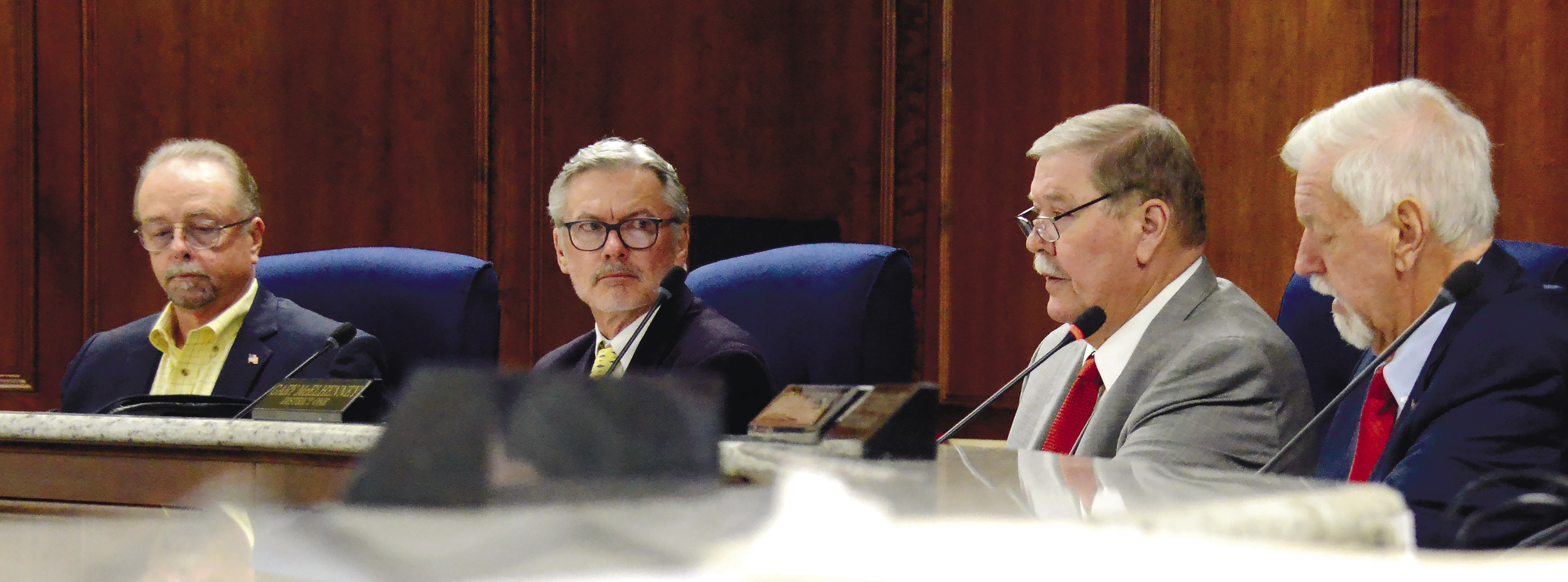
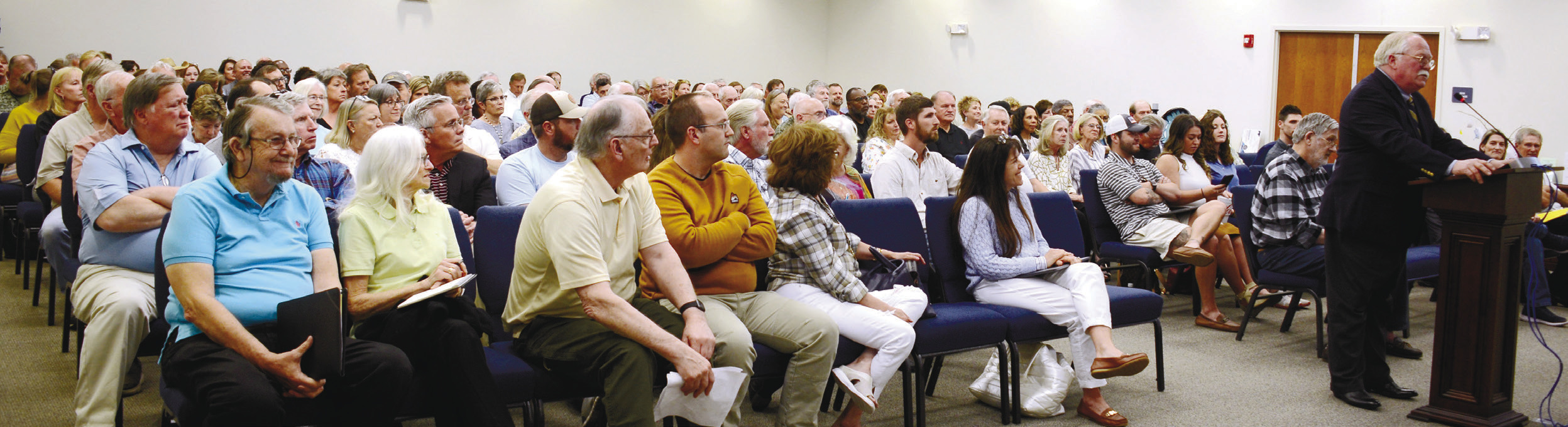
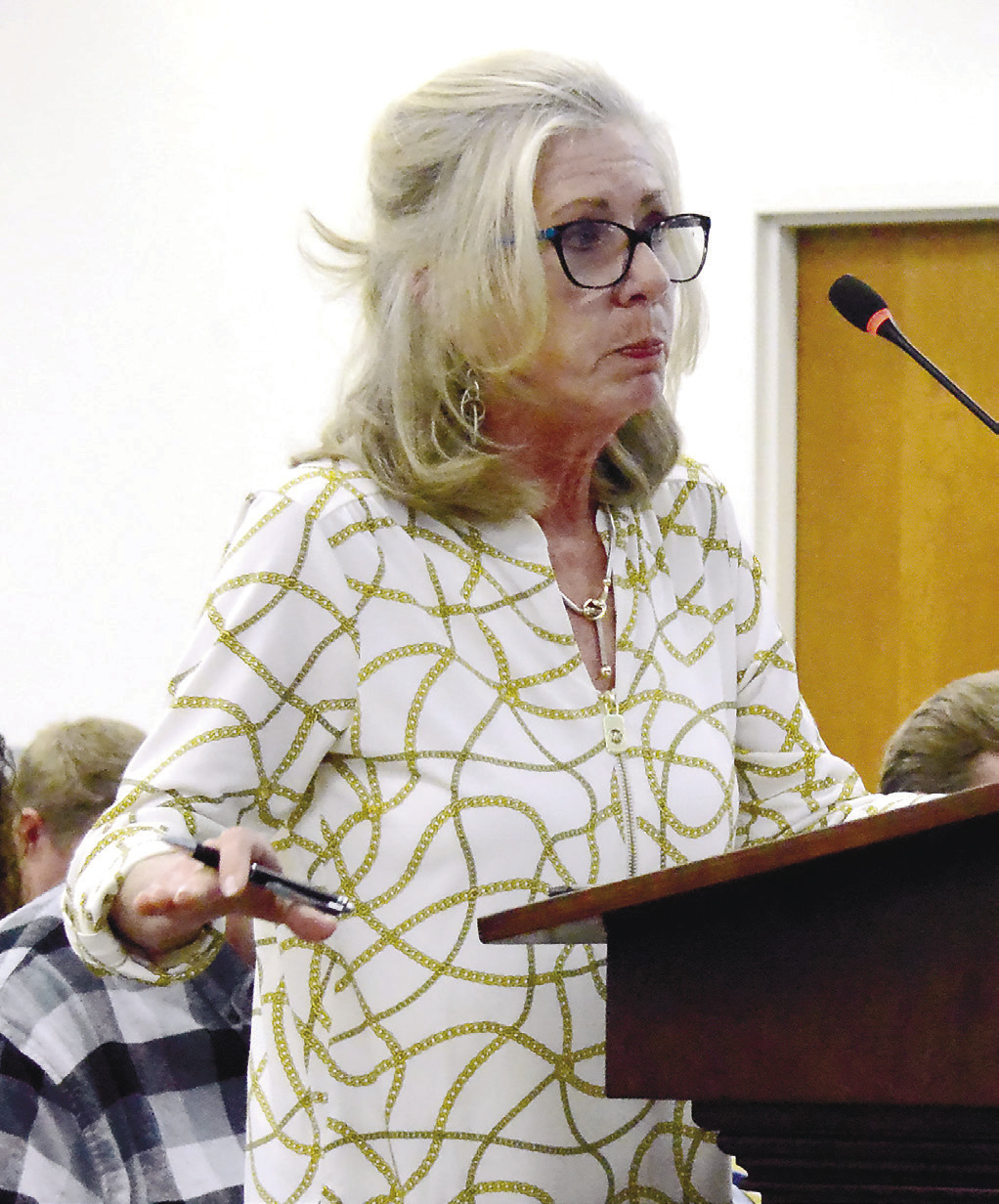
Last week’s first of two special hearings on short-term rentals (STRs) at Putnam County’s two large lakes saw nearly 40 people take three-minute turns at the microphone giving an earful to the Putnam County Board of Commissioners.
Some voiced specific complaints. Others held viewpoints on the economic stakes. Some desired reasonable compromises for improved regulations and enforcement.
One thing missing was any sympathy for absentee landlords and investors living hundreds, if not thousands, of miles away.
At one point last year, a real estate website listing sales of “luxury” homes had a place in Idaho at number one in the country, Greene County at number three, and Putnam County listed as number five.
The seemingly sudden popularity of people preferring to rent long weekends at private houses over hotels can be seen in the rise of rental agencies like Airbnb and VRBO, not to mention smaller, more localized latecomers.
This preference is not isolated to Putnam County, and it carries implications from property taxes (150 sales of lakeside properties accounted for the bulk of the 20 percent rise in the county’s tax digest last year) and housing prices to employment opportunities and neighborhood characteristics.
Morgan County, which has a limited shoreline on Lake Oconee, has an outright ban on short-term rentals, while Greene’s ordinance allows rentals in designated areas.
Athens-Clarke County has been facing the same problem, not because of shorelines but for football games, graduations and the like. The state of Florida, with its lengthy shoreline, has communities all around the state scrambling for solutions.
At Putnam Couty's hearing last Thursday, Sheriff Howard Sills led with four recommendations for tools to help with enforcement, at least for out-of-control parties.
“I am not here to advocate for either side, but I think these would help both,” Sills said.
He added the sheriff’s office enforces the laws of the state. Although he has agreed to help enforce county ordinances, he lacks the formal authority to do so. He also lacks the authority to enforce private contracts, say, between owners and renters.
Nonetheless, Sills said he had techniques “which I won’t divulge” to help (as in, a squad of tow trucks showing up to remove cars blocking a roadway).
Sills’ recommendations would require the renter to present a copy of the rental contract (clearly showing the maximum number allowed on the premises) to any investigating officer. No copy, or more people than allowed, would equal a violation.
“We can make a certain number leave, and if they don’t, that could be disorderly conduct or criminal trespass,” he said.
Another recommendation would not allow charging admission.
“I’m not talking about family members splitting the rental costs,” he said. “I’m talking about advertising a party and then standing at the door collecting $20 or $25.”
A sampler of other speakers and views includes Steve Kollross, who has two rental properties and pointed to the $739 million impact of tourism estimated for Putnam County.
“People rent boats. They buy groceries,” said Greg Pierce.
“Do not punish responsible owners,” said Laura York, who rents out a two-bedroom, two-bath house. “I pay taxes. I employ a handyman and cleaning service.”
Kiersten Tuel of Wild Water Sports noted that some of the complaints “could also happen at any full-time residence.”
“The real issue is not short-term rentals. It’s absentee owners,” argued Jo Jones, who owns a local management company and nonetheless pushed for “rules and regulations.” Both neighbors and individual owners have property rights, but they “don’t have that right everywhere,” she added.
“The problem is ownership and the execution of management,” echoed Vince Maiello. “I live there. I don’t stand for anything. It’s not the nightmare you might think it is.”
And indeed, there were complaints.
Pamela Brummond spoke of 3 a.m. beer pong parties in the backyard, a visiting dog “as big as a pony” running loose, and reckless boating that left her “tired of fixing my seawall.”
Joshua Shannon said he moved here from Florida to find peace and quiet, but the STR hassle has him thinking of saying goodbye.
“We can’t compete,” he said.
Deb Mallinson said she contemplated selling after neighboring incidents with annoyances like televisions on the back porch and giant floodlights evolved into an altercation last summer involving guns.
Strangers walking through residents’ yards or fishing off neighboring docks also drew comments.
Susan Stead lives next to an STR and said, “You guys are my HOA (Homeowners Association). Fifty percent of the renters are fine, but the other 50 percent are, well, totally opposite. We need more rules, more enforcement.”
Both rental owners and full-time residents offered potential remedies, all involving “rules and regulations.”
Examples included two people per bedroom (John Feltham), no events like wedding receptions and property inspections (Camille Lowe), signage similar to rezoning requests to announce an application for an STR license or its renewal (Michael Buhler), the minimum age for renters (John Foster), the use of hotel-motel taxes (Tommy Jefferson), a minimum six-month rental contract (Joshua Shannon), no grandfather clause for rental properties (Stephen Mallinson).
A second BOC hearing on short-term rentals in Putnam County is scheduled for next Tuesday, April 4, beginning at 10 a.m. at the county commission office at 117 Putnam Dr., in Eatonton.